


















































































Overview
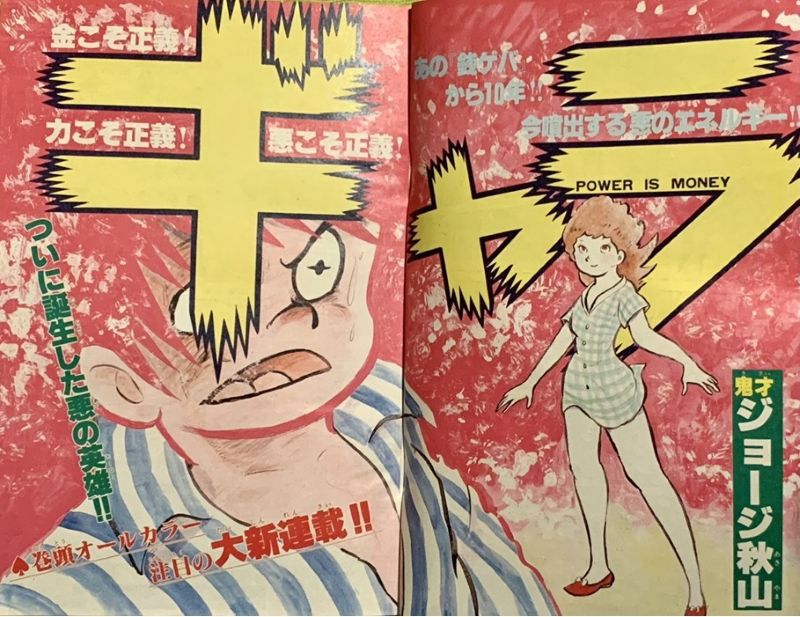
“Gyara” is a manga work by the Japanese manga artist George Akiyama. It was serialized in the weekly shōnen manga magazine “Weekly Shōnen King” from 1979 to 1981.
The story depicts a boy, Azami Yamada, who is abused by his father and looked down upon by those around him on account of his ugly appearance and stupidity. His encounter with a mysterious and beautiful girl, Beniko, becomes the catalyst for his decision to take revenge on society through the power of money and criminal acts, choosing to live as a villain.
About the Author
George Akiyama (1943–2020) was born in Nippori, Tokyo, in 1943, and raised in Ashikaga City, Tochigi Prefecture.
After graduating from junior high school, he moved to Tokyo and made his debut as a manga artist in the mid-1960s.
In the late 1960s, he was active primarily as a comedy manga artist, winning the 9th Kodansha Children’s Manga Award (1968) for “Patman X,” which was serialized in “Weekly Shōnen Magazine” from 1966 to 1968.
In the early 1970s, he attracted attention with controversial works characterized by social critique and extreme depictions: “Zeni Geba” and “Ashura.”
“Zeni Geba,” serialized in “Weekly Shōnen Sunday” from 1970 to 1971, portrays a man who repeatedly commits murder for money and rises to power, set against the backdrop of social issues such as poverty and money worship.
“Ashura,” serialized in “Weekly Shōnen Magazine” from 1970 to 1971, is set in Japan from the late ancient period to the early medieval period, amid famine and warfare, and explores human karma and the meaning of life under extreme conditions.
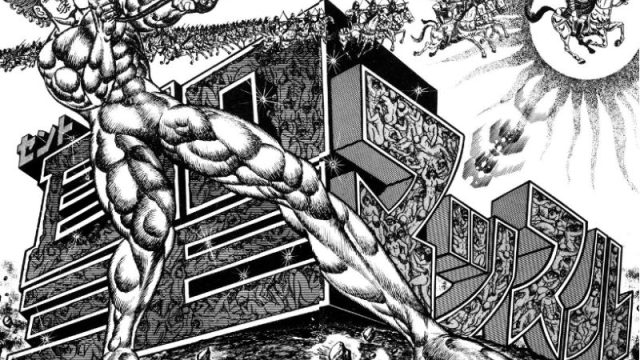
From 1972 to 1973, he serialized “The Moon” in “Weekly Shōnen Sunday,” an unconventional robot manga depicting nine children who operate a giant robot known as “The Moon.”
The period drama manga “Haguregumo,” which began serialization in the seinen manga magazine “Big Comic Original” in 1973, became a hit and received the 24th Shogakukan Manga Award (1978). Its serialization continued until 2017, making it a long-running series spanning 44 years.
From 1980 to 1984, he serialized the adult-oriented manga “Pink no Curtain” in “Weekly Manga Goraku.”
He passed away in 2020 at the age of 77.
Publication History
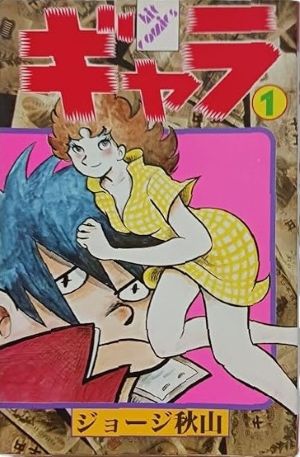
Shōnen Gahōsha’s “Weekly Shōnen King” Edition “Gyara”
“Gyara” was serialized in Shōnen Gahōsha’s shōnen manga magazine “Weekly Shōnen King” from issue no. 45 of 1979 to issue no. 17 of 1981.
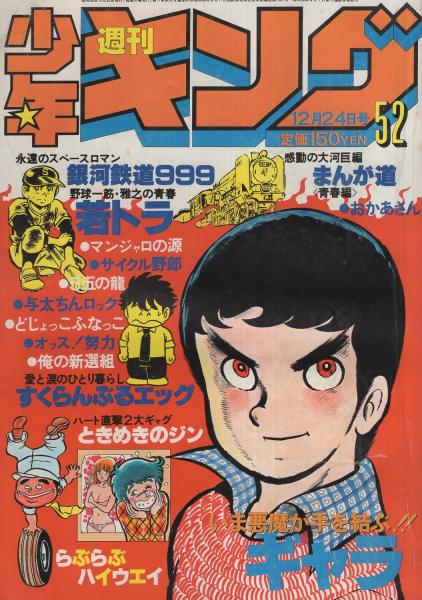
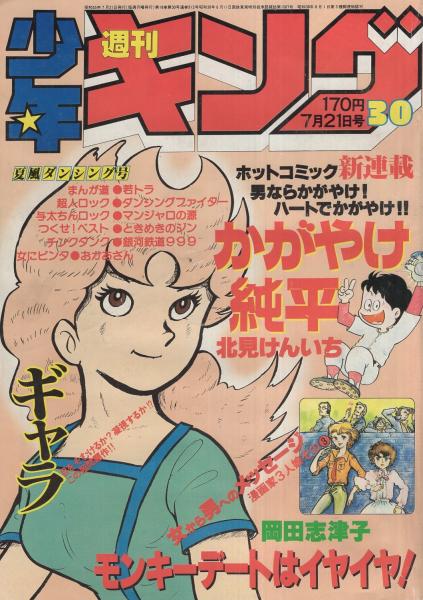
Collected volumes (eight in total) were published between 1980 and 1981 under Shōnen Gahōsha’s Hit Comics label.
Shōdensha’s “Comic Nostradamus” Edition “Gaki (Gyara)”
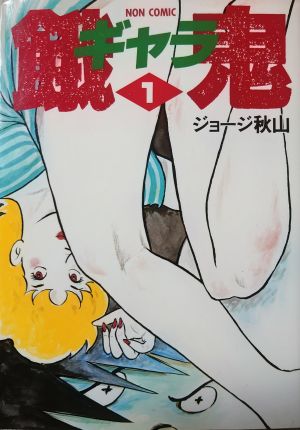
“Gyara” was republished in Shōdensha’s seinen manga magazine “Comic Nostradamus” (1983–1985) under the title “Gaki (Gyara),” and in 1984 the first collected volume was released under Shōdensha’s Non Comic label.
“Comic Nostradamus” ceased publication in 1985, and no volumes of the second of “Gaki (Gyara)” onward were ever published.
The first volume of “Gaki (Gyara)” (Non Comic edition, Shōdensha) contains the same material as volume 1 of the Hit Comics edition published by Shōnen Gahōsha.
Plot Summary
Azami Yamada is abused by his father and despised by people at school and in his community because of his ugly appearance and stupidity.
He meets a mysterious and beautiful girl who calls herself Beniko. She confesses her love to him.
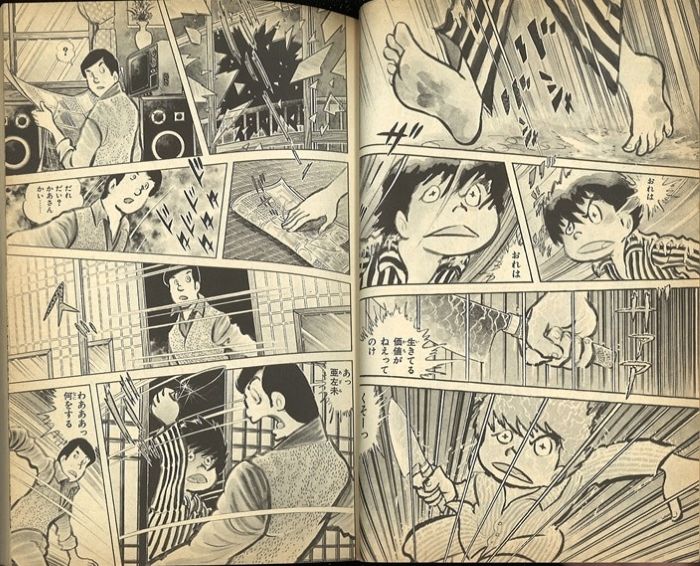
Enraged after his father denies him the right to live, Azami stabs his father to death. Beniko assists him and destroys the evidence of the murder.
Beniko’s true identity is revealed to be a boy named Naoki Shintenkai, disguised as a girl.
Naoki tells Azami that, having committed murder, he has no choice but to live as a villain, and proposes that they become wealthy together through moneylending.
Azami enters into a homosexual relationship with Naoki, and together they accumulate crimes—murder, usury, assault, extortion, and fraud.
Azami finds joy in dominating others with the power of money and pushes forward down the path of evil, but he is originally a gentle and kind boy, and deep down he continues to seek love.
He meets Haruka Yamakawa, a visually impaired girl. She treats him with kindness.
Naoki incites Azami to assault Haruka; however, upon realizing that Haruka is a person possessed of a spirit of philanthropy and self-sacrifice, Azami is unable to assault her, and Naoki curses Azami as a traitor.
Azami and Naoki begin a fight to the death.
Commentary
On the Title
In standard Japanese usage, “gyara” is an abbreviation of “guarantee,” meaning an appearance fee or remuneration. However, the meaning of the title “Gyara” is not explained within the work itself.
Drawing Style
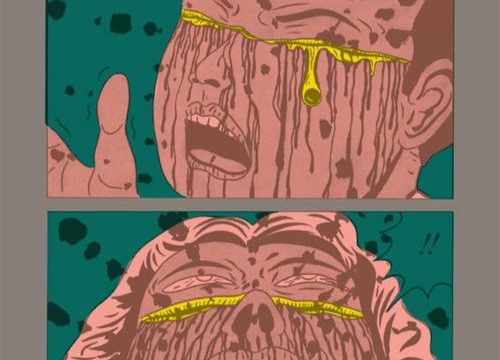
George Akiyama’s manga is known for its distinctive visual style, which combines character designs rendered in rounded, comedy-manga-derived lines with a gekiga-like touch. It is characterized by a psychological mode of depiction that prioritizes the expression of emotion over strict realism, and this work likewise follows that stylistic approach.
In the latter half, large panels and full-bleed ones depicting full-body, sensuously rendered images of female characters are frequently used.
A Controversial Work Inheriting the Themes of “Zeni Geba” and “Ashura”
“Gyara” is a controversial work in which George Akiyama develops, within the framework of shōnen manga, the themes he pursued in “Zeni Geba” and “Ashura.”
“Gyara” inherits from “Zeni Geba” the theme of “money and evil” (money worship and crime), and it shares the same basic setting: a socially discriminated against and marginalized individual seeks revenge on society through the power of money and criminal acts.
Its story development—in which the protagonist, a boy who appears to be a junior high school student, enters into a homosexual relationship with another boy and accumulates crimes including murder and sexual assault—was extremely unusual for shōnen manga of its time.
As a work of shōnen manga, this piece contains no explicit sexual depictions; however, it does include portrayals of murder, brutal violence, nudity, and sexual harassment.
Story Development
In terms of narrative typology, the work can be classified as an anti-hero story centered on a criminal protagonist.
The early part incorporates elements of an inverted mystery and crime suspense, while the middle section provides a sense of catharsis through revenge for readers who identify with Azami.
The Theme of the Conflict Between “Evil” and “Love”
In the final phase of this work, Azami’s anguish is depicted as he is caught between two opposing principles: “evil,” represented by Naoki (Beniko), and “love,” represented by Haruka.
In the final phase, the relationship between Azami and Haruka resembles that between Raskolnikov and Sonya in Dostoevsky’s “Crime and Punishment” (1866).
The Aspiration for the Recovery of Humanity and Religious Salvation
In “Ashura,” Akiyama exposed the true nature of human beings under extreme conditions—such as famine so severe that cannibalism takes place—and from there sought a path leading to the recovery of humanity and to religious salvation; similarly, in “Gyara,” he explores the possibility of a recovery of love and the attainment of atonement from the very extremity of evil, and the conclusion presents a path of religious salvation for the sinner.
A “Phantom” Work Difficult to Read
The collected volumes of this work are out of print and have never been reissued, rendering it a “phantom” work that is difficult to obtain and read.
A Movement Toward Reissue
In 2001, a reader-voting request campaign for the reissue of George Akiyama’s “Gyara” was launched on Fukkan Dot Com, a publishing and e-book service that brings out-of-print and unavailable books back into circulation based on readers’ voting requests.

Remake
Takumi Kobayashi’s manga “Gyara: Invitation to Evil (Gyara: Aku e no Shōtai),” serialized in the seinen manga magazine “Young King BULL” from 2019 to 2020 (Part I complete), is a remake of this work. In the remake version, the protagonist is reimagined as a high school student.

Synopsis (with Spoilers)
Azami Yamada’s father is a handsome elite who graduated from the University of Tokyo and works at a prestigious company. Azami’s mother loves him, but his father despises him for being unlike himself—ugly and stupid. He is likewise looked down upon by those at school and in his community.
Azami meets a mysterious and beautiful girl who calls herself Beniko, who confesses her love to him and foretells that he will kill his father.
Azami is abused by his father, who tells him, ”You don’t deserve to be alive” and ”Fuck off and die,” which causes him to become furious and stabs his father to death just as Beniko predicted.
Beniko destroys the evidence that Azami killed his father and pretends to be the culprit who stabbed Azami’s father to death in front of Azami’s mother and runs away.
Beniko is in fact Naoki Shintenkai, a boy who lives with his older sister Natsuko after losing their parents in a car accident.
Though outwardly a kind and friendly boy, Naoki is in truth a cold and ruthless criminal who commits murder and assault without hesitation.
He gives Azami one million yen. Naoki tells Azami that since he committed the murder, he has no choice but to live as a villain, and that they should work together as moneylenders and become very rich.
A detective investigating the murder of Azami’s father begins to suspect Azami and Naoki, but Naoki and Natsuko conspire to frame him as a sexual offender. The detective is transferred to Hokkaido and removed from the case.
Azami and Naoki enter into a homosexual relationship and continue committing crimes together.
They kill Azami’s uncle, who attempts to take Azami’s money, and disguise the death as a traffic accident.
Azami conspires with Naoki to make Hitomi Tashiro, a classmate who looked down on Azami, borrow a large amount of money, tells Hitomi to turn into a pig if she can’t repay the debt, and then strips Hitomi completely naked and sits astride her.
Azami and Naoki learn that Azami’s homeroom teacher, Sonoko, is having an affair with the principal, who has a wife and children, and that the principal has fraudulently embezzled the school’s money. The two blackmail the principal and Ms. Sonoko, telling them to do as they say if they don’t want their secrets revealed, and extort money from the principal, forcing Ms. Sonoko to jog 30 laps around the schoolyard naked.
Azami tests whether Maria Morikawa, a girl who treats everyone kindly, will maintain her kindness even when subjected to cruelty.
Maria lives with her mother, who runs a bar, but the bar is on the verge of bankruptcy and the Morikawa family is in financial trouble. Azami and Naoki lend money to Maria’s mother, induce her to take on a large amount of debt, and squeeze a large amount of interest from Maria’s mother.
Maria throws away her kind attitude toward Azami and violently insults him, calling him “an ugly beast, not just in your face, but in your heart.”
A woman named Tamami Shimojō, the daughter of the president of a large company, appears in front of Azami and asks Azami to lend him money.
Azami and Naoki try to defraud Tamami of money, but the woman turns out to be a fraudster using Tamami’s name. In turn, the woman defrauds Azami and Naoki of money, takes the title to the bar from Maria’s mother, sells it for 20 million yen, and disappears.
Naoki plans to make money by selling other people’s land. Azami and Naoki try to defraud a man who is looking for land of his money, but the man’s daughter Asako sees through their lie. They rob the man of fifty million yen.
Azami finds joy in dominating others with the power of money and pushes forward down the path of evil, but Azami is originally a gentle and kind boy, and deep down he continues to seek love.
Azami meets Haruka Yamakawa, a visually impaired girl, and they become friends. She treats Azami kindly, even reciting passages from the Bible to him.
Naoki tells Azami that the reason Haruka is kind to Azami is because she can’t see Azami’s face, and that if she sees that ugly face, she will definitely hate Azami, and incites Azami to sexually assault her.
Upon coming to understand that Haruka is a person who pours forth unconditional love equally upon all and possesses a spirit that does not shrink from self-sacrifice, Azami is unable to assault her, and Naoki curses him as a traitor.
Azami and Naoki begin a fight to the death.