























































































Overview
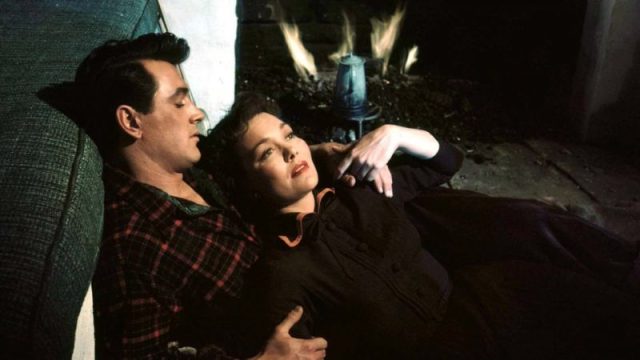
“All That Heaven Allows” is a 1955 American melodrama film directed by Douglas Sirk. Set in a small New England town, it follows the romance between a wealthy middle-aged widow and a younger gardener, and the pressure from a class-conscious community that stands in its way. The film runs 89 minutes and was shot in Technicolor.
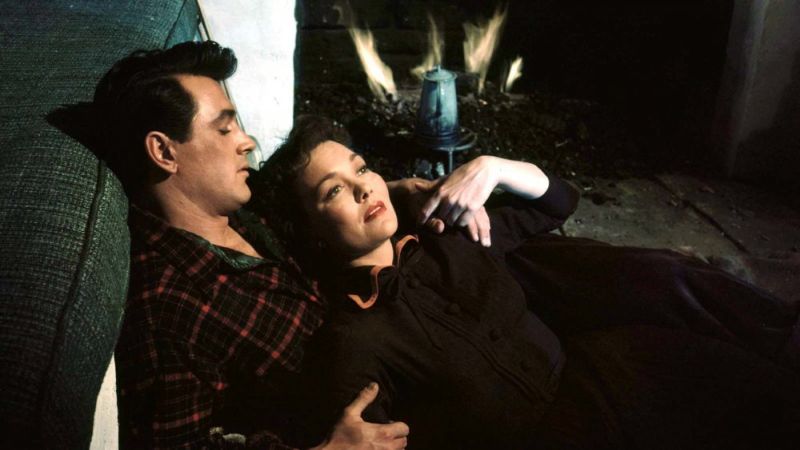
The story is by Edna L. Lee and Harry Lee, and the screenplay is by Peg Fenwick. It was produced by Universal-International, with Ross Hunter as producer. Jane Wyman and Rock Hudson reunited after “Magnificent Obsession” (1954).
The film was a commercial success on release, but critics were not especially warm toward it. From the 1970s onward, as Sirk’s work was reevaluated, it came to be regarded as a melodrama that critiques American class society and consumer culture. It was also a major influence on Rainer Werner Fassbinder’s “Ali: Fear Eats the Soul” (1974) and Todd Haynes’s “Far from Heaven” (2002).
- Producer: Ross Hunter
- Production company: Universal-International
- Distributor: Universal-International
- Story: Edna L. Lee, Harry Lee
- Screenplay: Peg Fenwick
- Cinematography: Russell Metty
- Editing: Frank Gross
- Music: Frank Skinner
- Art direction: Alexander Golitzen, Eric Orbom
- Main cast: Jane Wyman (Cary Scott), Rock Hudson (Ron Kirby), Agnes Moorehead (Sara Warren), Conrad Nagel (Harvey), Virginia Grey (Alida Anderson), Gloria Talbott (Kay Scott), William Reynolds (Ned Scott), Jacqueline deWit (Mona Plash), Charles Drake (Mick Anderson)
- Language: English
- Technical specifications: 35 mm film, Technicolor. The negative aspect ratio is 1.37:1. On release it was exhibited in ratios ranging from 1.37:1 to 2.00:1, depending on the theater. The Criterion edition presents it at 1.75:1.
- Budget: Unknown
- Box office: North American rentals of approximately $3.1 million
Trailer
Plot Overview
In Stoningham, a town in suburban New England, Cary Scott, a wealthy, middle-aged widow, leads a monotonous life in a house to which her college-age son, Ned, and daughter, Kay, return only on weekends. At a private social club, her friend Sara and others urge her to find a new husband, and a suitor, Harvey, appears, but Cary has no interest in remarrying.
One day she becomes friendly with Ron Kirby, a young man who tends her garden and runs a tree nursery. Ron took over the gardening work from his father. A naturalist devoted to Henry David Thoreau’s “Walden” (1854), he lives simply, free of any concern for wealth or status. Through Ron’s circle of friends, Cary encounters values very different from those of her social club, and the two are drawn to each other.
Cary accepts Ron’s proposal, but their relationship, which crosses class lines, draws cold reactions and malicious gossip from the club’s members. Her children also oppose the marriage fiercely, and Cary breaks off the relationship. She soon regrets having failed to stand by her own wishes out of concern for appearances, and sets out to see Ron. She turns back partway, and when Ron sees her leaving and tries to run after her, he falls from a cliff and is seriously injured.
Commentary
Production and Background
“Magnificent Obsession,” produced by Ross Hunter, directed by Sirk, and starring Wyman and Hudson, was a box-office success in 1954. Universal-International made this film with the same team. Afterward, Sirk and Hunter went on to produce a string of melodramas for the studio, including “Written on the Wind” (1956) and “Imitation of Life” (1959).
Sirk was a German-born director who had worked at UFA in the 1930s. He left Nazi Germany in 1937 and later worked as a director in Hollywood. The melodramas he made at Universal in the 1950s were often dismissed at the time as popular “women’s pictures.” The screenplay of this film weaves a social perspective on class and public appearances into the framework of that genre.
“Sirk on Sirk” (1971), a book of interviews in which Jon Halliday had Sirk discuss his own films, became an important source for later reevaluations of his work.
Casting
Jane Wyman was an accomplished actress who won the Academy Award for Best Actress for “Johnny Belinda” (1948).
Rock Hudson was one of Universal’s leading stars of the 1950s. Here he embodied a sincere, unpretentious young man without social standing.
Color and Visual Style
Cinematographer Russell Metty lit Sirk’s Universal films in a way that made full use of Technicolor’s rich palette. Colors such as red, blue, and yellow reflect the characters’ emotions and the tension of a scene.
The use of windows, glass, and mirrors is also distinctive. When Cary receives a television set from her children as a Christmas gift, her isolated figure is reflected in the blank screen. This scene is among the most frequently discussed images in the film. By framing characters through windows and mirrors, Sirk visually conveys the distance between them and their surroundings, or the way society binds them.
Thematic Analysis
Class and Social Standing
At the heart of the story is the conflict between the values of the upper class and the way of life of Ron and his friends. The members of Cary’s social club condemn her choice on the grounds of Ron’s economic position and occupation. Her children, too, put their family’s reputation and their own standing ahead of their mother’s happiness.
Consumer Society and Loneliness
The television set symbolizes both material comfort and spiritual loneliness. Instead of supporting their mother’s love, the children give her a commodity and consider the problem settled. Ron, who lives out the simple way of life described in Thoreau’s “Walden,” stands in contrast to this consumerist outlook.
Gender and Age
In the film, a middle-aged widow’s intention to marry a younger man meets with fierce social condemnation, whereas Harvey, a male suitor, faces no such criticism. Cary’s private feelings are interpreted by those around her within a framework of “impropriety” and “sexual desire.” The scene in which her daughter, Kay, tries to explain her mother’s romance in psychoanalytic terms is a prime example.
Interpreting the Ending
In the ending, Cary returns to the seriously injured Ron, and a deer appears outside the window. Critics have been divided over whether to take this as a straightforward happy ending celebrating the triumph of love, or as an ending tinged with irony toward the conventions of the genre.
Release
The film was released in the United Kingdom on August 25, 1955. In the United States, it opened in Los Angeles on December 25, 1955, and in New York on February 28, 1956.
Reception
Critical response at the time of release was not especially favorable, particularly in comparison with the film’s commercial success. Bosley Crowther of “The New York Times” described it as frank women’s fiction and criticized what he saw as forced emotion and facile clichés. “Variety” also found Cary’s characterization weak and Hudson’s performance somewhat wooden. “Motion Picture Daily,” on the other hand, praised the Technicolor photography and the mise-en-scène, so some notices were favorable.
From the 1970s onward, Sirk’s work was reevaluated by French critical journals such as “Cahiers du Cinéma” and by British critics. Thomas Elsaesser discussed the family melodrama in his 1972 essay “Tales of Sound and Fury,” and Laura Mulvey discussed Sirk in her 1977 essay “Notes on Sirk and Melodrama.” Through these debates, Sirk’s popular form came to be reread as carrying a critical view of American society.
On Rotten Tomatoes, the film holds a 91% approval rating based on 32 reviews, with an average rating of 8.1/10, at the time of writing.
In 1995, the film was selected for preservation in the United States National Film Registry.
Influence
Rainer Werner Fassbinder, a director known for his admiration of Sirk, published an essay on Sirk in 1971. Fassbinder’s “Ali: Fear Eats the Soul” (1974) depicts the romance between Emmi, a cleaning woman in her sixties, and Ali, a younger Moroccan laborer. The setup, in which the two face the prejudices of those around them over class, age, and race, is modeled on this film, and the work is regarded as something close to a remake.
Todd Haynes’s “Far from Heaven” (2002) is set in Hartford, Connecticut, in 1957. In it, a housewife, Cathy (Julianne Moore), confronts not class but other norms, namely race and sexual orientation, through her husband’s homosexuality and her relationship with Raymond, a Black gardener. The film deliberately carries on this film’s story and visual style.
Home Media
In the United States, the film has been released on DVD and Blu-ray by the Criterion Collection. The DVD was released in 2001, and the Blu-ray (a dual-format edition) on June 10, 2014.
Search Links
Cross-Search for “All That Heaven Allows” on JustWatch
Search for “All That Heaven Allows” on Amazon.com
Plot Summary (Spoilers)
Cary Scott, a wealthy widow living in Stoningham, lives in a house to which her son, Ned, and daughter, Kay, return from college only on weekends. At a private social club she attends at the invitation of her friend Sara, men such as Harvey court her, but Cary has no interest in remarrying.
One day, Cary talks with Ron Kirby, a gardener who has come to tend a tree at her home. Ron works as a gardener while growing trees at his nursery. Cary visits the nursery and meets Ron’s circle of friends, including the couple Mick and Alida. Ron lives in a converted old mill, and he lives by the simple, self-reliant way of life described in Thoreau’s “Walden.”
The two grow close and eventually fall in love. Ron proposes, and Cary accepts. She takes Ron to an event at the social club, where he is met with cold stares as “the gardener.” Mona Plash, a gossip, sees the two together and spreads a malicious rumor suggesting that the relationship began while Cary’s husband was still alive.
Cary tells her children of her decision to marry. Ned objects violently, and Kay, too, opposes the marriage, explaining her mother’s romance in psychoanalytic terms such as the Oedipus complex. Shaken by concern for appearances and by her children’s reaction, Cary chooses to part from Ron. At Christmas, her children give her a television set, as if to make up for her loneliness.
Afterward, Cary begins to suffer from headaches. Her doctor, Dr. Hennessy, diagnoses the cause as psychological and advises her to do what she wants. Cary goes to visit Ron but turns back partway. Ron, returning from a hunt, sees her leaving, tries to run after her, and falls from a cliff, seriously injuring himself. Cary rushes to Ron’s side and stays with him as he recovers. In the snow outside the window, a deer appears.