






















































Overview
“In Vanda’s Room” (original Portuguese title: No Quarto da Vanda) is a 2000 feature film by Portuguese film director Pedro Costa. Set in the impoverished Fontainhas district on the outskirts of Lisbon, the capital city of Portugal, it captures the daily life of heroin addict Vanda Duarte and the surrounding residents. It is the second film in Costa’s Fontainhas trilogy (following “Ossos” in 1997 and preceding “Colossal Youth” in 2006).
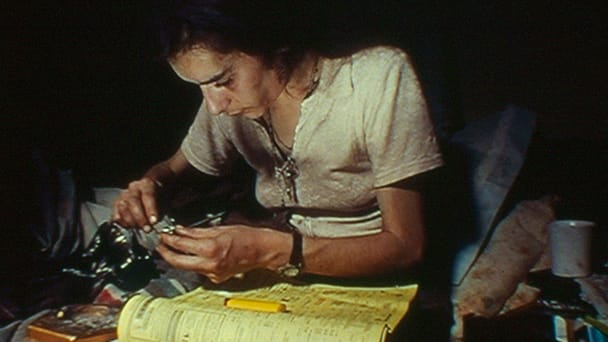
Following Vanda’s appearance in the narrative feature “Ossos,” Costa shifted from large-scale 35mm production to shooting with a small digital video camera and minimal crew over nearly two years on location. The film blurs the boundaries between fiction and documentary, employing long takes with static shots and utilizing natural and ambient indoor lighting. At 171 minutes, it eschews dramatic plotting in favor of an observational structure.
An international co-production primarily between Portugal, Germany, and Switzerland (with participation from Italy and others).
Production companies include Contracosta Produções (Portugal), Pandora Film (Germany), Ventura Film (Switzerland), among others.
Directed, written, and photographed by Pedro Costa.
Edited by Dominique Auvray and Patricia Saramago.
Main cast features Vanda Duarte, Lena Duarte (her mother), Zita Duarte (her sister), Nhurro, Paulo, Pango, and other local residents appearing as themselves.
Languages: Portuguese (with some Cape Verdean Creole).
Aspect ratio: 1.33:1 (4:3).
Trailer
Synopsis
The setting is Fontainhas, a poor immigrant neighborhood on the outskirts of Lisbon.
The film has no clear plot. Centered on Vanda’s small room, it presents fragmented scenes of the daily lives of the neighborhood’s residents as urban redevelopment and demolition advance. Outside, the constant sound of bulldozers and excavators echoes through the area.
The camera remains fixed for long periods on interiors of rooms, alleyways, and crumbling buildings, recording people’s movements, voices, and material surroundings. Dramatic events rarely occur; instead, the rhythms of the residents’ lives unfold in parallel with the physical destruction of the district.
Vanda Duarte is a heroin addict who spends most of her time in bed. Her face is gaunt, her body unhealthily thin, and she coughs violently at times. She nominally sells vegetables on the streets. She deeply loves her mother, Lena Duarte, but her father has left the household and her relationship with a male family member presumed to be her stepfather is strained. Her sister Nela is in prison, and Vanda recounts visiting her there. The family also cares for what appears to be the imprisoned sister’s child. Her sister Zita also smokes heroin together with Vanda.
The young Cape Verdean man Pango (António “Pango” Semedo) lives nearby and is considering moving. Nhurro, Vanda’s childhood friend, has recently been evicted and appears with a birdcage. He visits Vanda’s room for extended conversations about the past, life, and fate. Nhurro’s friend Paulo has a disabled left leg and walks with crutches. The two men inject heroin together in dark rooms and discuss past troubles, regrets, their mothers, and the hardships of street life.
Commentary
Release
Premiered at the Locarno International Film Festival in August 2000.
Production Background
After questioning the large crew and high costs of 35mm feature filmmaking on his previous work “Ossos,” Costa returned to Fontainhas. Building on his relationship with Vanda and the other residents, he began shooting with a small DV camera (such as Panasonic models), working almost alone or with a minimal crew. He accumulated over 180 hours of footage, which he later edited down to about three hours. Lighting was restricted to natural light, indoor illumination, and basic reflectors, as he pursued 35mm-level image quality through digital means.
The background includes the poverty, drug problems, and forced relocation due to urban redevelopment in a neighborhood inhabited largely by immigrant workers from Cape Verde, Portugal’s former colony. Costa lived with the residents for extended periods, transforming their lived experiences into cinematic form through the act of filming.
Characteristics as a Film
The defining feature of the film is its intense preoccupation with the materiality of space and the duration of time.
Shot in low-light conditions, the film emphasizes the contrast between dark areas and light, strongly foregrounding the material conditions of the space—such as the walls of the room, furniture, and the bodies of the inhabitants.
Static long takes meticulously record the details of the room, light from the windows, and the subtle movements of the characters. The contrasts of light and shadow create painterly compositions reminiscent of Renaissance to Baroque styles. Sound is also a crucial element; coughs, conversations, the noise of demolition machinery, and silence itself actively construct the space.
While fictional elements (rehearsals and staging) are present, the non-professional performers essentially play versions of themselves, basing their actions on daily routines. This results in an extremely strong documentary texture.
The film eliminates dramatic developments and internal psychological portrayal, placing emphasis not on the reenactment of events but on the sustained material and corporeal reality itself.
Evaluation and Reception
Critics have highly praised the film as a groundbreaking work that opened new possibilities for digital cinema. On Rotten Tomatoes, it holds a 100% approval rating, although based on a limited number of reviews. On the other hand, its long runtime and slow, deliberate pace make it a challenging and difficult work for general audiences.
In academic and critical circles, the film is frequently discussed in relation to neorealism, the rigorous austerity of Robert Bresson, and postcolonial representations of immigrant labor.
Awards
- 2001 Yamagata International Documentary Film Festival FIPRESCI Prize
- 2002 Cannes Film Festival France Culture Award (Foreign Cineaste of the Year, Pedro Costa)
Influence
The film marked a major turning point in Pedro Costa’s filmmaking style. It laid the foundation for subsequent works, such as “Colossal Youth,” in which he continued to follow the residents after their relocation.
By demonstrating a viable model for low-budget, small-scale digital production, the film influenced trends in observational cinema and docufiction.
Additionally, it remains an important visual archive documenting the now-demolished Fontainhas area.
Search Links
Cross-Search for “In Vanda’s Room” on JustWatch
Search for “In Vanda’s Room” on Amazon.com