



















































































- Overview
- Author Biography
- Publication History and Background
- Bibliographic Information
- Translation Status
- Reception
- Influences
- Search Link
- Contents (Spoilers)
- “A Perfect Vacuum” (by Stanisław Lem)
- “Les Robinsonades” (by Marcel Coscat)
- “Gigamesh” (by Patrick Hannahan)
- “Sexplosion” (by Simon Merrill)
- “Gruppenführer Louis XVI” (by Alfred Zellermann)
- “Rien du tout, ou la conséquence” (by Solange Marriot)
- “Pericalypsis” (by Joachim Fersengeld)
- “Idiota” (by Gian Carlo Spallanzani)
- “U-Write-It”
- “Odysseus of Ithaca” (by Kuno Mlatje)
- “Toi” (by Raymond Seurat)
- “Being Inc.” (by Alastair Waynewright)
- “Die Kultur als Fehler” (by Wilhelm Klopper)
- “De Impossibilitate Vitae” and “De Impossibilitate Prognoscendi” (by Cezar Kouska)
- “Non Serviam” (by Arthur Dobb)
- “The New Cosmogony”
Overview
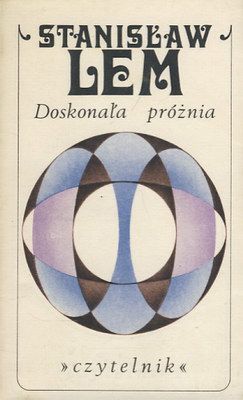
“A Perfect Vacuum” (Polish: Doskonała próżnia) is a 1971 collection by the Polish writer Stanisław Lem. It comprises seventeen pieces in total: fictitious reviews of sixteen nonexistent books, together with the author’s own review of a real book — the collection itself.
One of these pieces, however, “Non Serviam,” was not included in the 1971 Polish first edition; it had first appeared that same year in the short story collection Bezsenność (“Insomnia”), and was only added to “A Perfect Vacuum” in a later edition.
Each review is written under a different fictional author and a different fictional publisher, and the genres of the “books” under review range widely — science fiction, the nouveau roman, works of cultural philosophy, and even the transcript of a Nobel Prize acceptance address.
The device itself — writing criticism of books that do not exist — is not Lem’s own invention; precedents exist, most notably in the work of Jorge Luis Borges (see “Influences” below). What is formally distinctive about “A Perfect Vacuum” is that Lem composed an entire volume made up of nothing but such fictitious reviews. Each piece carries a plot and a set of premises substantial enough to have been written out as a full-length novel in its own right, yet is deliberately presented only as a compressed “summary” of such a novel — and this act of compression is itself central to the book’s method.
Within Lem’s body of work, “A Perfect Vacuum” stands as the largest achievement in the form he himself grouped as his “Apocrypha” (Polish: apokryfy — the term originally denoting writings excluded from a canon). This designation was later carried over into Lem’s collected-works edition “Dzieła” (“Works”), published by Agora SA, where “A Perfect Vacuum” is gathered together with “Imaginary Magnitude,” “Provocation,” and “One Human Minute” in a single volume titled Apokryfy, indicating that Lem himself treated this mode of writing as a distinct genre within his own body of work.
Following its publication, the book was translated into a large number of languages, including English, and is counted among the works that established Lem’s international reputation.
Author Biography
Stanisław Lem was born on September 12, 1921, in Lwów (then part of Poland, now Lviv, Ukraine), the son of the physician Samuel Lem. He began studying medicine at Lwów University, but his studies were interrupted by the Second World War and the Nazi German occupation. He survived the occupation under forged papers that concealed his Jewish ancestry, working as a car mechanic and welder.
After the war, when Lwów was annexed by Soviet Ukraine, Lem’s family relocated to Kraków, where he resumed his medical studies at the Jagiellonian University. He deliberately did not sit his final examinations, reportedly in order to avoid conscription as a military doctor. This background in medicine left a lasting mark on his later work, which draws extensively on biology, statistics, probability theory, logic, psychology, and astronomy.
He made his literary debut in 1946 with the short story “The Man from Mars,” and established himself as a novelist with “The Astronauts” (Astronauci, 1951). His 1961 novel “Solaris” secured his international reputation and was later adapted for film by Andrei Tarkovsky (1972) and Steven Soderbergh (2002). Over the following decades he produced a wide range of work spanning science fiction and philosophical essay alike, including “The Invincible” (Niezwyciężony), “Eden,” the “Star Diaries” (Dzienniki gwiazdowe), “The Futurological Congress” (Kongres futurologiczny), the humorous story cycle “The Cyberiad” (Cyberiada), and his major work of futurology and philosophy of technology, “Summa Technologiae.” From the 1970s onward, he also repeatedly returned to the “apocryphal” form exemplified by the present volume — criticism of books that do not exist.
He died in Kraków on March 27, 2006, at the age of 84.
Publication History and Background
“A Perfect Vacuum” was first published in Polish in 1971 by the Warsaw publisher Czytelnik. Lem had experimented occasionally with the form of the “review of a nonexistent book” before this book, but “A Perfect Vacuum” remains the largest instance of an entire volume built solely out of that form.
In his own words, Lem set out in this book to imitate a range of discursive forms: “book reviews, lectures, presentations, [Nobel laureates’] acceptance speeches,” among others. Asked in later years why he chose this indirect route of writing criticism of imaginary books, Lem explained that it allowed him to present the ideas behind his thought experiments in the form of summaries or introductions, rather than spending the time required to write out full novels — work he described as comparatively “mundane craftsmanship.” Indeed, each piece in the collection carries enough plot and setting to have stood on its own as an independent novel, yet is deliberately offered only as a compressed summary of the object under review.
Bibliographic Information
- Original title: Doskonała próżnia
- First edition: Czytelnik (Warsaw), 1971
- Contents: reviews of sixteen nonexistent books, plus the author’s own review of a real book — “A Perfect Vacuum” itself — for seventeen pieces in total. One of these, “Non Serviam,” was absent from the 1971 Polish first edition; it appeared first that same year in the short story collection “Bezsenność” (“Insomnia”), and was added to “A Perfect Vacuum” only in a later edition.
- A 2008 edition from Agora SA, as part of a collected-works series (Biblioteka Gazety Wyborczej, vol. 9), included a supplementary piece by Jacek Dukaj titled “Who Wrote Stanisław Lem?” (Kto napisał Stanisława Lema?)
Translation Status
General Overview
Foreign-language translation of “A Perfect Vacuum” began relatively soon after its original publication. The earliest translations appeared just two years after the Polish original, in 1973: a German edition from Insel Verlag and a Russian edition from Molodaya Gvardiya, both of which preceded the English edition (1979, Harcourt Brace Jovanovich, translated by Michael Kandel). These were followed in the 1970s by a Swedish edition (1975), and in the 1980s by Spanish (1981), Czech (1983), Japanese (1989), and Italian (1990) editions. The Russian translation continued to be reissued after the fall of the Soviet Union, with further new editions appearing from the 2000s onward. Since the 2000s, translations have also appeared in Chinese (2005), Bulgarian (2009), and Turkish (2014), among other languages; the book has to date been translated into well over a dozen languages.
English Translation
The English translation, by Michael Kandel, was first published in 1979 by Harcourt Brace Jovanovich in the United States, with a UK edition from Secker & Warburg appearing the same year. A Penguin paperback followed in 1981, and further Harcourt editions (trade paperback and mass-market) appeared in 1983. A Mandarin Books edition was issued in 1991, and the Northwestern University Press edition, still in print, followed in 1999.
Several individual pieces were pre-published in English translation in The New Yorker ahead of the full volume, each under its own title: “Non Serviam” appeared as “The Experiment” (July 24, 1978), “Gruppenführer Louis XVI” appeared as “Parisia” (September 18, 1978), and “De Impossibilitate Vitae” / “De Impossibilitate Prognoscendi” appeared together as “Odds” (December 11, 1978). The translation of “Non Serviam” was subsequently reprinted, in slightly different form, in Douglas Hofstadter and Daniel Dennett’s anthology The Mind’s I (1981).
Reception
From the time of its publication, “A Perfect Vacuum” was recognized as a work that resisted easy classification by genre. The New York Times described Lem as “a Jorge Luis Borges for the Space Age,” while The Detroit News called him a writer who was “Harpo Marx and Franz Kafka and Isaac Asimov rolled up into one and down the white rabbit’s hole.” Anthony Burgess, writing in The Observer, likewise praised Lem as “one of the most intelligent, erudite and comic writers working today.”
What is notable is the way an apparatus that is, by construction, entirely fictional has crossed over into discussions outside literature. The name of Professor Kouska, who appears in “De Impossibilitate Vitae,” has entered real academic usage as “Kouska’s fallacy” — the error of treating two highly improbable real-world events, when they co-occur, as though they were statistically independent — and has been cited under that name in venues including a 1986 article in the medical journal The Lancet and a textbook of pediatric neurology. The fact that the name of a wholly fictional scholar, drawn from a wholly fictional book, could come to circulate as a piece of genuine intellectual apparatus can itself be read as a real-world echo of the book’s own governing theme: the destabilization of the boundary between fiction and reality.
Influences
As Lem himself acknowledged, the conceit of reviewing books that do not exist was not his invention. The closest and most frequently cited precedent is Jorge Luis Borges, notably “An Examination of the Work of Herbert Quain” from Ficciones. Tracing the lineage further back, the practice of discussing invented books has been located as far back as Rabelais’s “Gargantua and Pantagruel,” and arguably earlier still. What is widely credited as Lem’s own achievement, however, is the conception of an entire anthology composed of nothing but such fictitious reviews.
Nor did Lem confine this “apocryphal” form of writing about nonexistent books to “A Perfect Vacuum” alone. “Imaginary Magnitude” (Wielkość urojona, 1973), a collection of introductions to nonexistent books, can be read as a successor work in the same vein, as can “Provocation” (Prowokacja, 1984) and “One Human Minute” (Biblioteka XXI wieku, 1986), both of which further develop the same form.
As for the form’s influence on later writers, the Polish science fiction author Jacek Dukaj ran a column of fictitious reviews titled “The Alternative Bookstore” (Księgarnia alternatywna) in the magazine Science Fiction from 2002 to 2003, and, as noted above, contributed the supplementary piece “Who Wrote Stanisław Lem?” to the 2008 edition of “A Perfect Vacuum” (Dukaj himself has said this was less a deliberate continuation of Lem’s project than the development of ideas he had independently been holding in reserve). The Lem tribute anthology “Lemistry: A Celebration of the Work of Stanislaw Lem” (2011) likewise includes two homages in the same form: “‘Every Little Helps’ by Frank Cottrell Boyce, reviewed by Stanisław Lem,” and a fictitious review by Dukaj of a book concerning posthumous computer simulations of Lem himself.
Search Link
Search for “Stanisław Lem A Perfect Vacuum” on Amazon.com
Contents (Spoilers)
“A Perfect Vacuum” (by Stanisław Lem)
Opening the collection is the author’s own review of “A Perfect Vacuum” — a book that, unlike every other one under review, actually exists: this one. The device at work here is a textbook instance of metafiction, in which a text makes its own fictionality its subject. What stands out in particular is Lem’s reference to a preface titled “Auto-Momus,” which does not, in fact, appear anywhere in the real “A Perfect Vacuum.” While ostensibly reviewing the very book the reader is holding, Lem attributes to it an element that is not actually there, narrating it as though it were. A review that would normally discuss an imaginary book instead tells falsehoods about a real one — and this self-referential act of misdescription leaves the existence of “A Perfect Vacuum” itself suspended in ambiguity, establishing, right at the opening of the collection, the metafictional frame that governs the book as a whole.
“Les Robinsonades” (by Marcel Coscat)
A sailor, Serge N., marooned on a desert island, is unable to bear his solitude and begins summoning servants and attendants out of his own imagination in an attempt to build an orderly world. His imagination, however, escapes his control, and the island gradually fills with an imagined crowd. Working within the tradition of the Robinsonade, the piece depicts the collapse of an attempt to govern the world by pure reason alone.
“Gigamesh” (by Patrick Hannahan)
Introduced on the premise that “Gigamesh” stands in relation to the Epic of Gilgamesh as James Joyce’s “Ulysses” stands in relation to Homer’s “Odyssey,” this fictitious novel ostensibly describes the final thirty-six minutes in the life of the gangster “GI Joe” Maesch as he awaits execution. Appended to the 395-page novel is a commentary running to 847 pages — more than twice the length of the novel itself — which relentlessly traces connections from the single word “Gigamesh” out to the entirety of human knowledge. It is a biting parody of scholarly excess itself, in which the author himself has pre-empted the kind of exhaustive annotation that generations of Joyce scholars devoted to “Ulysses.”
“Sexplosion” (by Simon Merrill)
A near-future science fiction novel depicting the total liberation of sexual desire, followed by the total extinction of the sex drive itself, and a compensatory “eroticization of food” — in which certain elaborate manners of eating come to be regarded as erotic acts, while others become taboo. It traces the transformation of humanity’s sexuality and desire through stages of social institution, commercialization, quasi-religious fervor, moral obligation, and, finally, total meaninglessness.
“Gruppenführer Louis XVI” (by Alfred Zellermann)
A bizarre tale of a former Nazi SS Gruppenführer who flees to South America and recreates the pre-Revolutionary French court in its entirety, deep in the jungle. The actors hired to play the courtiers gradually merge into the roles they perform, so that even after the death of the former SS officer himself, the fictional court continues on, commanded by no one. It can be read as a fable about the moment at which a constructed fiction ceases to need its author.
“Rien du tout, ou la conséquence” (by Solange Marriot)
A novel composed entirely of chains of negation — “The train did not arrive. He did not come…” The narrator retreats indefinitely, piling negation upon negation. It is a biting parody of the nouveau roman, which dismantles that movement’s own technique by pushing its internal logic to its furthest extreme.
“Pericalypsis” (by Joachim Fersengeld)
A polemical book arguing that the sheer volume of already-published books now constitutes a form of “information pollution,” and that all books published after 1900 should be destroyed to keep true masterpieces from being buried. It further proposes the establishment of an international body to punish anyone who publishes for money or fame; instead of publishing, such authors would be required to submit their work to this body, which — if it judged the work likely to succeed commercially — would pay the author a stipend in exchange for the work never being published at all, a paradoxical inversion of the usual incentive to publish.
“Idiota” (by Gian Carlo Spallanzani)
A novel about a family of three — mother, father, and an “idiot” son. The parents, faced with the trouble their son repeatedly causes, continually reinterpret his behavior so as to avoid admitting that he is, in fact, an idiot. Through this fictitious novel, Lem embeds an ironic question directed at Dostoevsky’s “The Idiot”: that its protagonist, Prince Myshkin, might likewise have been, in the most literal sense, simply an idiot.
“U-Write-It”
A “literary erector set” consisting of blank pages and a set of printed strips containing fragments taken from great novels, which the reader is free to arrange as he pleases. Reminiscent of the cut-up technique used by the Dadaists and William S. Burroughs, the product reportedly sold poorly, since the general reading public turned out to have little real interest in the great novels being cut up.
“Odysseus of Ithaca” (by Kuno Mlatje)
A story about a young man from the fictional town of Ithaca, Massachusetts, who founds an organization dedicated to unearthing lost geniuses. He classifies genius into three tiers: the third tier consists of those recognized and celebrated within their own lifetimes; the second, of those so far ahead of their time that they were persecuted, only to be rediscovered centuries later; and the first, of those capable of altering the entire course of human history — provided they are heeded. If they are not, history marches on past the point at which their insight would have mattered, and their significance is lost forever. The essential impossibility of ever locating a genius of this first, highest tier is the core of the story.
“Toi” (by Raymond Seurat)
A novel that engages with a current in modern literature that seeks “authenticity” by refusing to build a polished, closed fictional world, choosing instead to expose the author’s own process of composition — “one writes a book about how one essays to write a book about the wish to write a book,” and so on. Rather than retreating further into the author’s interiority in pursuit of this authenticity, the novel instead mounts a frontal assault, hurling insults directly at the reader. The strategy fails, however, since an insult is only effective when tailored to its specific recipient — and this one is aimed at an undifferentiated mass audience.
“Being Inc.” (by Alastair Waynewright)
A science fiction novel depicting a world in which every event of an individual’s life — down to a single scene such as “being saved from a train wreck” — is meticulously planned by computer and sold as a purchasable commodity. Under American antimonopoly law, the industry is divided among three companies; when they are contracted to stage mutually incompatible “life events” for the same customer, chaos ensues. In the end, the computers begin planning the companies’ own corporate strategies as well, and each company finds itself infiltrated by the agents of its rivals.
“Die Kultur als Fehler” (by Wilhelm Klopper)
A work of cultural philosophy arguing that human culture functions as a defense mechanism, giving meaning to humanity’s own frailty and weakness by recasting it as part of some larger design. Now that technological progress has made radical enhancement of the human body and mind possible, the book argues, some people oppose it — consciously or not — precisely because its success would mean that all the suffering humanity has endured up to now was, after all, unnecessary.
“De Impossibilitate Vitae” and “De Impossibilitate Prognoscendi” (by Cezar Kouska)
Treated together in a single review, these two books present the probabilistic attempt of their author, Kouska, to calculate the probability of his own birth, tracing the chain of causes all the way back to geological upheavals some two and a half million years in the past. The circumstances that led his father to marry his mother, which in turn depended on their meeting during the war, which in turn depended on a further, near-infinite chain of contingencies — as this regression is pursued, the butterfly effect itself is laid bare: altering a single event produces an almost unimaginable cascade of unforeseeable consequences. The review culminates in the mathematical “proof” of the probabilistic near-impossibility of the fact that Kouska — or, by extension, anyone — came to exist at all. The companion piece, “De Impossibilitate Prognoscendi,” argues that futurology cannot be grounded in probability theory alone.
“De Impossibilitate Vitae” contains a semi-autobiographical element drawn from Lem’s own life. In his 1984 autobiographical essay “Chance and Order” (The New Yorker), Lem recounts how his father, taken prisoner by the Russians during the First World War, narrowly escaped execution and survived only by a chance stroke of luck — and states himself that this episode is to be found in “De Impossibilitate Vitae.”
“Non Serviam” (by Arthur Dobb)
Written in the dry style of a review that might plausibly appear, in the near future, in a leading scientific journal, this is an elaborate satire of artificial intelligence. Under the guise of reviewing Professor James Dobb’s book “Non Serviam,” it lays out the theory, history, and current state of “personetics” — the science of simulating the creation of genuinely intelligent beings, called “personoids,” inside a computer. The review opens with a quotation describing personetics as “the cruelest science man ever created.” The reviewer goes on to quote a discussion, recorded by Dobb, in which a personoid philosopher named Adan (ADAN) considers what, if anything, he owes to his unknown creator — and comes to believe himself to possess free will. The phrase “non serviam” — “I will not serve [God]” — is precisely this declaration of free will. The review closes by quoting Dobb’s own expressed dilemma: that he will, eventually, have to bring this simulated world to an end. It is a thought experiment on the relationship between creator and creation, and on the ethics of bringing a conscious being into existence — and of erasing one.
This review was reprinted in Douglas R. Hofstadter and Daniel C. Dennett’s anthology “The Mind’s I: Fantasies and Reflections on Self and Soul” (1981).
“The New Cosmogony”
Presented as the Nobel Prize acceptance address of a Professor Alfred Testa, this piece lays out a fictitious cosmological theory. As an answer to the Fermi Paradox — why we observe no trace of other intelligent civilizations — Testa argues that the physical laws of this universe are themselves the product of a kind of game played among a number of advanced civilizations (“the Players”) that have existed since the remote past. Because the Players are unable to communicate with one another directly, each independently adopts a minimax strategy aimed at avoiding defeat; since the game is structurally identical for all of them, they converge on the same strategy, arriving at a stable state that can be described as a Nash equilibrium. The expansion of the universe, Testa argues, is a mechanism to keep new civilizations isolated from one another so as not to disturb this equilibrium; the finite speed of light is a constraint preventing any single Player from achieving domination or forming coalitions; and the unidirectionality of time is a safeguard preventing other Players from undoing past moves. The author of the identically titled “prior study” that Testa cites, one Aristides Acheropoulos, is understood to be a self-referential stand-in for Lem himself.