



























































































Overview
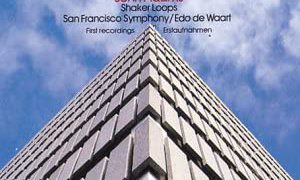
“Octet; Music For A Large Ensemble; Violin Phase” is an album of works by the American composer Steve Reich, released in 1980 by ECM Records.
It was recorded between February and March 1980 and performed by Steve Reich and Musicians, the ensemble led by the composer himself.
The album contains three compositions written between the late 1960s and late 1970s and represents an important recording documenting the development of Reich’s minimalist style.
Repetition, phasing processes, steady pulse, and cyclical harmonic patterns—hallmarks of Reich’s music—are realized through different instrumental ensembles.

Biography of the Composer
Steve Reich (born 1936) is one of the leading composers associated with minimal music in the late twentieth century.
Born in New York, he studied at Cornell University and the Juilliard School, later working with Luciano Berio at Mills College.
In the mid-1960s he discovered the phasing technique in tape works such as “It’s Gonna Rain” (1965), later applying the process to instrumental compositions.
From the late 1960s through the 1970s he established an international reputation with works such as “Piano Phase” (1967), “Drumming” (1971), and “Music for 18 Musicians” (1974–1976), becoming a central figure in the minimalism movement.
Background of the Production
The album was produced as a follow-up to Reich’s 1978 ECM release “Music for 18 Musicians.”
Recording sessions took place at Columbia Recording Studios in New York and Tonstudio Bauer in Germany, and the album was produced by ECM founder Manfred Eicher.
Track Descriptions
The total duration is about 48 minutes.
1. Music for a Large Ensemble (1978) – 15:28
This work was composed in 1978 and commissioned by the Holland Festival, receiving its premiere in Utrecht in 1979.
It is scored for a large ensemble including flute, clarinets, soprano saxophones, trumpets, strings, four pianos, percussion instruments such as marimbas and vibraphone, and female voices.
The piece is organized into four sections, with harmonic changes marked by the metallophone.
Short musical cells expand and contract while interlocking with one another, producing a vivid rhythmic texture.
2. Violin Phase (1967) – 15:09
“Violin Phase,” composed in 1967, is one of Reich’s classic phasing works.
It is typically performed by four violins, or by violin with tape. Multiple performers repeat the same melodic pattern while gradually shifting out of phase, producing new patterns of rhythm and melody.
This work, following “Piano Phase,” is an important piece in which Reich presents his phasing technique in a more clearly articulated form.
3. Octet (1979) – 17:29
“Octet,” composed in 1979, is a chamber work later revised in 1983 as “Eight Lines.”
It is scored for string quartet, two pianos, and two woodwind players each playing clarinet, bass clarinet and flute as well as piccolo.
The piece features transparent harmonies and interlocking pulses, with piano and woodwind patterns gradually evolving over time.
Release History
The album was released on LP in 1980. It was later reissued on CD in 1987.
Streaming Services
Search Links
Search for “Steve Reich Octet Music For A Large Ensemble Violin Phase” on Amazon.com
Search for “Steve Reich Octet Music For A Large Ensemble Violin Phase” on Apple Music