
































































Overview
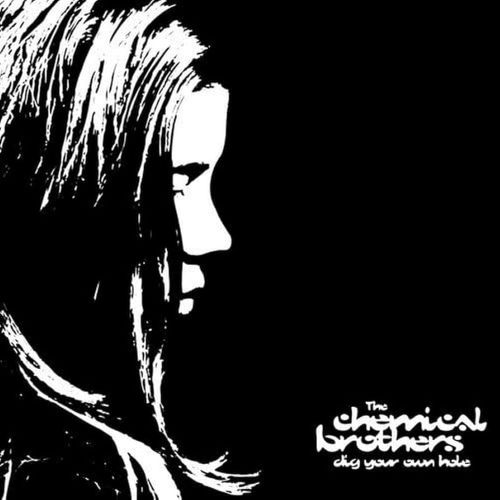
“Dig Your Own Hole” is the second studio album by the English electronic music duo The Chemical Brothers, composed of Tom Rowlands and Ed Simons.
It was released on 7 April 1997 in the United Kingdom and the United States, through Freestyle Dust / Virgin Records (UK) and Astralwerks (US).
The album combines big beat, techno, acid house, and psychedelic rock elements, and stands as one of the defining works of the late-1990s big beat movement.
Background of the Production
Tom Rowlands (born 1971, Kingston upon Thames) and Ed Simons (born 1970, Oxford) met as students at the University of Manchester in 1989. Initially performing under the name The Dust Brothers, they were renamed The Chemical Brothers in 1995 following a legal challenge from the American production duo of the same name.
Their debut album “Exit Planet Dust” (1995), featuring collaborations with vocalist Beth Orton and Tim Burgess of The Charlatans, reached number 9 on the UK Albums Chart and established their template of sampling-heavy, guitar-inflected electronic music.
Recording of “Dig Your Own Hole” took place at Orinoco Studios in South London between 1996 and 1997. The production relied on hardware including Roland TB-303 bass synthesizers and TR-909 and TR-808 drum machines. The album was self-produced with full creative autonomy through Freestyle Dust, a subsidiary of Virgin Records.
Commentary
The album reached number 1 on the UK Albums Chart and number 14 on the US Billboard 200, substantially exceeding the commercial performance of its predecessor.
The production draws on big beat, acid house, hip-hop breakbeats, and psychedelic rock.
The instrumentation centers on Roland drum machines and TB-303 bass synthesizers alongside sampled material drawn from soul, funk, and rock sources. Most tracks take the form of extended grooves rather than conventional song structures.
The album received broadly positive reviews upon release. Retrospective assessments have consistently cited it as a defining document of the big beat era.
From a music-historical perspective, the album draws on the hip-hop sampling aesthetics of Public Enemy, the first wave of UK acid house and Detroit techno, and the psychedelic rock and Madchester sounds of the late 1980s and early 1990s.
Along with The Prodigy’s “The Fat of the Land” (1997) and Fatboy Slim’s “You’ve Come a Long Way, Baby” (1998), it represents the commercial peak of the big beat movement.
The Chemical Brothers continued releasing albums in subsequent years, moving toward a broader electronic sound from “Surrender” (1999) onward.
Track Commentary
“Block Rockin’ Beats” (5:14) is the second single, released in 1997. It combines a drum sample from Bernard Purdie, a bass line from 23 Skidoo, and a vocal sample from Schoolly D. It reached number 1 on the UK Singles Chart and won the Grammy Award for Best Rock Instrumental Performance at the 40th Grammy Awards (1998).
“Dig Your Own Hole” (5:27), the title track, centers on a TB-303 bass line over a breakbeat pattern and is one of the most explicitly acid house-influenced tracks on the album.
“Elektrobank” (8:18) is a high-tempo, percussion-dense track with minimal melodic content. Released as the third single, it reached number 17 on the UK Singles Chart. The music video was directed by Spike Jonze.
“Piku” (4:54) is a short, interludial track built around processed synthesizer tones and horn samples. It features a distinctive stuttered, rhythmic feel that gives it a glitchy and highly percussive character.
“Setting Sun” (5:29), featuring guitar and vocals by Noel Gallagher of Oasis, is built around a processed sample of the drum pattern from The Beatles’ “Tomorrow Never Knows” (1966). Released as the first single in 1996 before the album, it reached number 1 on the UK Singles Chart.
“It Doesn’t Matter” (6:14) is a track characterized by a heavy, mechanical drum beat, a repetitive vocal sample, and a psychedelic, distorted synthesizer loop.
“Don’t Stop the Rock” (4:50) combines funky samples with electronic percussion to create a repetitive, high-energy track designed for club play. Its relentless loop and driving groove make it a potent dancefloor weapon.
“Get Up on It Like This” (2:47) is a short, bass-heavy groove-oriented piece with a strong funky feel. It also incorporates subtle Latin percussion elements, adding a lively and danceable flavor to the track.
“Lost in the K-Hole” (3:52) takes a repetitive, hypnotic structure over a minimal rhythmic framework.
“Where Do I Begin?” (6:56) features vocals by Beth Orton and is the most conventionally song-structured track on the album.
“The Private Psychedelic Reel” (9:22), the closing track, draws most explicitly on psychedelic rock influences, moving through multiple distinct sections over nearly nine minutes.
Track Listing
Total duration: approximately 63 minutes 22 seconds.
Side One
- “Block Rockin’ Beats” – 5:14
- “Dig Your Own Hole” – 5:27
- “Elektrobank” – 8:18
- “Piku” – 4:54
- “Setting Sun” (featuring Noel Gallagher) – 5:29
Side Two
- “It Doesn’t Matter” – 6:14
- “Don’t Stop the Rock” – 4:50
- “Get Up on It Like This” – 2:47
- “Lost in the K-Hole” – 3:52
- “Where Do I Begin?” (featuring Beth Orton) – 6:56
- “The Private Psychedelic Reel” – 9:22
Personnel
The Chemical Brothers
- Tom Rowlands – production, programming, synthesizers, sampling
- Ed Simons – production, programming, synthesizers, sampling
Guest performers
- Noel Gallagher (of Oasis) – guitar, vocals on “Setting Sun”
- Beth Orton – vocals on “Where Do I Begin?”
- DJ Kool Herc – vocals on introduction of “Elektrobank”
- Keith Murray – sampled vocals on “Elektrobank”
- Ali Friend – bass on “Dig Your Own Hole” and “Elektrobank”
- Seggs – bass on “Lost in the K-Hole”
- Jonathan Donahue (Mercury Rev) – clarinet on “The Private Psychedelic Reel”
- Simon Phillips – drums
Technical
- Produced by The Chemical Brothers
- Engineered by Steve Dub (with assistance from Jon Collyer and others)
- Mastered by Mike Marsh at Metropolis Studios, London
Streaming Services
Search Links
Search for “Chemical Brothers Dig Your Own Hole” on Amazon.com
Search for “Chemical Brothers Dig Your Own Hole” on Apple Music