



















































Overview
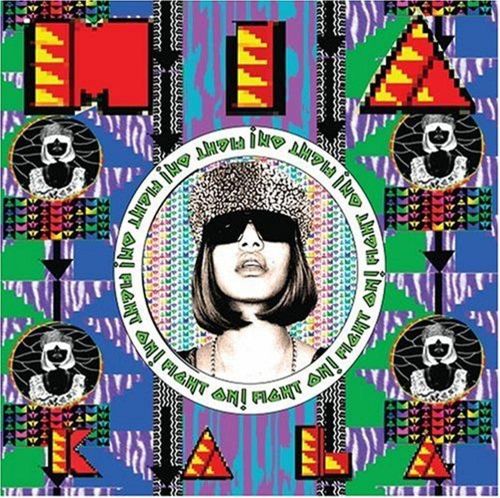
“Kala” is the second studio album by M.I.A. (real name: Mathangi “Maya” Arulpragasam), a British rapper and singer of Sri Lankan Tamil descent born in London in 1975.
It is known for blending hip-hop, dancehall reggae, UK club music (garage, grime), and dance styles from various global sources, with particularly heavy emphasis on global sampling and powerful beat structures.
Background of the Production
While her debut “Arular” (2005) relied heavily on the Roland MC-505 for an electroclash-oriented production, “Kala” adopted a more aggressive, sample-intensive approach.
M.I.A. initially planned extensive collaboration with the music producer Timbaland, but faced difficulties obtaining a long-term US work visa (reportedly due to her family’s political connections in Sri Lanka). She instead recorded across multiple locations—India, Angola, Trinidad and Tobago, Liberia, Jamaica, and Australia—between 2006 and 2007.
The core production was handled by M.I.A. and British house/DJ producer Switch. They made extensive use of Apple’s Logic Pro as the primary DAW (digital audio workstation) and incorporated field recordings and non-studio vocal takes. In India, they recorded a group of Tamil drummers at A.R. Rahman’s studio. Additional contributions came from Diplo, Blaqstarr, Morganics, and others.
Commentary
Released on 8 August 2007 via XL Recordings, the album peaked at No. 18 on the US Billboard 200 and No. 39 on the UK Albums Chart. It topped the US Electronic Albums chart for 2007 and earned RIAA gold certification (500,000 units).
“Bird Flu,” “Boyz,” “Jimmy,” and “Paper Planes” were released as singles.
“Kala” has been widely acclaimed as a masterpiece of alternative dance music. In 2013, “New Musical Express (NME)” ranked it number 184 in its list of the “500 Greatest Albums of All Time.”
Musically, it aggressively incorporates South Asian elements (notably the urumee drum from Tamil Nadu’s gaana music), Bollywood/Tamil film samples, funk carioca, African folk music, and the Australian wind instrument didgeridoo. This creates a “world fusion” promiscuity while maintaining strong dancefloor functionality. Beats are powerful and repetitive; vocals are delivered in a flat, raw style— an intentional choice that has drawn comparisons to British post-punk acts such as Delta 5 and The Slits.
Lyrics address Third World political realities—poverty, illegal immigration, capitalism, gun availability, and violence—but ground them in concrete migratory experiences and sourced audio rather than abstraction.
Key Track Characteristics
- Bamboo Banga: Opens with a bamboo-like percussive beat and house feel; references The Modern Lovers’ “Roadrunner” (1976).
- Bird Flu / Boyz: Prominent urumee drums; reflect work in India and Trinidad with soca influences.
- Jimmy: Adaptation of “Jimmy Jimmy Jimmy Aaja” from the 1982 Bollywood film “Disco Dancer.”
- Hussel (feat. Afrikan Boy): Collaboration with Nigerian-born grime artist Afrikan Boy addressing immigrant realities directly.
- Mango Pickle Down River (feat. The Wilcannia Mob): Incorporates voices from Australian Aboriginal children.
- 20 Dollar: Samples Pixies’ “Where Is My Mind?” (1988) and New Order’s “Blue Monday” (1983) bassline; addresses ease of acquiring AK-47s in Liberia.
- Paper Planes: Signature hit with gunshots and cash register sounds. It tackles visa and immigrant issues, referring to “Straight to Hell” (1982) by the Clash. It reached No. 19 on the UK chart.
Streaming Services
Search Links
Search for “M.I.A. Kala” on Amazon.com
Search for “M.I.A. Kala” on Apple Music