





































Overview
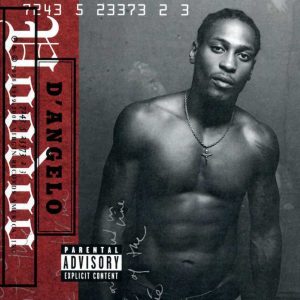
“Voodoo” is the second studio album by American singer-songwriter and producer D’Angelo (real name Michael Eugene Archer). It was released on January 25, 2000, by Virgin Records / Cheeba Sound.
Released approximately five years after his 1995 debut “Brown Sugar,” this album is positioned as a work that expands the framework of neo-soul and organically fuses elements of R&B, funk, jazz, and hip-hop. It consists of 13 tracks with a total running time of approximately 78 minutes and 54 seconds, and almost all of the songs are long-form compositions exceeding four and a half minutes.
Recording took place from 1998 to 1999 at Electric Lady Studios in New York. Centered on the core members of the musical collective known as the Soulquarians, a large number of musicians participated. Immediately after its release, it debuted at number one on the Billboard 200, selling approximately 320,000 copies in its first week. It won the Grammy Award for Best R&B Album and was highly praised by critics as one of the masterpieces of its time.
Background of Production
D’Angelo was born in 1974 in Richmond, Virginia. After becoming familiar with church music from an early age, he emerged as a leading figure of neo-soul in the mid-1990s. While “Brown Sugar” achieved commercial success, the production of the follow-up work was prolonged and involved a period of mental stagnation and a sense of discomfort with the industry.
Around 1997/98, the writing of “Send It On,” prompted by the birth of his son, served as the catalyst for the start of full-scale sessions. The recording base selected was Electric Lady Studios, in whose construction Jimi Hendrix was involved.
The central collaborator was Ahmir “Questlove” Thompson, the drummer of The Roots. Questlove fulfilled a co-producer-like role and shared the direction of the sessions. James Poyser, J Dilla (Jay Dee), Roy Hargrove, Pino Palladino, Charlie Hunter, and others joined, and an environment was created in which artists associated with the Soulquarians, such as Common and Erykah Badu, also recorded in parallel at the same studio. Sessions were often advanced in a form that thoroughly studied the recordings of “heroes” such as Prince, Sly and the Family Stone, James Brown, Curtis Mayfield, and Fela Kuti, and extracted songs from long jam sessions. Analog equipment was extensively used, and a recording approach that emphasized a live feel was adopted. Engineer Russell “The Dragon” Elevado handled the majority of the recording and mixing.
Commentary
The musical core of this album lies in a “drunken” rhythmic feel that intentionally shifts strict meter and orderly structures. Centered on Questlove’s drums and Pino Palladino’s bass, a “time feel” in which the instruments subtly move ahead of or behind one another runs throughout the whole. This is said to have been strongly influenced by J Dilla, and is an approach that actively incorporates human fluctuation rather than following a fixed click. While D’Angelo himself plays the majority of the instruments and constructs multi-layered vocal arrangements, Roy Hargrove’s horns and Charlie Hunter’s guitar/bass add jazz-like improvisation and spatial depth.
The themes are wide-ranging, including sexuality, the complexity of love, criticism of materialism, spirituality, fatherhood, and self-renewal. As the title suggests, an attitude that regards music as a kind of magical and ritualistic act underlies the whole, and it is not merely an extension of neo-soul but an attempt to internalize and reconstruct the history of Black music. The songs take open structures, and in many cases move gradually from the presentation of a theme into improvisational development, demanding active engagement from the listener.
Track Commentary
“Playa Playa” (7:07): A long introductory track. Based on a sample from the Ohio Players, an unstable groove incorporating handclaps gradually gains thickness. Questlove’s drums, Pino Palladino’s bass, Mike Campbell’s guitar, and Roy Hargrove’s horns intertwine, and D’Angelo’s multi-layered vocals sing of swagger (a composed, confident attitude). It is an important track that foreshadows the overall “shifted” rhythmic feel.
“Devil’s Pie” (5:21): The most directly hip-hop track on the album, produced by DJ Premier. Samples from Teddy Pendergrass, Fat Joe, and others are boldly cut and pasted, and a critique of materialism and desire is developed. A heavy beat confronts
D’Angelo’s vocals, shaking the boundary between R&B and hip-hop.
“Left & Right” (4:46): Method Man and Redman handle the raps. Q-Tip participates as vocal percussion. D’Angelo plays almost all the instruments and mixes Funkadelic-like uproar with sensuality. It is a track that prioritizes the rawness of the groove while being conscious of points of contact with the mainstream hip-hop of the time.
“The Line” (5:15): A turning point of the album. Except for Raphael Saadiq’s guitar, it is almost entirely a multi-tracked performance by D’Angelo alone. Delicate vocal arrangements overlap while shifting the time axis, and quietly speak of personal renewal and an appeal for survival. It is an introspective track that eliminates aggression.
“Send It On” (5:57): A song written against the background of the birth of his son. It quotes and reconstructs Kool & the Gang’s “Sea of Tranquility,” and Roy Hargrove’s flugelhorn and trumpet add lyricism. Taking honesty and trust in love as its theme, Palladino’s bass supports it gracefully.
“Chicken Grease” (4:36): Liberated funk born from a jam after listening to Curtis Mayfield’s “Mother’s Son” and others. The rhythm section of Questlove, Palladino, and James Poyser generates a warped groove, and lyrics praising the mystery of creation ride on it.
“One Mo’Gin” (6:15): A mid-tempo ballad recalling a former lover. Centered on Palladino’s bass, D’Angelo’s vocals unfold introspectively. Conversational fragments in the introduction reinforce a rough and intimate atmosphere.
“The Root” (6:33): A track of minimal yet complex structure in which Charlie Hunter simultaneously handles bass and guitar. While singing of heartbreak and the emptiness of the soul, the multi-layering of vocals leads to a kind of purification.
“Spanish Joint” (5:44): A lively track strongly influenced by Latin jazz. Hunter’s guitar/bass, Giovanni Hidalgo’s congas, Hargrove’s horns, and Questlove’s drums intertwine and take on a collective celebratory quality. It is one of the most extroverted tracks on the album.
“Feel Like Makin’ Love” (6:22): A cover of the hit song written by Eugene McDaniels and recorded by Roberta Flack. Based on the rhythm of Palladino and Questlove, it reinterprets the sweetness of the original into a slow and intimate groove.
“Greatdayndamornin’ / Booty” (7:35): A medley consisting of two parts. It transitions from the first half, which sings of hope and everyday life, to a more sensual second half.
“Untitled (How Does It Feel)” (7:10): A co-write with Raphael Saadiq. A slow jam in which the homage to Prince is clear, with a stop-and-go groove and tactile guitar intersecting. The album version is a long form exceeding seven minutes and quietly heightens sexual and spiritual rapture. It is a track that became widely known through the influence of its music video.
“Africa” (6:13): A closing track themed on fatherhood, ancestry, and legacy. Supported by Questlove’s drums and guitar, it leaves a spiritual aftertaste.
Reception
Commercially, it is a successful work that received platinum certification. Critically, evaluations of it as a “masterpiece” were dominant from the time of its release; “Time” magazine selected it as the best album of 2000, and it ranked 6th in the Pazz & Jop critics’ poll of “The Village Voice.” At the Grammy Awards it won Best R&B Album, and “Untitled (How Does It Feel)” won Best Male R&B Vocal Performance.
In later re-evaluations as well, it has continued to be positioned as a groundbreaking work in R&B/soul of the early 21st century. Its rhythmic innovation, recording approach that emphasized a live feel, and cross-genre integration are pointed out as having exerted a broad influence on subsequent artists. On the other hand, because of its long-form and open-form character, there were cases in which it appeared difficult to listeners expecting commercial catchiness. Overall, in terms of both technical perfection and musical depth, it is internationally recognized as one of the peaks of neo-soul, or a work that surpasses it.
Track Listing
Total approximately 78 minutes 54 seconds.
(Track durations conform to the official CD / major releases. There may be differences of a few seconds depending on the pressing.)
- “Playa Playa” – 7:07
- “Devil’s Pie” – 5:21
- “Left & Right” (feat. Method Man & Redman) – 4:46
- “The Line” – 5:15
- “Send It On” – 5:57
- “Chicken Grease” – 4:36
- “One Mo’Gin” – 6:15
- “The Root” – 6:33
- “Spanish Joint” – 5:44
- “Feel Like Makin’ Love” – 6:22
- “Greatdayndamornin’ / Booty” – 7:35
- “Untitled (How Does It Feel)” – 7:10
- “Africa” – 6:13
Personnel
Main
- D’Angelo – vocals, almost all instruments, arrangements, production, mixing, executive production
Principal Participating Musicians
- Ahmir “Questlove” Thompson – drums, percussion
- Pino Palladino – bass
- Roy Hargrove – trumpet, flugelhorn, horns
- Charlie Hunter – guitar, bass
- Raphael Saadiq – guitar, bass, production (partial)
- James Poyser – keyboards
- Mike “Dino” Campbell – guitar
- C. Edward Alford – guitar
- Giovanni Hidalgo – congas
Guests
- Method Man, Redman – raps (“Left & Right”)
- Q-Tip – vocal percussion (“Left & Right”)
- DJ Premier – production, programming (“Devil’s Pie”)
- Angie Stone – co-writing (partial)
Technical Staff
- Russell “The Dragon” Elevado – recording, mixing
- Steve Mandel – assistant engineer
- Tom Coyne – mastering
- Dominique Trenier – executive production, management
D’Angelo – Voodoo Promo Video
Streaming Services
Search Links
Search for “D’Angelo Voodoo” on Amazon.com
Search for “D’Angelo Voodoo” on Apple Music