
















































Overview
“Spiderland” is the second and final studio album by the American rock band Slint. It was released on March 27, 1991, by Touch and Go Records. The recording was conducted in August 1990 at River North Studios in Chicago, and the engineer was Brian Paulson. The running time is 39 minutes and 31 seconds.
The band’s lineup consisted of Brian McMahan (vocals, guitar), David Pajo (guitar), Todd Brashear (bass), and Britt Walford (drums). Whereas the previous album “Tweez” (1989), produced by Steve Albini, was a relatively fragmentary and experimental work, this album is more structurally organized and develops a sound based on irregular time signatures, abrupt dynamic changes, and contrasts between clean guitar and distortion. The lyrics were written primarily by McMahan and Walford in the studio, and a narrative vocal style is characteristic.
At the time of release the band had already disbanded, and almost no promotion was conducted. Initial sales were sluggish, but evaluations in the British music press served as a trigger for gradually gathering cult support, and it later came to be positioned as a foundational work of post-rock and math rock.
Background of Production
Slint was formed in 1986 in Louisville, Kentucky. The members were teenagers who had participated in the local hardcore punk scene, and although punk influences were initially strong, they gradually shifted toward their own direction. After the recording of “Tweez,” bassist Ethan Buckler left and Brashear joined.
Over the course of the summer of 1990, six pieces centered on McMahan and Walford were rehearsed. The lyrics and vocal melodies were not finalized until immediately before recording and were hurriedly created in the studio. The recording was completed in four days.
Brian Paulson, who handled the engineering, employed a live-oriented recording method and captured the performances in a minimal number of takes.
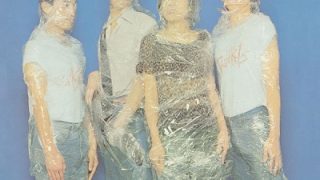
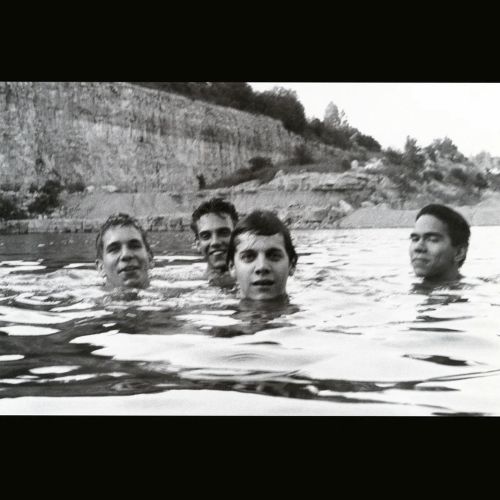
The jacket photograph is by Will Oldham and is a black-and-white photo of the members floating in a quarry lake in Utica, Indiana. The title derives from McMahan’s brother feeling that the music was “spidery.”
The band disbanded before the album’s release.
Production Methods
The recording was conducted using the nighttime slots of a commercial studio. Paulson’s method differed from Albini’s more aggressive approach and had a strong documentary character of capturing the performances as they were. The guitars primarily employed switches between clean tones and high-register harmonics and sharp distortion, with effects pedals kept to a minimum. The drums are characterized by Walford’s complex fills and metric changes, and the bass was handled by Brashear (except on “Don, Aman”).
The song structures combine repetition and non-repetition and emphasize contrasts between quiet and loud. The vocals mix whispering, speaking, and shouting, and the vocal melodies were added after the instrumental tracks were completed.
Reception
At the time of release, critical attention in the United States was limited. On the other hand, in the United Kingdom positive responses were seen, such as Steve Albini rating it “Ten fucking stars” in “Melody Maker.” “NME” gave it a score of 7/10. Evaluations rose with the passage of time, and the 2014 remastered box set recorded a Metacritic score of 99 (based on 11 reviews).
In later reviews, including those from AllMusic and Pitchfork, it has been treated as an important work of 1990s indie/experimental rock, and points particularly often made concern the control of dynamics, the use of space, and the narrative vocal style. Although initial sales were on the order of a few thousand copies, through later reappraisal it became a work that continues to be mentioned.
Relationships of Influence in Music History
“Spiderland” is widely recognized as a work that directly influenced the formation of post-rock and math rock. Elements such as clean guitar lines, abrupt dynamic changes, irregular meters, and speech-centered vocals were inherited by many bands from the late 1990s onward. Mogwai, Godspeed You! Black Emperor, Explosions in the Sky, Tortoise (which Pajo later joined), and others have publicly acknowledged the influence. The methods of quiet-loud contrasts and guitar interplay also spread to post-hardcore, math rock, and some post-metal and emo-related bands.
Whereas the previous album “Tweez” is positioned in the noise/post-hardcore context surrounding Albini, this album is characterized by incorporating guitar treatments reminiscent of Television, Crazy Horse, and the Minutemen, as well as mechanical groove elements reminiscent of AC/DC, while rearranging them within rigorous dynamic control. Immediate influence after release was limited, but from the late 1990s into the 2000s its positioning as a pioneering work became established.
Track Commentary
1. “Breadcrumb Trail” (lyrics and music: Slint)
It is based on switches between clean guitar harmonics and distortion. The lyrics describe a day at a carnival and an exchange with a fortune-teller. Meter and dynamics change frequently.
2. “Nosferatu Man” (lyrics and music: Slint)
A song for which Walford wrote the main guitar riffs. It has a title inspired by the 1922 film “Nosferatu.” It begins with a dissonant riff and a snare- and tom-centered drum pattern, passes through a distorted chorus section, and transitions into an extended groove.
3. “Don, Aman” (lyrics and music: Britt Walford)
Walford handles guitar and vocals. It is a song that was first presented to the other members in the studio. It begins with quiet speech, raises tempo and volume to reach a peak, and then returns to the original tempo. The title is an anagram of “Madonna.”
4. “Washer” (lyrics and music: Slint)
The longest track on the album. It begins with an introduction of low-volume guitar and cymbals, and the full band gradually joins. Distortion enters strongly in the final verse, and it continues into a long outro. Pajo has stated that he is particularly fond of the one-note guitar solo on this track.
5. “For Dinner…” (lyrics and music: Slint)
An instrumental. It employs standard-tuned guitars and is structured around repeating tension and release from quiet chord progressions and muted drum beats.
6. “Good Morning, Captain” (lyrics and music: Slint)
It is based on a two-chord guitar riff and irregular drum patterns. McMahan’s vocals transition from speech to shouting, and it is said that he became physically unwell from straining his voice during recording. The lyrics suggest a maritime disaster, and a connection to Samuel Taylor Coleridge’s poem “The Rime of the Ancient Mariner” (1798) has been pointed out, but the band has denied it.
Track Listing
Total: 39:31
- Breadcrumb Trail – 5:55
- Nosferatu Man – 5:35
- Don, Aman – 6:28
- Washer – 8:50
- For Dinner… – 5:05
- Good Morning, Captain – 7:38
Personnel
Slint
- Brian McMahan – vocals, guitar
- David Pajo – guitar
- Todd Brashear – bass (except on “Don, Aman”)
- Britt Walford – drums, vocals (selected tracks), guitar (“Don, Aman”)
Others
- Brian Paulson – engineering
- Will Oldham – jacket photography
- Noel Saltzman – back-jacket photography (spider)
(Note: The original packaging did not clearly list the members’ names.)
Streaming Services
Search Links
Search for “Slint Spiderland” on Amazon.com
Search for “Slint Spiderland” on Apple Music