






























































Introduction
This article aims to introduce the collection of quatrains known as the “Rubaiyat” (Rubāʿiyāt), attributed to the 11th–12th century Persian scholar Omar Khayyam (Omar Khayyām, 1048–1131; there are some differing views on the exact years of his birth and death), to readers who have not yet encountered the work. It provides an overview of the circumstances of the work’s formation and the questions surrounding authenticity, its principal themes, and the history of its reception, while also critically examining the reasons why the work has been described as “anti-Islamic.”
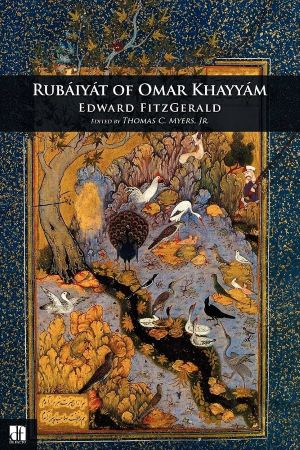
About the Author Omar Khayyam
Khayyam was born in the city of Nishapur in northeastern Persia. The name “Khayyam” means “tent-maker” and is said to derive from his family’s trade. In his own time he was known primarily as a mathematician and astronomer. His most representative achievement is a treatise on algebra in which he solved cubic equations geometrically by means of the intersection of conic sections. Under the Seljuk ruler Malik Shah, he was involved in the late 1070s in observations at an observatory and in calendar reform; the calendar based on this reform is known as the Jalali calendar (said to have been put into effect in 1079).
In contemporary records he appears more as a scientist and philosopher than as a poet, and this fact is closely related to the problem of authenticity discussed below.
What Is the “Rubaiyat”?
“Rubaiyat” is the plural form of the Arabic-derived word “ruba‘i,” which means a quatrain. A ruba‘i typically rhymes in the pattern aaba (the first, second, and fourth lines), and because it is a short, self-contained form, it is well suited to expressing philosophical aphorisms or fleeting emotions. Khayyam’s “Rubaiyat” is not a sequence of poems conceived as a single work, but rather a later compilation of quatrains attributed to him.
The Problem of Authenticity
The greatest difficulty in dealing with the “Rubaiyat” is that it is hard to determine which poems were actually written by Khayyam. The ruba‘i is a form in which authorship easily becomes uncertain, and it is thought that anonymous works gradually accumulated under the name of a famous poet. The number of quatrains included varies greatly from manuscript to manuscript, and the total number of quatrains attributed to Khayyam is said to exceed a thousand. The number regarded as authentic ranges from a very small number (around a dozen or so) to around two hundred, depending on the scholar. For example, Sadegh Hedayat limited those that can be regarded as certainly by Khayyam to 14 and listed around 143 in a broader selection based on similarity of thought and style. Ali Dashti accepts several dozen, while Mohammad Ali Foroughi and others accept around one hundred and several dozen, so there is a considerable range of opinion.
One of the oldest surviving manuscripts is the one held in the Bodleian Library at Oxford University, dated 1460 and containing 158 quatrains; it became one of the base texts for FitzGerald’s translation discussed later. Mentions of quatrains associated with Khayyam’s name appear from roughly a century after his death, but decisive evidence for identifying authentic works is scarce.
Therefore the ideas discussed below should properly be read not strictly as “Khayyam’s personal thought” but as “the thought that appears in the body of quatrains transmitted under Khayyam’s name.”
Principal Themes
Materialist View of Nature and Impermanence
A recognition that frequently appears in the quatrains is that human beings are made from earth and return to earth when they die. The image of earth being reshaped into a jar or vessel, and of that jar speaking about its maker, is a stock motif of this collection. Here one finds a view that treats human beings as material beings without relying on the immortality of the soul or rewards and punishments after death.
Together with this, a sense of the impermanence of all things—that glory and power vanish without a trace—is repeatedly expressed. This sense has sometimes been compared to the Buddhist view of impermanence.
This-Worldly Hedonism
From the recognition of impermanence arises the attitude of enjoying the life one has in one’s hands right now. The speaker of the poems urges us to value the time spent with wine, friends, and the spring countryside rather than worrying about the afterlife or reputation. This has been compared to ancient Greek hedonism and the Roman idea of “carpe diem,” but in Khayyam’s case the hedonism is characteristically presented less as optimism than as a choice made alongside emptiness.
Agnosticism and Fatalism
The speaker of the “Rubaiyat” repeatedly states that no one knows the answers concerning the origin of the world or the fate that awaits after death. Poems of this type say that even the wise and the learned cannot solve the riddle, and that no one has ever returned from the other world to tell the truth. This is closer to agnosticism that acknowledges the limits of human knowledge than to atheism that actively denies the existence of God.
At the same time there is a strong fatalistic sense that human destiny is predetermined and that the revolutions of the heavens are indifferent to human wishes. Poems that liken human beings to pieces moved on a board by the heavens are representative expressions of this idea. There are also poems that question the injustice of a God who creates human beings weak and then punishes their faults. Whether such doubts about divine justice reflect the author’s own position, however, cannot be separated from the problem of authenticity.
Examples of Representative Quatrains
Although very few quatrains can be definitively authenticated, the following are among those that scholars often regard as relatively certain or highly likely to be by Khayyam on the basis of thought and style.
(1) A well-known quatrain on the impermanence of life and the need to live in the present:
این قافلهٔ عمر عجب میگذرد دریاب دمی که با طرب میگذرد ساقی غم فردای حریفان چه خوری پیش آر پیاله را که شب میگذرد
This caravan of life passes strangely.
Seize the moment that passes in joy.
Cupbearer, why worry about your friends’ tomorrow?
Bring the cup, for the night is passing.
(2) A quatrain urging us to abandon the past and the future:
دیروز گذشت و یاد آن مکن
فردا نرسیده و غم آن مکن
بر رفته و نارفته بنیاد مکن
حالی خوش باش و عمر بر باد مکن
Yesterday is gone: do not dwell on it.
Tomorrow has not come: do not grieve over it.
Build nothing on what has passed or has not yet arrived;
be happy now, and do not throw your life to the wind.
(3) A quatrain expressing the material fate of human beings:
گل کوزهگری به کارگاه خود از خاک مرا ساخت و از خون مرا گفتا که به وقت خود بخواهم شکست و آنگه به گل خویش باز خواهم آورد
The potter, in his workshop,
fashioned me from clay and colored me with blood.
He said, “When the time comes I shall break you,
and then return you to my own clay."
These poems concisely illustrate the principal themes of the “Rubaiyat”—impermanence, enjoyment of the present, and the unknowable. Strict authentication remains difficult, however, and they are best read as part of the body of thought transmitted under Khayyam’s name.
On the Aspects Regarded as “Anti-Islamic”
The “Rubaiyat” has often been discussed as a work that goes against Islamic norms. There are three main points of contention.
First is skepticism toward the afterlife and the Last Judgment. This creates tension with orthodox doctrine. In the early thirteenth century (around the 1220s), the mystic Najm al-Din Razi (Najm al-Din Daya) quoted quatrains attributed to Khayyam in his work “Mirsad al-‘Ibad” and critically treated them as showing materialist and atheistic tendencies.
Second is the praise of wine-drinking. Given that the Qur’an forbids the drinking of wine, poems that celebrate wine sound provocative. In Persian poetry, however, the theme of wine has long been a conventional motif. In the Sufi tradition, wine is used as an allegory for love of God or mystical intoxication. Interpretations that read the wine in the “Rubaiyat” allegorically have therefore been proposed. On the other hand, many critics argue that such allegorical readings are hard to reconcile with the skeptical and materialist tone of the poems.
Third is the representation of the cupbearer (saqi) with homoerotic overtones. In classical Persian poetry the cupbearer or the beloved is often depicted as a young man; this is a widespread poetic convention shared even by the fourteenth-century Persian poet Hafez. It is therefore difficult to judge with certainty to what extent this representation in the poems of the “Rubaiyat” reflects the author’s actual views on sexuality.
In light of the above, the characterization “anti-Islamic” is merely a one-sided view. While it is true that the work contains elements incompatible with orthodox faith, the label “atheism” blurs the distinction between agnosticism and skepticism. Moreover, as long as the range of authentic works remains undetermined, one should be cautious about asserting the personal beliefs of the author.
History of Reception
FitzGerald’s English Translation
What made the “Rubaiyat” known worldwide was the English translation by the nineteenth-century British poet Edward FitzGerald. The first edition, published anonymously in 1859 and containing 75 quatrains, sold almost nothing at first, but it was discovered and highly valued by Dante Gabriel Rossetti (a Pre-Raphaelite painter and poet) and Algernon Charles Swinburne (a late Victorian poet), among others.
FitzGerald continued to revise the work through successive editions: the second edition (1868) contains 110 quatrains, and from the third edition (1872) onward it contains 101 (the fourth edition appeared in 1879). This translation is less a faithful rendering of the original poems than a free adaptation that recombines multiple quatrains, and it strongly reflects Victorian sensibilities. By the end of the nineteenth century it had given rise to a kind of fashion, including the formation of the Omar Khayyam Club in London in 1892.
History of Translations
In addition to FitzGerald’s English version, the “Rubaiyat” was successively translated from the latter half of the nineteenth century into French (including J. B. Nicolas’s 1867 edition), German, Russian, Italian, and other European languages; by the twentieth century it had been rendered into almost all the major languages of the world, including those of Asia and the Middle East. While many of these translations are adaptations or retranslations strongly influenced by the FitzGerald version, scholarly critical translations based directly on the original texts also appeared in parallel, and different emphases—skeptical, hedonistic, or mystical—can be seen according to the literary and intellectual circumstances of each country.
Reception in Persia Itself
In Persia itself, Khayyam was long remembered primarily as a mathematician and astronomer, and his reputation as a poet is said to have been limited. In the twentieth century, scholars and writers in the Persian-speaking world began systematically collating manuscripts and selecting authentic works, and his aspect as a poet came to be reevaluated. The writer Sadegh Hedayat read Khayyam’s quatrains from a skeptical, pessimistic, and materialist perspective and introduced them in works such as “The Songs of Khayyam” (Taraneh-haye Khayyam). Critical editions by Mohammad Ali Foroughi and others also advanced, and Khayyam came to be positioned both as a scientist and as a poet who embodied a modern spirit of skepticism. Today the Khayyam Mausoleum in Nishapur has become a cultural symbol visited by many people.
Evaluation and Influence
The “Rubaiyat” is both a classic of Persian literature and a work that has widely influenced poetry around the world. Especially through the English translation, it was received by Western readers as a poem that speaks of Eastern wisdom and the enjoyment of the fleeting moment. At the same time, its reception has depended heavily on the interpretations of its translators, and the gap between the original poems and the image that circulates is a point that should always be kept in mind when reading the work.
Themes of skepticism, impermanence, fate, and enjoyment have been reread repeatedly in eras when religious certainty has been shaken. The “Rubaiyat,” precisely because the determination of authentic works is difficult—or perhaps because of that very difficulty—continues to be read as a collection of poems that takes up the questions of successive ages.