






















































Overview
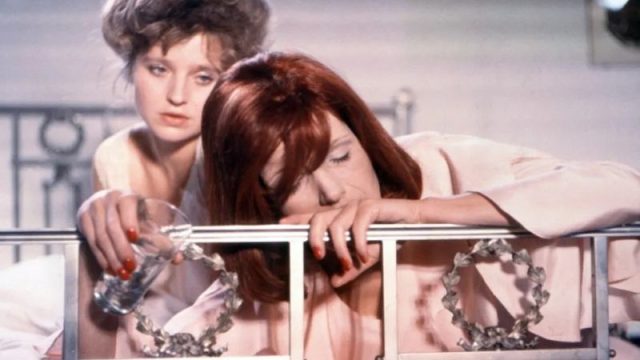
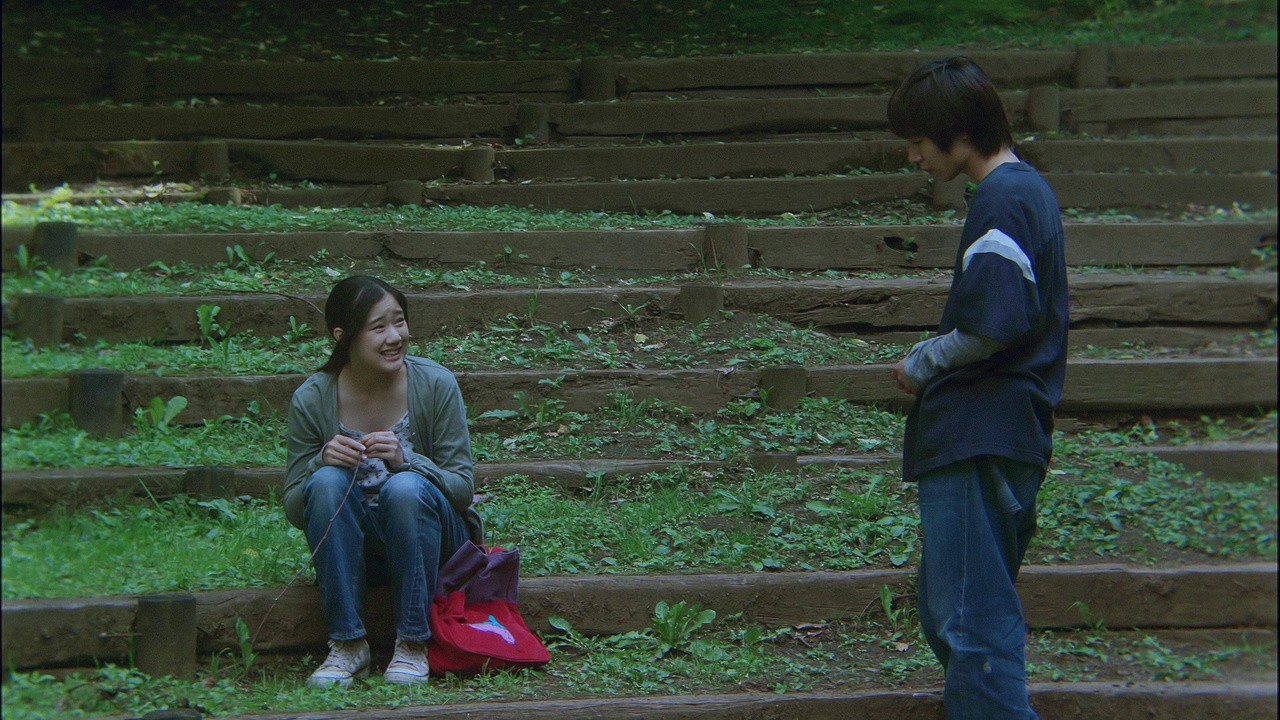
“Hana and Alice” (Japanese title: Hana to Arisu) is a 2004 Japanese teen romance film directed by Shunji Iwai. Iwai served simultaneously as director, screenwriter, producer, editor, and composer.
The film was reconstructed as a feature from a four-part, three-chapter short film series (“The Love of Hana,” “The Storm of Hana I: Secret,” “The Storm of Hana II: Wild Dance,” and “Hana and Alice”) that had been streamed online on March 24, 2003, on “Breaktown,” a website operated by Nestlé Confectionery (now Nestlé Japan) to mark the 30th anniversary of KitKat’s launch in Japan.
Cinematography was overseen by director of photography Noboru Shinoda, with camerawork by Shinichi Tsunoda; production design was by Yohei Taneda.
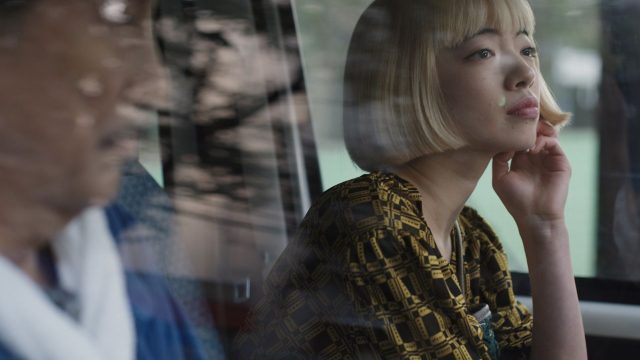
The film stars Anne Suzuki as Hana Arai and Yū Aoi as Tetsuko “Alice” Arisugawa, with Tomohiro Kaku as Masashi Miyamoto.
Supporting cast includes Shoko Aida, Hiroshi Abe, Sei Hiraizumi, Tae Kimura, Takao Osawa, Ryōko Hirosue, Ayumi Ito, and Eri Fuse.
Distributed by Toho. 135 minutes, Academy ratio, color.
The film was theatrically released in Japan on March 13, 2004.
Trailer
Plot Summary
Hana Arai (known as Hana) and her best friend Tetsuko “Alice” Arisugawa are middle school students who attend the same ballet class. One day, Hana develops a crush on a high school boy, Masashi Miyamoto, whom she spots on her way to school, and begins secretly riding his train throughout the winter.
The following spring, Hana and Alice enroll at Miyamoto’s high school. Learning that he belongs to the storytelling club, Hana joins as well. While continuing to secretly follow him, she witnesses him knock himself unconscious against a shutter, and, finding him in a daze, impulsively lies that a blow to the head has given him amnesia and that she is his girlfriend. Miyamoto believes the lie, and the two begin a pretend relationship.
Meanwhile, Alice is scouted by a talent agency and begins auditioning for modeling work. To keep her own lie consistent, Hana enlists Alice to pose as Miyamoto’s ex-girlfriend, which inadvertently causes Miyamoto to fall for Alice. From this point, Hana, Alice, and Miyamoto find themselves caught in a strange love triangle.
Commentary
Production Background
The film was reconstructed by Iwai himself as a feature-length work built on the short film series that had streamed online the previous year (2003) as part of Nestlé’s KitKat 30th-anniversary campaign. The short version is no longer available online, but it is included on the bonus disc of the special-edition DVD of the feature; some scenes in this version were edited or added and differ from the theatrical cut.
Cinematography
Director of photography Noboru Shinoda was a longtime collaborator of Iwai’s, having shot many of his major works, including “Love Letter” (1995), “Swallowtail Butterfly” (1996), “April Story” (1998), and “All About Lily Chou-Chou” (2001). Shinoda died of liver failure on June 22, 2004, about three months after the film’s theatrical release, at age 52; as a result, this film became his final collaboration with Iwai.
The film was shot on HD digital video. Noboru Shinoda served as director of photography, with camerawork handled by Shinichi Tsunoda. It was framed in the Academy ratio (Standard size).
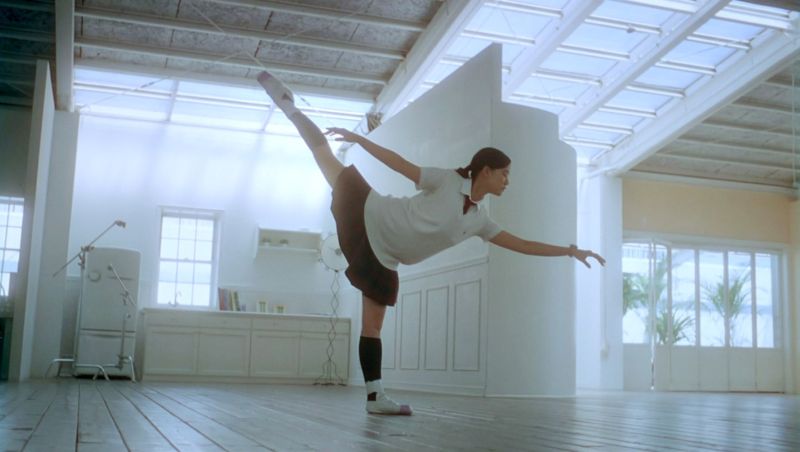
The film’s climactic scene near its end, in which Alice, played by Yū Aoi, improvises a ballet performance at an audition, is widely regarded as one of its highlights. Told mockingly by a photographer to dance if she can really do ballet, Alice wraps her toes in paper cups and packing tape to fashion makeshift pointe shoes and dances in her school uniform; the scene is frequently cited as drawing on Aoi’s own ballet background.
Allusions and Homages
The film contains references to older animated works, including Osamu Tezuka’s “Astro Boy” (1963–1966) and Isao Takahata’s “Horus, Prince of the Sun” (1968), with Tezuka Productions and Toei Animation credited for cooperation in their use. The name of the high school the characters attend, Tezuka High School, can also be read as echoing this set of references.
Additionally, the stage names of the storytelling club’s members—”Hanaya Pyun Pyun Maru,” “Moretsu-tei Atarō,” and “Bakuhatsuya Gorō”—are wordplay derived from the classic anime series “Pyun Pyun Maru” (1967, 1969–1970), “Moretsu Atarō” (1969–1970), and “Bakuhatsu Gorō” (1970), respectively.
Reception
For her performance in the film, Yū Aoi received the Best Actress award at the 14th Japanese Professional Movie Award in 2005.
Spin-offs
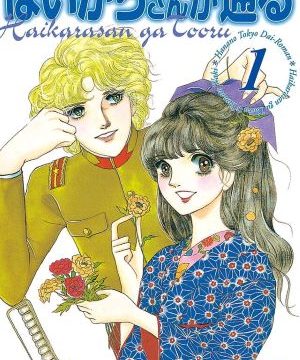
Based on the film, a manga adaptation drawn by Iwai himself from his own storyboards, “Hana and Alice” (Kadokawa Shoten, 2004), and a photo book of an original story, “Hana to Alice Shashinkan,” shot by Noboru Shinoda, Takayuki Inoue, and Ivy Chen and supervised by Iwai (Fusosha, 2004), were both published.
In 2015, a feature-length animated prequel, “The Case of Hana & Alice,” was released. Iwai again wrote and directed, with Yū Aoi and Anne Suzuki reprising their roles as voice actors. The film was made using rotoscoping, in which live-action footage is traced to create animation, and was an official selection in the feature competition at the 2015 Annecy International Animation Film Festival, as well as receiving the Excellence Award in the Animation Division at the 19th Japan Media Arts Festival.
Release
The film was theatrically released in Japan on March 13, 2004, distributed by Toho. It subsequently opened in other Asian territories over 2004 and 2005, while in the West it was introduced not through general theatrical release but through film festival screenings. It screened at the Seattle International Film Festival on June 8, 2005, and also at the New York Asian Film Festival.
Home Media
In Japan, DVD editions (special and standard) were released on October 8, 2004. The special edition includes a bonus disc containing the short film version. An HD-remastered Blu-ray was released by Pony Canyon on September 6, 2012.
Other Notes
The end credits are presented entirely in English, though the credit for cast member Zen Kajihara is misspelled as “Kajiwara Zen” rather than the correct “Kajihara Zen.”
The station and school names that appear in the film are also drawn largely from the names of manga artists.
Search Links
Cross-Search for “Hana and Alice” on JustWatch
Search for “Hana and Alice” on Amazon.com