




















































Overview
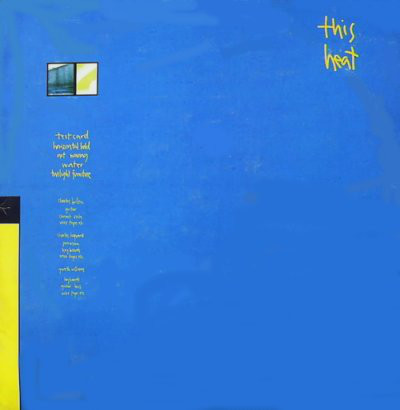
“This Heat” is the self-produced debut studio album by This Heat, an English experimental rock band formed in London in 1976.
It was recorded between 1976 and 1978, and released in 1979 on the British independent label Piano.
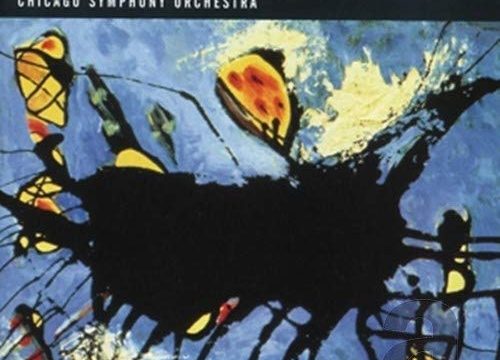
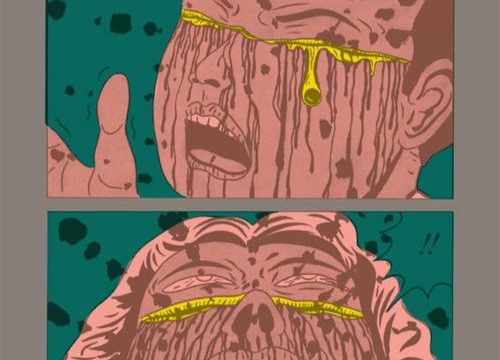
Owing to the minimalist color scheme of its artwork, the album is commonly known among fans by the nickname “Blue and Yellow.”
Background
This Heat was formed in 1976 around Charles Hayward (drums, keyboards, vocals) and Charles Bullen (guitar, clarinet, viola, vocals).
At the time, Hayward was a member of the progressive rock band Quiet Sun, led by Roxy Music guitarist Phil Manzanera, and had worked with Bullen through several groups on London’s improvised music scene, including Radar Favourites and Dolphin Logic.
In 1975, Quiet Sun signed to Island Records and recorded the album “Mainstream,” which was named NME’s Album of the Month and received considerable critical acclaim, but Manzanera stepped down mid-tour to work on a new Roxy Music album; Bullen took his place, and Quiet Sun dissolved shortly afterward.
Following the split, Hayward and Bullen decided to continue working together, and were soon joined by visual artist Gareth Williams (bass, keyboards, vocals), who had no formal musical training but possessed an intuitive ear for sound. The trio, performing under the name Friendly Rifles, played their first gig at the Three Horseshoes in Hampstead on February 13, 1976.
In early 1977, the band received its first radio airplay after sending a demo tape—recorded in an upstairs room at Hayward’s parents’ house in Camberwell—to DJ John Peel.
The debut album was recorded between February 1976 and September 1978, primarily at The Workhouse Studios on Old Kent Road and at Cold Storage in Brixton, using mono/stereo cassette, 2-track, and 24-track reel-to-reel equipment.
Central to the album’s production was the extensive use of tape manipulation and looping, later crystallized in the track “24 Track Loop,” in which two-inch analog tape was used as a rudimentary sampling device.
The band turned down offers from several major labels in order to preserve creative autonomy and independence, and was eventually persuaded by their friend David Cunningham of The Flying Lizards to release the album through his independent label, Piano.
Track Commentary
“Testcard” (0:47) opens the album with a brief track built from tones reminiscent of the monotonous signal accompanying a broadcaster’s test card after the close of transmission.
“Horizontal Hold” (6:56) functions as the effective opening track of the album proper, structured as though fragments recorded in different sessions and different spaces had been spliced together. It begins with guitar and bass chugging captured with a garage-like, distant mic placement, before moving through intermittent guitar ghost notes, a whirlwind of tape-loop sequencing, the strumming of increasingly distorted minor-seventh chords, and dissonant noise and electronic drones. The angular combination of aggressive guitar, driving rhythm, and noise loops has also been described as anticipating, to some degree, the vocabulary of later electronica and drum’n’bass.
“Not Waving” (7:26) is a dark-ambient-leaning piece characterized by strongly dissonant harmonies and slow swells of bass and guitar volume, rising and falling.
“Water” (3:10) is built on gamelan-like percussion, forming a shapeless, brooding drone.
“Twilight Furniture” (5:06) is one of the more accessible pieces on the album, an eerie pop-ballad-like track.
“24 Track Loop” (5:57) is regarded as the centerpiece of the album, built on tape loops that use two-inch analog tape as a rudimentary sampling device. Given that it was made in London in the late 1970s, its structure—built around a circular drum pattern—is frequently cited as anticipating the vocabulary of later jungle and breakbeat music.
“Diet of Worms” (3:09) is an ambient drone piece marked by grating high-pitched tape hiss.
“Music Like Escaping Gas” (3:40) is likewise a drone piece built on tape hiss, structured around the gradual accumulation of fragmentary sound material.
“Music Like Escaping Gas” (3:40) is likewise a drone piece built on tape hiss, structured around the gradual accumulation of fragmentary sound material.
“Rainforest” (2:55) centers on a heavily distorted drum solo.
“The Fall of Saigon” (5:10), like “Horizontal Hold,” is a track built around forceful drumming.
The closing “Testcard” (4:09) forms a closing track paired with the opening track of the same name, ending on a sound reminiscent of the quiet hum of machinery.
Track Listing
Total length: 48 minutes 25 seconds.
Side One
- “Testcard” – 0:47
- “Horizontal Hold” – 6:56
- “Not Waving” – 7:26
- “Water” – 3:10
- “Twilight Furniture” – 5:06
Side Two
- “24 Track Loop” – 5:57
- “Diet of Worms” – 3:09
- “Music Like Escaping Gas” – 3:40
- “Rainforest” – 2:55
- “The Fall of Saigon” – 5:10
- “Testcard” – 4:09
The final track on the original LP’s Side Two (track 11 above) ends in a locked groove cut into the run-out area at the innermost edge of the record.
Personnel
This Heat
- Charles Bullen – vocals, guitar, clarinet, drums, tapes
- Charles Hayward – vocals, drums, keyboards, guitar, bass guitar, tapes
- Gareth Williams – vocals, bass guitar, keyboards, tapes
Technical
- This Heat – production, engineering
- David Cunningham – production, engineering
- Anthony Moore – production
- Chris Blake – engineering
- Frank Bryan – engineering
- Kevin Harrison – engineering
- Rik Walton – engineering
Streaming Services