





















































Overview
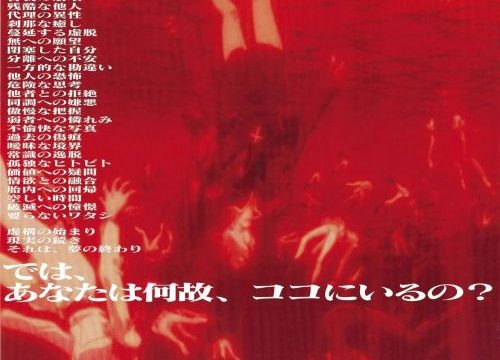
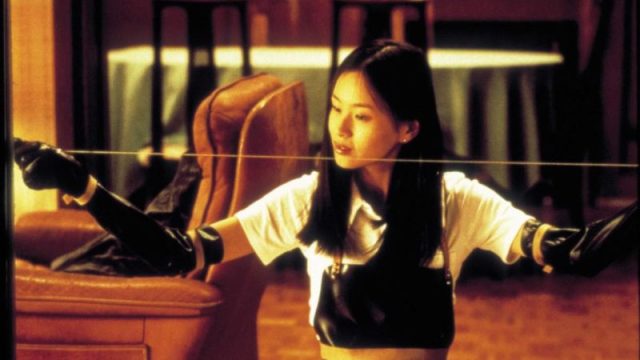
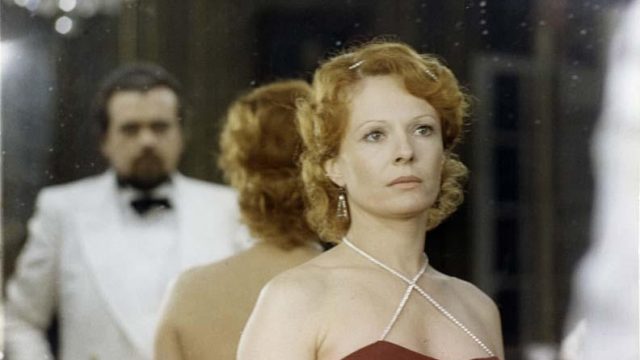
“The Kiss” (Japanese title: Seppun) is a 2008 Japanese crime drama / psychological suspense film.
It depicts the process by which a female office worker, who sees “the same loneliness as herself” in the smile of a man shown on television as the perpetrator of a family massacre, becomes obsessed with him and eventually enters into a prison marriage. Centered on the relationships among the woman, the murderer, and the murderer’s court-appointed defense attorney, the film follows the course of a love that does not seek to be understood by others, leading to a shocking conclusion.
The director is Kunitoshi Manda, whose feature debut “UNloved” (2002) was selected for the Critics’ Week at the Cannes Film Festival and won the Ecumenical Prize for a New Director and the Rail d’Or. The screenplay was co-written by Tamami Manda and Kunitoshi Manda, and the producer was Takenori Sento.
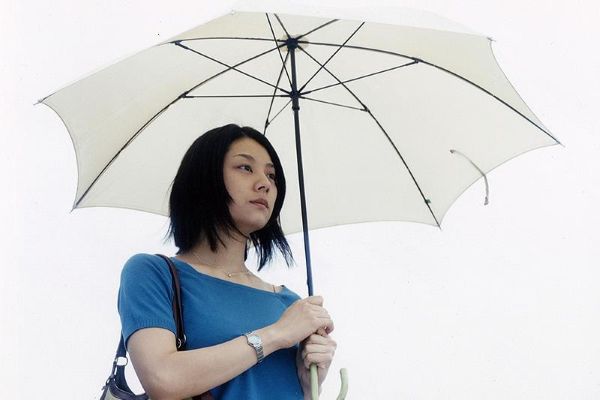
Eiko Koike plays the female protagonist with intense concentration, Etsushi Toyokawa plays the murderer, and Toru Nakamura plays the lawyer.
The film was entered in the competition section of the 8th Tokyo FILMeX (2007) and was theatrically released on March 8, 2008. It received the Best Picture Award at the 23rd Takasaki Film Festival and the Best Screenplay and Best Actress awards (Eiko Koike) at the 30th Yokohama Film Festival.
Trailer
Film Data
- Production: Geneon Entertainment, Rumble Fish and others (The Kiss Film Partners)
- Producer: Takenori Sento
- Director: Kunitoshi Manda
- Screenplay: Tamami Manda, Kunitoshi Manda
- Original Story: Tamami Manda, Kunitoshi Manda
- Cinematography: Makoto Watanabe
- Art Direction: Takeshi Shimizu
- Music: Hiroyuki Nagashima
- Lighting: Yuji Wada
- Sound: Masaru Usui
- Main Cast: Eiko Koike (female office worker, Kyoko Endo), Etsushi Toyokawa (murderer, Akio Sakaguchi), Toru Nakamura (lawyer, Hasegawa), Saburo Shinoda (Sakaguchi’s older brother, Tatsumi Sakaguchi), Takeshi Onishi (father of the Inoue family murdered by Sakaguchi), and others
- Language: Japanese
- Format: 35mm color, American Vista (1:1.85)
- Distributor: Phantom Film
- Running Time: 108 minutes
- Release: March 8, 2008 (Japan)
Plot Summary
Kyoko Endo, a 28-year-old office worker, has few social contacts and spends lonely days. One night, when she sees on a television news broadcast the arrest of Akio Sakaguchi, the suspect in a family murder case, Kyoko is strongly drawn to the smile Sakaguchi directs at the camera. Finding in Sakaguchi the same loneliness as her own, Kyoko becomes obsessed with him and deepens her relationship with him through gifts, correspondence, and visits. Sakaguchi’s court-appointed defense attorney Hasegawa is gradually attracted by Kyoko’s single-minded devotion.
Sakaguchi and Kyoko enter into a prison marriage, but Sakaguchi is sentenced to death. Hasegawa announces an appeal, which Kyoko strongly opposes.
On Sakaguchi’s birthday, Kyoko, together with Hasegawa, meets Sakaguchi and takes unexpected action there.
Commentary
Production Background
Kunitoshi Manda was involved in independent filmmaking with Kiyoshi Kurosawa and others while studying at Rikkyo University; after working as a screenwriter and assistant director, he gained international attention with his feature debut “UNloved.”
The project for this film began when producer Takenori Sento proposed to the couple Kunitoshi and Tamami Manda a screenplay on the theme of “prison marriage with a death-row inmate.” The working title at the planning stage was “Notebook,” which was later changed to the present title.
The screenplay was primarily written by Tamami Manda, who had also co-written the screenplay for “UNloved,” with Kunitoshi Manda adding cinematic adjustments in a collaborative process.
Shooting took place during the rainy season, and the continued cloudy weather contributed to the texture of the film’s images. Manda did not draw storyboards; he used two to three cameras to repeatedly shoot the same performances from different angles and determined the shot breakdown at the editing stage.
Directorial Approach
The film strips away explanatory dialogue and psychological description as much as possible, emphasizing the actors’ physical movements and generating emotional suspense through the strict framing of space.
Especially in the scenes in the detention center visiting room where Sakaguchi and Kyoko face each other, the physical barrier of the glass is placed at the center of the frame, and the exchange of gazes and contact of hands are emphasized.
Music is used sparingly, and silence and ambient sound dominate.
The detention center visiting room where Sakaguchi and Kyoko face each other is a space with little change in posture and limited room, so it could only be shot either in shot/reverse-shot or with both of them in the frame. Manda has stated that he struggled to create variation in the shots within these constraints. While adhering to the reality that a prison officer is present, the film partially fictionalizes the scene by placing the officer at the edge of the frame.
In the rural scene on the way back after Hasegawa and Kyoko visit Sakaguchi’s older brother, finely cut shots are followed by a long shot that frames the two of them small in the distance. Manda has said he shot this image in response to the producer’s comment that “there are close shots but no long shots.” Placing the two figures in the far distance under cloudy skies, this shot conveys a sense of enclosure even within a wide landscape.
The scene in which Hasegawa looks straight into the camera at the press conference announcing the appeal, and Kyoko sees the footage on television and becomes angry, was designed, according to Manda, as a counterpart to the early scene in which Sakaguchi smiles while looking into the camera at the time of his arrest.
In the final visiting scene on Sakaguchi’s birthday, the tension suddenly shifts into intense physical movement. The stabbing with the knife and the subsequent kiss are staged as an almost action-like chain of bodily movements, eliminating explanatory psychological description.
Thematic Analysis
The film can be viewed as a work that, through the subject of obsession with a murderer, depicts the one-sided and asymmetrical love that arises when the self-love underlying romantic feelings is directed toward another person.
Kyoko does not attempt to “understand” the motive or inner life of Sakaguchi’s crime; instead, she projects her own loneliness onto his existence, treating him as if he were her double, and becomes unilaterally obsessed and dependent.
Kyoko’s attachment to Sakaguchi is pure in that it is completely unrelated to how he feels about her or how third parties might view them, yet it falls outside the ordinary framework of romantic love in which people communicate and mutually understand each other.
From a psychoanalytic perspective, such a relationship can be understood as a pathology in which the other is used as a self-object (in Heinz Kohut’s term) that supplements one’s own psychological functions, or as narcissistic identification in which the boundary between self and other becomes blurred and the other is identified with the self.
Kyoko regards Sakaguchi not as an independent personality but as a presence that fills her own loneliness and anxiety. The dynamics of this kind of relationship, in which intense anger or despair arises when the identified other does not move as expected, can also be seen in the scene where Kyoko expresses anger when Hasegawa announces the appeal. Kyoko’s one-sided way of relating fails to mesh with the people around her, and that discrepancy drives the narrative.
The relationships among the three are also structured asymmetrically, with affection flowing in one direction. Sakaguchi accepts Kyoko as someone who understands him, but because for Kyoko he was only an object of narcissistic projection, their relationship collapses. The lawyer Hasegawa defends Sakaguchi, but because Sakaguchi has no intention of rehabilitation and desires the death penalty, he cannot build a relationship of trust with Sakaguchi. Hasegawa repeatedly advises Kyoko out of concern for her, yet for Kyoko he is merely a useful but bothersome presence.
As seen in the evaluation by Shigehiko Hasumi discussed later, it is also possible to view the film as a pure-love romance; how one receives it is up to the spectator.
“Happy Birthday to You”
There are two scenes in the film in which “Happy Birthday to You” is sung: the scene in which Sakaguchi sings it at the murder site, and the scene in which Kyoko sings it during the visit in a room without a partition at the end of the film.
The first scene is inserted as Sakaguchi’s recollection in a dream. After killing the three members of the Inoue family, Sakaguchi seats the three corpses around the dining table in the living room, lights many candles in the darkness, and sings “Happy Birthday to You” under his breath.
In the second visiting scene, Kyoko, pretending to celebrate Sakaguchi’s birthday while intending to commit the stabbing, sings “Happy Birthday to You” as if repeating Sakaguchi.
In both scenes, the lyrics omit “dear (name),” so that the song of celebration is used ironically to symbolize the rejection of the other or the impossibility of communication.
Interpretation of the Kiss
The scene at the end of the film in which Kyoko attacks Hasegawa and suddenly exchanges a dense kiss with him has provoked discussion among audiences and critics since its release regarding its interpretation. Because Kyoko’s motive is not explained in the film, interpretations differ among viewers.
Since this kiss is difficult to regard as an expression of affection, motives such as a violent contact extending the intent to kill, or a refusal of verbal communication through the body, may be considered. There are also readings that see it as a sudden transfer of desire from Sakaguchi to Hasegawa, or as a gesture of refusing salvation.
Release
The film was entered in the competition section of the 8th Tokyo FILMeX (2007). It was released nationwide starting March 8, 2008, at Eurospace and other theaters, distributed by Phantom Film.
Internationally, it was screened as the opening film of the 2008 Jeonju International Film Festival.
Reception
The film received the Best Picture Award at the 23rd Takasaki Film Festival. At the 30th Yokohama Film Festival, Kunitoshi Manda and Tamami Manda received the Best Screenplay award, and Eiko Koike received the Best Actress award. Koike was also selected for the Best Actress award at the 63rd Mainichi Film Awards.
The film was ranked 9th in the 82nd Kinema Junpo Best Ten (2008).
Critic Shigehiko Hasumi, in a talk event with Manda at the 2007 Tokyo FILMeX screening, called the film “the ultimate love story” and highly praised Eiko Koike’s performance.
Home Media
In Japan, the DVD “The Kiss Deluxe Edition” was released on February 25, 2009, by Geneon Entertainment (now NBCUniversal Entertainment Japan). Special features include making-of footage, the opening-day stage greeting, and the theatrical trailer.
Search Links
Cross-Search for “Kunitoshi Manda The Kiss” on JustWatch
Search for “Kunitoshi Manda The Kiss” on Amazon.com
Synopsis (Spoilers)
The Incident
Akio Sakaguchi breaks into the Inoue family’s house in a quiet residential area and kills the three family members with a blunt instrument. Using a cash card stolen from the Inoue family, Sakaguchi withdraws cash from an ATM, then reports his own identity and location to the police and television stations, arranging for his arrest on the riverbank of the Tama River to be broadcast live on television.
The Encounter
Kyoko Endo is a 28-year-old single office worker. She leads a lonely life, estranged from her family and without friends, finishing overtime work forced on her by colleagues before returning home. One night, while washing dishes in the kitchen after dinner, Kyoko sees the arrested Sakaguchi on a casually turned-on television news program. Sakaguchi is smiling at the camera. Kyoko finds in that silent smile the same loneliness and despair as her own and is drawn to him; from that night she begins recording in a notebook all the information about Sakaguchi that she can learn from newspapers and magazines.
The Trial and Gifts
Sakaguchi confessed to the crime when he was arrested by the police, but afterward he switched to remaining silent, speaking neither to his court-appointed defense attorney Hasegawa nor to the judges, and continues to maintain his silence. Kyoko attends the trial from the first hearing and comes to think, “I want to hear his voice.” Kyoko asks Hasegawa to convey her feelings to Sakaguchi and begins sending gifts and corresponding with him.
Visit to Sakaguchi’s Brother
Hasegawa, together with Kyoko, visits Sakaguchi’s older brother living in Gunma Prefecture and hears about Sakaguchi’s background from him. Sakaguchi’s brother relates that Sakaguchi grew up neglected in a poor single-mother household and says that he hopes Sakaguchi will accept the death sentence.
On the way back, the two get out of the car in the countryside and exchange words while walking.
Death Sentence and Prison Marriage
Sakaguchi is sentenced to death in the first trial. Because once the death sentence is finalized only relatives and the lawyer will be allowed to visit, Kyoko proposes marriage to Sakaguchi by letter.
Kyoko quits her company, moves near the detention center, and begins working at a soap factory. Kyoko visits Sakaguchi, and Sakaguchi accepts her proposal of marriage.
Hasegawa, worried about Kyoko’s future, tries to persuade her to give up the marriage to Sakaguchi, but Kyoko’s resolve remains unshaken.
Kyoko and Sakaguchi spend intimate time in the glass-partitioned visiting room. When Kyoko brings her soap-scented hand close to the holes in the glass, Sakaguchi also places his hand against it.
“Happy Birthday to You”
While sleeping in the detention center, Sakaguchi recalls in a dream the events after he killed the three members of the Inoue family. In the living room he seats the three corpses around the dining table, lights many candles in the darkness, and sings “Happy Birthday to You” under his breath.
Hasegawa’s Leak
Hasegawa thinks that if Kyoko is placed in a position of public condemnation she might leave Sakaguchi, and so he leaks information about Kyoko to a magazine reporter. Kyoko begins to be hounded by members of the press, but this only strengthens her resolve to stand together with Sakaguchi in opposition to society.
While sleeping in the detention center, Sakaguchi dreams that the three people he killed are standing like ghosts in front of his solitary cell.
The Appeal
Hasegawa urges Sakaguchi to appeal. Sakaguchi tells Hasegawa that he is a person who feels nothing even though he has killed people and that he deserves the death penalty, but Hasegawa informs him that he will proceed with the appeal procedures.
Hasegawa announces at a press conference that he will appeal. At the conference Hasegawa directs his gaze as if looking through the camera at Kyoko. Feeling that Sakaguchi’s agreement to the appeal without consulting her is a betrayal of herself, Kyoko is seized by strong anger and sorrow.
The Final Visit
One day, with Sakaguchi’s birthday approaching, Kyoko and Hasegawa head to the detention center for a visit with Sakaguchi. On the way, Kyoko gives Hasegawa a present.
Granted a special visit without a partition, Kyoko offers Sakaguchi a birthday cake in a room at the detention center and lights the candles. While slowly and intermittently singing “Happy Birthday to You,” Kyoko takes the present from Hasegawa’s bag. It is a knife.
Kyoko embraces Sakaguchi and stabs him in the chest with the knife, and Sakaguchi dies.
Kyoko attacks Hasegawa and suddenly kisses him. As she is restrained by guards and led away, Hasegawa calls out, “Kyoko-san, I’ll defend you. All right?” and Kyoko shouts, “Don’t think about doing anything with me. Leave me alone!”