





























































Overview
“The Virgin Spring” (Swedish: “Jungfrukällan”) is a 1960 Swedish historical drama film directed by Ingmar Bergman, with a screenplay by Ulla Isaksson. Set in medieval Sweden, it tells the story of a father who takes revenge on the men who raped and murdered his daughter. The film is in black and white and runs 89 minutes.
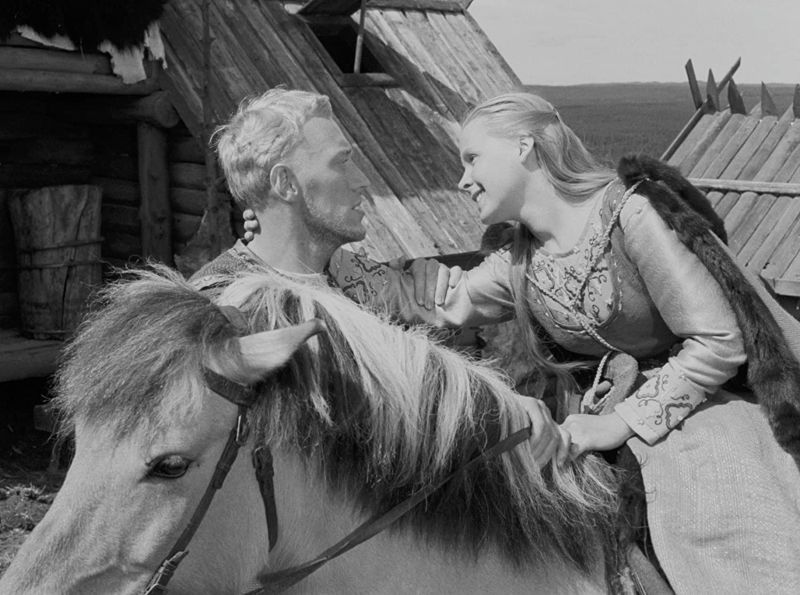
It is based on the Swedish ballad “Töres döttrar i Wänge” (Töre’s Daughters in Vänge), which is believed to date from the Middle Ages.
The film was the first full-scale collaboration between Bergman and the cinematographer Sven Nykvist, who went on to become one of Bergman’s principal collaborators.
It won the Academy Award for Best Foreign Language Film at the 33rd Academy Awards (1961).
- Produced by: Allan Ekelund, Ingmar Bergman
- Production company: Svensk Filmindustri
- Distributed by: Svensk Filmindustri (Sweden), Janus Films (United States)
- Screenplay: Ulla Isaksson
- Cinematography: Sven Nykvist
- Editing: Oscar Rosander
- Music: Erik Nordgren
- Art direction: P.A. Lundgren
- Costume design: Marik Vos
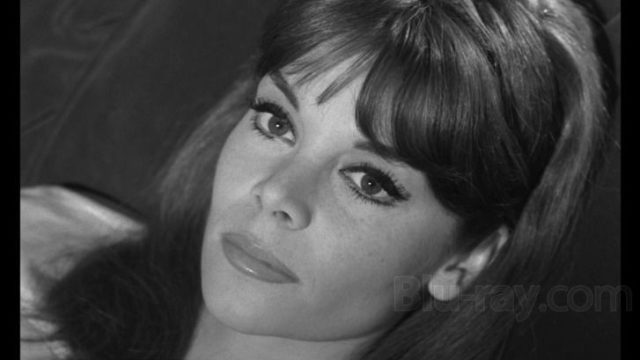
- Main cast: Max von Sydow (Töre), Birgitta Valberg (Märeta), Gunnel Lindblom (Ingeri), Birgitta Pettersson (Karin), Axel Düberg (the thin herdsman), Tor Isedal (the mute herdsman), Ove Porath (the boy), Allan Edwall (the beggar)
- Language: Swedish
- Technical specifications: 35 mm film, black and white, 1.37:1 aspect ratio
- Box office: approximately US$700,000 in the United States
Trailer
Plot Summary
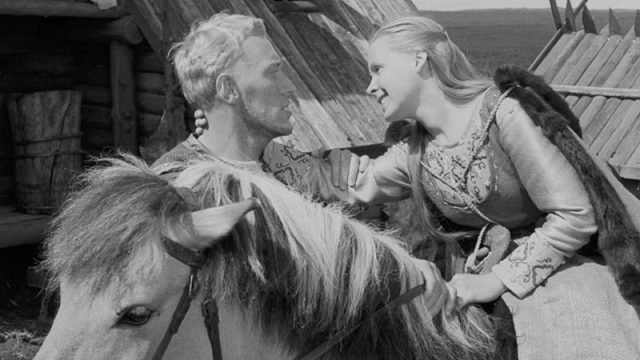
In medieval Sweden, Töre, a devout Christian and wealthy landowner, lives with his wife Märeta and their only daughter, Karin. A pregnant servant, Ingeri, also lives in the household. Ingeri secretly worships the Norse god Odin and resents Karin, who has been raised with great care.
Karin sets out on horseback through the forest to deliver candles to the church, accompanied by Ingeri. After parting from Ingeri, Karin, now alone, meets three goat herdsmen (brothers: two men and a boy). The two men rape and murder her. Ingeri witnesses the whole event from a distance but does not intervene.
The herdsmen, unaware of whose home it is, ask Töre’s household for shelter for the night.
Commentary
Production and Background
Bergman is said to have read the legend of Töre as a student and considered it suitable for adaptation to the screen. He initially envisioned it as a ballet for the Royal Swedish Opera or as a stage play, but during the production of “Wild Strawberries” (1957) he concluded that film was the best medium. Several ballads concern Töre, and Bergman chose “Töres döttrar i Wänge” as one of the simplest among them.
For the screenplay he engaged the novelist Ulla Isaksson. Isaksson was known for the realism of her novel set in the Middle Ages, and Bergman is said to have wanted to avoid the kind of criticism about historical accuracy that had been leveled at “The Seventh Seal” (1957). According to the biography by the Bergman scholar Frank Gado, Isaksson’s interest lay in the conflict between Christianity and paganism, while Bergman’s lay in the analysis of guilt.
The production company Svensk Filmindustri made its approval of the film conditional on Bergman first making a comedy. That comedy was “The Devil’s Eye” (1960).
The cinematographer changed from Gunnar Fischer, who had shot Bergman’s earlier films, to Nykvist.
Bergman himself acknowledged the influence of Akira Kurosawa’s “Rashomon” (1950). Although he counted that film among his favorites, he later described this one as “a wretched imitation of Kurosawa.”
Filming
Nykvist adopted a lighting approach that emphasized natural light more than Fischer’s had. Filming took place in the spring of 1959. According to “Pages from a Non-Existent Diary,” a text Bergman wrote for the film’s publicity materials, temperatures hovered near freezing, fog carried flakes of snow, and the crew struggled to keep aging camera equipment running. But when the sun broke through the clouds, they managed to film the dark surface of the water in the forest.
Locations
The exterior scenes were shot in the province of Dalarna. The confirmed locations are Styggforsen (now a nature reserve), north of Rättvik, and Skattungby. The interior scenes are said to have been shot in a Stockholm studio.
Characterization
Karin and Ingeri are characterized in sharp contrast, like figures in a folktale. Karin always appears in clean, fine clothing as an innocent virgin. Ingeri, by contrast, is dirty, dark-complexioned, and rides a dark horse, and her pregnancy signals the absence of innocence (according to Deveryle James’s 2011 analysis). After the rape, Karin’s appearance is shown in disarray.
Depiction of Violence
Bergman stated that in the rape scene it was necessary to show the crime in all its naked cruelty, drawing the audience out of aesthetic contemplation of a work of art and into involvement in a human drama of sin and grace. His position was that violating certain taboos was justified to achieve this.
The scene was subject to censorship in several countries. In the version released in New York, the shot of Karin’s bare legs wrapped around her rapist was removed. In Fort Worth, Texas, the film was banned as obscene, and the Texas Supreme Court declined to review the ban. In Japan, the film-classification board Eirin cut the rape scene entirely at the time of its release.
Thematic Analysis
At the core of the story is the conflict between Christianity and paganism. Against the background of Christianity’s rise to dominance in Sweden, paganism is associated with sorcery, jealousy, and revenge. The film opens with Ingeri kindling the hearth fire and praying to Odin. Gado has pointed out that the one-eyed man (the bridge keeper) whom Ingeri meets recalls Odin and his throne Hlidskjalf, through his single eye, his raven, and a seat from which one sees far. This also leads to a reading that equates Odin with the Devil in Christian terms.
Each of the principal characters bears guilt. Ingeri is tormented by having prayed to Odin and by having stood by during Karin’s murder. The herdsman boy, after the killing, tries to cover the body with earth, but stops partway and flees. Töre later kills that boy as well, and is tormented by having done so.
The critic Marc Gervais has described Töre’s revenge as “ritualized pagan vengeance,” arguing that Töre is torn between two ritual demands: pagan vengeance, and Christian repentance and forgiveness. He also notes a resemblance to “Macbeth.” Töre calls out to God, says he cannot understand why God permitted such a thing, and vows to build a church at the site of the killing. At that moment a spring wells up where the body’s head had lain. Isaksson, the screenwriter, regarded the spring as a symbol of Karin’s innocence. Ingeri’s act of washing her head and eyes in the water and drinking it is regarded as a symbol of absolution. The critic Peter Cowie interprets the spring (water), together with Ingeri’s fire at the opening and the streams (earth) that appear throughout the film, as reflecting pagan meanings of fire, earth, and water.
Critics have been divided over whether the miracle of the spring should be taken as God’s response. The critic Dwight Macdonald questioned why God chose a spring rather than resurrection.
Release
The film premiered on February 8, 1960, in Stockholm. During the screening, fifteen people are said to have walked out, and some viewers reportedly left in tears. An accountant at Svensk Filmindustri, who had often pointed out the losses on Bergman’s films, acknowledged that this one was a success. At the Cannes Film Festival in May 1960 (May 4–20) it was entered in the main competition and won a Special Mention and the FIPRESCI Prize of the International Federation of Film Critics.
In the United States it opened in New York on November 14, 1960. In Japan, it was ranked first among foreign films in the 1961 Best Ten list of the film magazine “Kinema Junpo.”
Reception
In Sweden, reception was divided. “Svenska Dagbladet” described the film as landing like a punch between the eyes. “Stockholms-Tidningen” judged Isaksson better suited to print than to film. “Aftonbladet” found the direction somewhat loose.
In the United States, Bosley Crowther of “The New York Times,” in his 1960 review, wrote that the realism of the brutal scenes overwhelmed the senses out of proportion to their dramatic effect. Stanley Kauffmann judged the revenge scene so prolonged that it verged on the ridiculous.
In “Bergman on Bergman,” Bergman himself said that at the time he regarded it as one of his better films. On the other hand, as noted above, he later left a harsh self-assessment of it as an imitation of Kurosawa.
At the time of writing, Rotten Tomatoes reports an approval rating of 88% based on 25 reviews, with an average score of 8/10.
Awards and Nominations
- 33rd Academy Awards: Best Foreign Language Film (won); Best Costume Design, Black-and-White (Marik Vos, nominated). It was Bergman’s first win in the foreign language category.
- Cannes Film Festival (1960): Special Mention; FIPRESCI Prize.
- Golden Globe Awards: Best Foreign Language Film.
Legacy
Wes Craven’s 1972 horror film “The Last House on the Left” is based on the plot of this film. It carries over the setup in which the parents of a murdered daughter take revenge on the killers when they happen to stay at the parents’ home, and Craven acknowledged Bergman’s influence. The film critic Robin Wood contrasted the two, treating “The Virgin Spring” as art and “The Last House on the Left” as exploitation. The scholar Alexandra Heller-Nicholas regards “The Virgin Spring” as a comparatively high-minded origin of the rape and revenge film genre.
The film director Ang Lee has also said that the film had a profound influence on him. It was the first art film he saw as a student in Taiwan. In the introduction he recorded for the Criterion Collection edition (2005), he said that in his eighteen years he had never seen anything “so quiet, so serene and yet so violent,” a work that fundamentally questions where God is. He has said that the film changed his life.
Home Media
In the United States, the Criterion Collection released the film on DVD on January 24, 2006, and on Blu-ray on June 26, 2018. Before that, Home Vision Entertainment had released a video edition on April 29, 1998.
In Europe, Tartan released it on DVD and video in the United Kingdom on October 28, 2002. In Germany, StudioCanal (Arthaus) released it on DVD on June 1, 2005. The Blu-ray was included in the “Ingmar Bergman Edition” released on November 21, 2013, a set that also contains “Smiles of a Summer Night,” “The Seventh Seal,” and “Wild Strawberries.” In 2018 it was also included in a ten-film Blu-ray box set marking the centenary of Bergman’s birth.
In Japan, a DVD was released on April 25, 2000 (Happinet). It was followed by an HD-remastered DVD on December 24, 2014 (Cinema McGuffin) and an HD-restored DVD on July 14, 2023. The Blu-ray was included in the Blu-ray box set of the HD-restored “Wild Strawberries” and “The Virgin Spring,” released on July 14, 2023, and a standalone HD-restored Blu-ray followed on October 30, 2024.
Search Links
Cross-Search for “Virgin Spring” on JustWatch
Search for “Virgin Spring” on Amazon.com
Detailed Synopsis (Spoilers)
In medieval Sweden, Töre, a wealthy and devout Christian, raises his only daughter, Karin, with great care. A pregnant servant, Ingeri, lives in the household; she secretly worships Odin and resents Karin. The film opens with Ingeri kindling the hearth fire and praying to Odin.
In the morning, Töre and his wife, Märeta, order Karin to take candles to the church, a day’s journey away. Out of jealousy toward Karin, Ingeri tucks a toad into the sandwiches of her lunch as a small act of retaliation. The two ride through the forest on horseback.
Near a mill by a stream, Ingeri becomes frightened and warns Karin, but Karin rides on alone, leaving Ingeri behind. Ingeri meets a one-eyed man. He answers that he has no name now, and says he sees what others cannot see and hears what they cannot hear. When he makes a sexual advance and offers her power, Ingeri takes fright and runs off.
Meanwhile, Karin meets three herdsmen and shares her lunch with them. The two older men rape and murder her. Ingeri, having caught up, watches the whole event from a distance but does not intervene. The two men try to take Karin’s clothing. The boy, left beside the body, is shaken; he tries to cover it with earth, but stops partway and runs after the two men.
The herdsmen, unaware of whose home it is, ask Karin’s household for shelter for the night. That night, one of them tries to sell Karin’s clothing to Märeta. Märeta suspects the worst, locks the three men in the dining hall while they sleep, and confides her suspicion to Töre.
As Töre is trying to establish the truth, Ingeri, who has returned, breaks down before him and tells what happened, the rape and the murder. She also confesses that out of jealousy she had secretly wished for Karin’s death. Enraged, Töre resolves to kill the herdsmen at dawn. He stabs one to death with a knife and throws another into the fire. He then lifts the boy and hurls him against the wall, killing him. Märeta watches in horror.
Afterward, Töre and the members of the household set out, guided by Ingeri, to find Karin’s body. Having found it, Töre collapses in tears and calls out to God. Töre says he cannot understand why God allowed this, and vows to build a church where the body lies. When Töre and Märeta lift the body, a spring wells up where Karin’s head had been. Ingeri washes her body in the water, and Märeta wipes the earth from Karin’s face.