






















































Overview
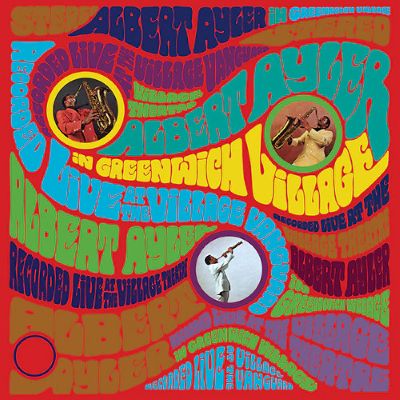
“Albert Ayler in Greenwich Village” is a live album by the American saxophonist Albert Ayler, released in 1967. It was his first leader album for Impulse! Records and consists of four tracks excerpted from recordings of the December 18, 1966 performance at the Village Vanguard and the February 26, 1967 performance at the Village Theatre. The total length is approximately 37 minutes. It is one of the most highly regarded critically among Ayler’s works from his Impulse! period.
Background of Production
Albert Ayler, born in 1936 in Cleveland, Ohio, began his activities in Europe after experience in a military band and entered the New York avant-garde jazz scene in the mid-1960s. With works such as “Spiritual Unity” (1965) on ESP-Disk, he had established his unique language that juxtaposed simple melodies derived from hymns, folk songs, marches, and lullabies with intense collective improvisation and extended timbres.
At the strong recommendation of John Coltrane, Impulse! signed a contract with Ayler. Following Coltrane’s advice, live recordings were prioritized over studio recordings. Coltrane himself is said to have been in the audience at the December 18, 1966 Village Vanguard performance, and at the February 26, 1967 Village Theatre performance, Ayler performed “For John Coltrane,” which he dedicated to Coltrane. Both performances featured ensembles using multiple bassists and added string instruments (violin or cello), pursuing thickness of tone color and diversity of texture. The producer was Bob Thiele and the engineer was George Klabin.
Thereafter, unreleased takes from the same performances were included on “The Village Concerts” (1978), and further combined with the 1965 Village Gate recording and others into the complete edition “Live in Greenwich Village: The Complete Impulse Recordings” (1998).
Commentary
This album vividly demonstrates the core of Ayler’s music—“the contrast between simple themes and radical improvisation”—through two different ensembles. Side A (Village Theatre) features a relatively chamber-music-like sound centered on the alto saxophone, while “Change Has Come” develops denser collective improvisation. Side B (Village Vanguard) is characterized by a more collective and march-like energy centered on the tenor saxophone and the trumpet of his brother Donald Ayler. In both sessions, the placement of two bassists secured thickness in the low register and a stable foundation, supporting the radical expression of the lead instruments.
The musical structure begins with a clear statement of the theme, develops into collective improvisation, and often returns to the theme. The method of expanding the sonic space freely while sharing a pulse, unbound by fixed harmonic progressions or meters, is based on free jazz after Ornette Coleman while strongly bearing Ayler’s unique “hymn-like and festive” character. The timbres push the limits of the saxophone, including wide vibrato, screams in the altissimo register, metallic noise, and roars reminiscent of the human voice. The intervention of string instruments fuses classical textures with free polyphony, giving the whole a unique coloration.
Track Commentary
“For John Coltrane” (13:32): Recorded February 26, 1967 at the Village Theatre. A dedication to Coltrane on which Ayler took up the alto saxophone for the first time in a long while. The personnel consists of cello (Joel Freedman), two basses (Alan Silva, Bill Folwell), and drums (Beaver Harris). It begins with a relatively restrained, sorrowful manner of singing and gradually swells in volume, interweaving the sharp high register characteristic of the alto with Ayler’s wide vibrato. In a spatial sound with restrained intervention of the drums, the strings and basses weave sustained tones and fragmentary responses, giving the whole a meditative and solemn character. It is a performance that is quiet yet charged with inner tension, conscious of Coltrane’s late spiritual explorations.
“Change Has Come” (6:15): Recorded the same day at the Village . An intense improvisation piece with the same personnel as the previous track (alto saxophone, cello, two basses, drums). After the theme statement, it rapidly shifts into dense collective improvisation. The screams of the saxophone and the dissonant intertwining of the strings and basses are characteristic. The energy is concentrated, leaving a strong impact despite its short length.
“Truth Is Marching In” (12:12): Recorded December 18, 1966 at the Village Vanguard. Tenor saxophone (Albert), trumpet (Donald), violin (Michel Sampson), two basses (Henry Grimes, Bill Folwell), drums (Beaver Harris). A march-like theme that evokes the sound of New Orleans marching bands and hymns is clearly stated. Through repetition and transformation of the theme, it explodes into intense collective improvisation. Ayler’s tenor releases roars like the human voice, Donald’s trumpet responds, and the violin draws sharp lines. The longest piece on the album and a representative performance in which festivity and roughness coexist.
“Our Prayer” (4:28): Recorded the same day at the Village Vanguard. Composed by Donald Ayler. Same personnel as the previous track. A relatively short piece of a prayerful character. A simple theme is stated quietly and gradually increases in density while overall maintaining an introspective and solemn bearing. It is a closing track that suppresses the march-like energy and brings the spiritual aspect to the fore.
Reception
It was highly evaluated from the time of its release. In 1968, Pete Welding gave it five stars in Down Beat magazine, describing it as “Ayler and his confreres are creating their own ordered cosmos” and calling him “the Johnny Dodds of the avant-garde.” Scott Yanow (AllMusic) positioned it as “probably his best album for Impulse!,” and The Penguin Guide to Jazz also highly evaluates the complete edition. Although commercial success was limited, it is regarded as one of the essential listening discs as an important live document of free jazz in the latter half of the 1960s.
Track Listing
Total playing time: approximately 37 minutes 28 seconds.
Side A
- “For John Coltrane” – 13:32
- “Change Has Come” – 6:15
Side B
- “Truth Is Marching In” – 12:12
- “Our Prayer” (Donald Ayler) – 4:28
(The listed times are based on the original LP. There are slight differences on reissues.)
Recorded: December 18, 1966 at the Village Vanguard (3, 4), February 26, 1967 at the Village Theatre (1, 2), New York.
Personnel
Performance
- Albert Ayler – alto saxophone (1, 2), tenor saxophone (3, 4)
- Donald Ayler – trumpet (3, 4)
- Joel Freedman (also credited as Joel Friedman) – cello (1, 2)
- Michel Sampson – violin (3, 4)
- Alan Silva – bass (1, 2)
- Bill Folwell – bass (all tracks)
- Henry Grimes – bass (3, 4)
- Beaver Harris – drums (all tracks)
Technical
- Bob Thiele – producer
- George Klabin – engineer
- Nat Hentoff – liner notes
- Charles / Chuck Stewart – photography
- Robert & Barbara Flynn – design
Streaming Services
Search Links
Search for “Albert Ayler in Greenwich Village” on Amazon.com
Search for “Albert Ayler in Greenwich Village” on Apple Music