



































- Overview
- Background of Production
- About the Album Title
- Musical Characteristics of the Album
- Instrumentation and Song Characteristics
- Release History
- Reception and Evaluation
- Track-by-Track Review
- Side One
- 1. The Electric Prunes – I Had Too Much to Dream (Last Night) (1966)
- 2. The Standells – Dirty Water (1966)
- 3. The Strangeloves – Night Time (1965)
- 4. The Knickerbockers – Lies (1965)
- 5. The Vagrants – Respect (1967)
- 6. Mouse – A Public Execution (1966)
- 7. The Blues Project – No Time Like the Right Time (1967)
- Side Two
- Side Three
- Side Four
- 1. The Chocolate Watchband – Let’s Talk About Girls (1967)
- 2. The Mojo Men – Sit Down, I Think I Love You (1967)
- 3. The Third Rail – Run, Run, Run (1967)
- 4. Sagittarius – My World Fell Down (1967)
- 5. Nazz – Open My Eyes (1968)
- 6. The Premiers – Farmer John (1964)
- 7. The Magic Mushrooms – It’s-a-Happening (1966)
- Side One
- Streaming Services
- Search Links
Overview
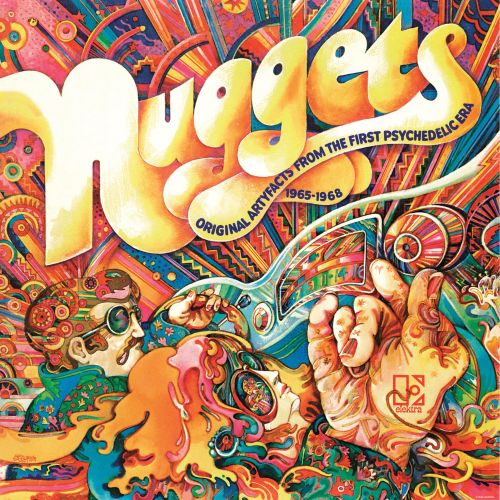
“Nuggets: Original Artyfacts from the First Psychedelic Era 1965–1968” is a compilation album of mid-1960s American garage rock and psychedelic rock released by Elektra Records in 1972, containing 27 tracks in total. It was compiled by music critic Lenny Kaye, who later became the guitarist for the Patti Smith Group.
The album holds historical significance for reevaluating and systematizing a collection of local, independent singles that possessed a distinct edge but failed to achieve commercial success in the shadow of mainstream psychedelic rock and album-oriented rock (AOR) of the late 1960s. It is known as a milestone in rock history that established one of the foundational blueprints for subsequent punk rock, indie rock, and power pop.
Background of Production
In the early 1970s, rock music was transitioning toward large-scale stadium rock and progressive rock with massive commercial markets. Lenny Kaye, who was writing for publications such as “Rolling Stone” at the time, focused on the short-lived yet intensely energetic music hidden within countless singles (so-called “45s”) independently or small-scale released by local labels across the United States in the mid-1960s.
Backed by Jac Holzman, the founder of Elektra Records, Kaye selected the tracks utilizing his own collection and network as a record digger. The album was released as a double LP in 1972.
About the Album Title
The word “nuggets” is a metaphor referring to the rough-cut gems that shone despite being obscured in the shadow of the mainstream. “Artyfacts” is a portmanteau coined by Lenny Kaye, combining “artifacts” with “art.” It is a humorous title that treats garage rock 45s as if they were precious cultural artifacts (excavated items) from antiquity—specifically, the first psychedelic era.
Musical Characteristics of the Album
The musical trait captured by “Nuggets” lies in the exposure of amateurism and primary impulse, standing in polar opposition to professional refinement. A distinct soundscape permeates the entire album, born as American youths—baptized by the British Invasion and folk rock acts like The Beatles and The Byrds—imitated and sublimated those influences in local studios and garages.
Characteristics include lo-fi sonic treatments, such as deviations from standard chord progressions, raw distortion, the excessive use of fuzz boxes and tremolo, and reverb evoking the acoustics of a cathedral. Furthermore, direct themes such as teenage angst, romantic frustration, or the yearning for a trance-like state take precedence over elevated political messages or epic compositions.
Instrumentation and Song Characteristics
The standard instrumentation adheres to the conventional four- or five-piece rock and roll band format: bass, drums, rhythm guitar, lead guitar, and vocals. However, its sonic processing blends cutting-edge technology of the era with a DIY ethos.
- Guitars: Metallic, grating sustained notes and sharp riffs are heavily utilized, often sounding as though fuzz pedals (such as the Maestro FZ-1) or tremolo effects are left permanently engaged.
- Keyboards: Farfisa and VOX combo organs are introduced, inducing a sense of perspective-distortion that imparts a psychedelic floating sensation and exotic atmosphere to the tracks.
- Rhythm Section: Built upon driving 8-beat rhythms or Motown-influenced dance beats, the performances retain an energetic, forward-leaning tempo instability stemming from technical greenness, which is left intact in the final takes.
- Vocals: A raw expression devoid of realism is pursued through shouts, megaphone-like signal processing, and excessive echoes.
Release History
The first edition was released as a double LP by Elektra Records in 1972 (featuring 27 tracks).
It was reissued with a new cover design by Sire Records in 1976.
A 4-CD box set (featuring 118 tracks) was released by Rhino Records in 1998.
A limited 5-LP box set (featuring 70 tracks) was released by Rhino Records in 2023.
Other derivative works include the “Nuggets” series released as 15 separate albums by Rhino Records in the 1980s, and “Nuggets II: Original Artyfacts from the British Empire and Beyond, 1964–1969” (Rhino Records, 2001), which gathered tracks from regions outside the United States.
Reception and Evaluation
Although the album did not become a massive commercial hit upon its initial release, it gained long-selling influence through word-of-mouth among core music fans and critical acclaim.
The primary achievement of the album lies in its critical establishment of the genre concept “garage rock.” Many punk rock musicians in mid-1970s New York and London, such as the Ramones and Patti Smith, referenced this album as a starting point or a shared common language.
Reevaluation continued into the 1990s and beyond within the contexts of indie rock and alternative rock, and its musical genetic code continues to exert a profound influence through the lo-fi movement and the garage rock revival. From a critical perspective as well, it is highly regarded as a masterpiece that rescued local cultural heritage from historical oblivion.
Track-by-Track Review
Side One
1. The Electric Prunes – I Had Too Much to Dream (Last Night) (1966)
- Formed around 1965 in Los Angeles, California; a psychedelic rock band.
- A representative psychedelic garage track featuring a languid yet visionary world built with intense fuzz guitars and backward-tape guitar sound effects.
2. The Standells – Dirty Water (1966)
- Formed in 1962 in Los Angeles, California; a garage rock band.
- A lo-fi garage classic featuring rough vocals singing about the gritty atmosphere of the city.
3. The Strangeloves – Night Time (1965)
- Formed in the mid-1960s in New York; a pseudonymous garage pop band consisting of a production team (Bob Feldman, Richard Gottehrer, and Jerry Goldstein).
- A garage rock track brimming with pop sensibility, featuring catchy melodies and handclaps.
4. The Knickerbockers – Lies (1965)
- Formed in 1964 in Bergenfield, New Jersey; a pop-rock and garage band.
- A number shining with driving momentum and vocal harmonies strikingly reminiscent of early Beatles, serving almost as an American response to them.
5. The Vagrants – Respect (1967)
- Formed in 1964 in Long Island, New York; an R&B and garage rock band featuring Leslie West.
- A cover of Otis Redding’s 1965 masterpiece, given a heavy and emotional guitar arrangement hinting at the dawn of hard rock.
6. Mouse – A Public Execution (1966)
- Formed in 1965 in Tyler, Texas; a garage rock band.
- Characterized by gloomy vocals under the influence of Bob Dylan and a psychedelic atmosphere propelled by swirling organs.
7. The Blues Project – No Time Like the Right Time (1967)
- Formed in 1965 in New York; a folk-rock and blues-rock band featuring Al Kooper.
- A rock track fusing urban sophistication with bluesy improvisation.
Side Two
1. The Shadows of Knight – Oh Yeah (1966)
- Formed in 1964 in Chicago, Illinois; a garage rock band.
- A cover of Bo Diddley’s 1959 song; aggressive blues rock driven by fuzz guitars and rough vocals.
2. The Seeds – Pushin’ Too Hard (1965)
- Formed in 1965 in Los Angeles, California; a garage and psychedelic rock band.
- A track that can be called a precursor to punk rock, leaving a strong impression with Sky Saxon’s unhinged vocals and cheap fuzz guitars.
3. The Barbarians – Moulty (1966)
- Formed around 1964 in Cape Cod, Massachusetts; a garage rock band.
- A dramatic, unconventional track featuring drummer Moulty—who lost a hand in an accident and wore a metal hook—reciting his life story via spoken word.
4. The Remains – Don’t Look Back (1966)
- Formed in 1964 in Boston, Massachusetts; an R&B-leaning garage rock band.
- A pinnacle of mod garage boasting some of the tightest and most explosive musicianship in the US, featuring driving organs and pianos.
5. The Magicians – An Invitation to Cry (1965)
- Formed around 1965 in New York; a garage rock band.
- A melancholy melody and nuanced vocal harmonies bridging early folk rock and garage.
6. The Castaways – Liar, Liar (1965)
- Formed in the early 1960s in Minneapolis, Minnesota; a surf and garage rock band.
- The quintessential garage punk track exploding with high-tension screams and fuzz-drenched riffs.
7. The 13th Floor Elevators – You’re Gonna Miss Me (1966)
- Formed in 1965 in Austin, Texas; a psychedelic rock band.
- A cornerstone of psychedelic rock driven by Roky Erickson’s frantic vocals and the striking, saw-like sound of an electric jug.
Side Three
1. Count Five – Psychotic Reaction (1966)
- Formed in 1964 in San Jose, California; a garage rock band.
- A major hit reaching number 5 on the US charts; a garage classic featuring a chaotic, Yardbirds-influenced guitar solo and a brooding mood.
2. The Leaves – Hey Joe (1966)
- Formed in 1964 in Los Angeles, California; a folk-rock and garage band.
- One of the most famous early garage covers of Billy Roberts’s renowned song, featuring a sturdy arrangement that influenced Jimi Hendrix’s later version.
3. Michael and the Messengers – Romeo & Juliet (1967)
- A garage pop band active around Milwaukee, Wisconsin, stemming from The Messengers formed in Minnesota in 1962.
- A cover of the Reflections’ 1964 song, merging breezy Motown-style rhythms with garage elements.
4. The Cryan’ Shames – Sugar and Spice (1966)
- Formed in 1965 in Chicago, Illinois; a folk-rock and pop band.
- A cover of the Searchers’ 1963 hit, characterized by polished vocal harmonies and sharp guitar sounds.
5. The Amboy Dukes – Baby Please Don’t Go (1967)
- A hard rock and psychedelic band formed around 1964 in Chicago and later based in Detroit; featuring Ted Nugent.
- A cover of Big Joe Williams’s 1935 blues song, featuring an extended performance including frantic guitar improvisation.
6. Blues Magoos – Tobacco Road (1966)
- Formed in 1964 in New York; a psychedelic rock band.
- A cover of John D. Loudermilk’s 1960 composition, memorable for its psychedelic siren effects and heavy organs.
Side Four
1. The Chocolate Watchband – Let’s Talk About Girls (1967)
- Formed in 1965 in San Jose, California; a garage and psychedelic rock band.
- A cover of the Grodes’ 1966 song, characterized by punkish fuzz guitars and dirty garage vocals.
2. The Mojo Men – Sit Down, I Think I Love You (1967)
- Formed in 1964 in San Francisco, California; a folk-rock and garage band.
- A cover of the song written by Stephen Stills and released by Buffalo Springfield in 1966, appealing with bright harmonies and pop arrangements.
3. The Third Rail – Run, Run, Run (1967)
- A studio-project-based pop-rock band active in New York around 1966–67, centered on Arthur Resnick, Chris Resnick, and Joey Levine.
- A catchy, fast-paced number hovering between bubblegum pop and psychedelia.
4. Sagittarius – My World Fell Down (1967)
- A sunshine pop project formed in 1966 in Los Angeles, California, centered on Gary Usher, with participation from Bruce Johnston and others.
- A baroque pop and psychedelic masterpiece combining intricate, Beach Boys Pet Sounds-esque vocal harmonies with an eerie, contemporary-classical-style interlude.
5. Nazz – Open My Eyes (1968)
- Formed in 1967 in Philadelphia, Pennsylvania; a power pop and hard rock band featuring Todd Rundgren.
- A pinnacle of early power pop merging Todd Rundgren’s exceptional guitar riffs with vocal harmonies heavily touched by British beat influences.
6. The Premiers – Farmer John (1964)
- Formed in 1962 in San Gabriel, California; a Chicano rock and garage band.
- A cover of Don and Dewey’s 1959 R&B number, characterized by party-like rowdiness and the raw atmosphere of a live dance floor.
7. The Magic Mushrooms – It’s-a-Happening (1966)
- Formed in 1965 at the University of Pennsylvania in Philadelphia; a garage pop band.
- Characterized by aggressive fuzz-toned guitar solos, cheap organ playing, and acid-tinged spoken word elements.
Streaming Services
Search Links
Search for “nuggets original artyfacts from the first psychedelic era” on Amazon.com
Search for “nuggets original artyfacts from the first psychedelic era” on Apple Music