














































Overview
“The Dreaming” is the fourth studio album by the English singer-songwriter Kate Bush. It was released on 13 September 1982 by EMI Records. Breaking away from her collaboration with co-producer Jon Kelly, who had worked with her up to the previous album “Never for Ever” (1980), this was the first album Bush produced entirely by herself. It is widely recognized as the most uncommercial and experimental album of her career.
Centered on the Fairlight CMI sampler, the album is characterized by dense soundscapes that make extensive use of polyrhythmic percussion, ethnic instruments, gated reverb, and complex vocal layers. Elements of art rock, avant-pop, and progressive pop intersect, and a certain post-punk hardness can also be felt.
It reached number 3 on the UK Albums Chart and was certified Silver by the British Phonographic Industry (BPI), but its chart run was relatively short at around ten weeks, and sales fell short of those of her previous albums. The single “Sat in Your Lap” reached number 11 in the UK, but the title track peaked at number 48, and the other singles struggled commercially. It entered the US Billboard 200 at number 157, marking Bush’s first appearance on that chart.
The album is positioned as a turning point in the process leading to her next album, “Hounds of Love” (1985), in which artistic autonomy was prioritized over commercial success.
Production Background
Having achieved commercial success with “Never for Ever” and established herself as a pop icon, Bush sought further creative freedom. Feeling the limitations of working with a co-producer, she decided to take complete control of the decision-making process. Demo work began around September 1980, and “Sat in Your Lap” was written after she was inspired by a Stevie Wonder concert.
Recording spanned approximately two years and was carried out at London studios including Townhouse, Abbey Road, Odyssey, and Advision. In the early stages, Hugh Padgham participated as engineer and introduced the gated reverb drum sound, but due to scheduling conflicts he was succeeded by Nick Launay. In the final stages, Paul Hardiman took the central role, overseeing meticulous overdubs and mixing.
Bush struggled with writer’s block, but she found a breakthrough through sessions with Irish folk musicians (members associated with Planxty and The Chieftains) and by thoroughly exploring the possibilities of the Fairlight CMI. The themes are wide-ranging and include the pursuit of knowledge and its limits, the Vietnam War, the destruction of Australian Aboriginal lands, the life of the magician and escape artist Harry Houdini, and imagery from Stephen King’s novel “The Shining” (1977). These often function as metaphors for Bush’s own internal struggles in seeking artistic autonomy.
Production Techniques
The most distinctive feature of this album is the full-scale use of the Fairlight CMI digital sampling synthesizer. Having first introduced the instrument on her previous album, Bush operated it on nearly every track, sampling real-world sounds (voices, environmental noises, instruments) and processing and reconstructing them to create textures that went beyond conventional instrumentation. The LinnDrum and Roland drum machines were also used in combination, and live drums (played by Preston Heyman and Stuart Elliott) were treated with extensive gated reverb to construct hard, spacious rhythms.
The introduction of ethnic instruments is also prominent. On the title track, didgeridoo (played by Rolf Harris), bullroarer, and animal sounds (by Percy Edwards) are employed, while “Night of the Swallow” features uilleann pipes, fiddle, and bouzouki that evoke Irish traditional folk music.
Bush herself took the central role on piano, while bass was handled by Del Palmer and Jimmy Bain, and double bass by Danny Thompson and Eberhard Weber.
The vocals function as Bush’s primary instrument, with thorough use of multi-layered harmonies, changes in accent, effects processing, and character acting.
The recording sessions were lengthy, and the process of digging into the fine details of the sound later became a motivation for Bush to build her own studio. Although EMI was perplexed by the “uncommercial” nature of the finished work, it was released as is thanks to Bush’s strong determination.
Reception
Critical reception upon release was mixed. General listeners and some critics found the departure from the catchy image of her previous work “difficult,” “bizarre,” or “uncommercial.” Neil Tennant of “Smash Hits” described it as “very weird. She’s obviously trying to become less commercial.” On the other hand, Colin Irwin of “Melody Maker” noted that “initially it is bewildering and not a little preposterous, but try to hang on through the twisted overkill and the histrionic fits and there’s much reward,” while “Trouser Press” and “Cashbox” praised its inventiveness. Music critic Robert Christgau positioned it as “the most impressive Fripp / Gabriel-style art-rock album of the postpunk refulgence.”
Later reevaluation has been significant. AllMusic described it as “a theatrical and abstract piece of work” and regarded it as a precursor to “Hounds of Love.” Pitchfork (2019) gave it a score of 7.7 and called it “a turning point from Kate Bush, pop star to Kate Bush, artist.” It ranked number 71 on Slant Magazine’s list of the best albums of the 1980s and number 24 in NPR’s poll of the greatest albums by female artists. Björk, Big Boi of OutKast, and Steven Wilson have cited it as a favorite, establishing its reputation as a pioneering work of experimental pop. Bush herself has looked back on it as the album about which people said “she’s gone mad,” while stating that it is a work imbued with energy of anger and liberation.
Overall, although it initially received harsh scrutiny due to the gap with commercial expectations, its technical innovation and narrative and emotional depth have been highly reevaluated in later years, and it is now positioned as an important work symbolizing Bush’s artistic independence.
Song Commentaries
1. “Sat in Your Lap”: The lyrics depict a thirst for knowledge and enlightenment and the accompanying frustration; Bush sings from the perspective of “a king who is also a fool” about the paradox that the more one discovers, the more one realizes one’s ignorance. Intense polyrhythmic drums and sticks (Preston Heyman, Paddy Bush) are pushed to the forefront, with Jimmy Bain’s bass and a Fairlight CMI brass section (Geoff Downes) adding thickness. Bush’s vocals feature abrupt leaps from low to high registers and multi-layered harmonies, and the compressed sound holds the whole track together at high density.
2. “There Goes a Tenner”: A crime narrative depicting a small-time gang of robbers who become involved in a major job and fall into panic. Bush’s exaggerated Cockney accent is effective. Built on Stuart Elliott’s drums and Del Palmer’s bass, Dave Lawson’s Synclavier provides distinctive timbres, while Bush layers piano, Fairlight, and Yamaha CS-80.
3. “Pull Out the Pin”: A song depicting the Vietnam War from the perspective of a Vietnamese soldier. Danny Thompson’s double bass and Brian Bath’s electric guitar form the core, with Preston Heyman’s drums sustaining the tension. Based on Bush’s piano, David Gilmour’s backing vocals add spatial breadth.
4. “Suspended in Gaffa”: The most pop-oriented track on the album, released as a single in Europe. It uses the state of being bound in gaffer tape as a metaphor. Stuart Elliott’s drums and sticks and Del Palmer’s bass are joined by Paddy Bush’s mandolin and strings. Dave Lawson’s Synclavier enriches the texture, and Bush’s vocals are relatively melodic, unfolding in multi-layered harmonies.
5. “Leave It Open”: The lyrics treat human beings as “vessels” and speak of the necessity of opening and closing them appropriately. Centered on Preston Heyman’s drums and Jimmy Bain’s bass, Alan Murphy’s electric guitar and Ian Bairnson’s acoustic guitar create contrast. Bush’s Fairlight-processed vocals are layered rhythmically, with prominent changes in timbre through effects.
6. “The Dreaming”: The track depicts the destruction of Australian Aboriginal sacred sites by uranium mining through the concept of “the Dreaming” (or Dreamtime) in Australian Aboriginal mythology. Built on Stuart Elliott’s drums, Rolf Harris’s didgeridoo and Paddy Bush’s bullroarer form an ethnic texture. Percy Edwards’s animal sounds and crowd noise are added, and Bush’s Fairlight and highly varied vocal style (strongly accented singing) dominate the whole.
7. “Night of the Swallow”: A beautiful ballad that incorporates elements of Irish traditional folk. Del Palmer’s fretless/8-string bass and Stuart Elliott’s drums are joined by Liam O’Flynn’s uilleann pipes and penny whistle, Seán Keane’s fiddle, and Dónal Lunny’s bouzouki. Bill Whelan’s arrangement for pipes and strings is effective, with Bush’s piano and Fairlight supporting the melody.
8. “All the Love”: An introspective and emotionally rich song about the lack of love and regret. Based on Del Palmer’s bass and Stuart Elliott’s drums/percussion, Bush’s piano and Fairlight construct a quiet space. A boy’s choir is added, and the vocals unfold in restrained, multi-layered expression.
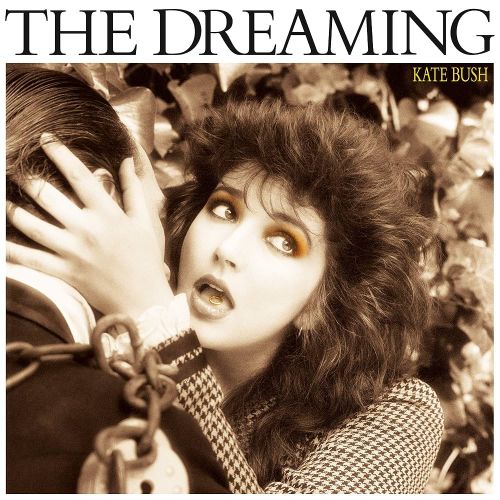
9. “Houdini”: Taking the magician and escape artist Harry Houdini and his wife Bess as its subject, the song depicts communication after death and eternal bonds. It is also the motif of the album cover photograph. Thorough role preparation was undertaken, including intentionally roughening the voice by consuming milk and chocolate. Eberhard Weber’s double bass and Stuart Elliott’s drums support the low end, while string arrangements by Dave Lawson and Andrew Powell add thickness.
10. “Get Out of My House”: A passionate track inspired by Stephen King’s “The Shining” and the film “Alien” (1979). Preston Heyman’s fierce drums, Jimmy Bain’s bass, and Alan Murphy’s electric guitar provide the driving force, with Esmail Sheikh’s talking drum added. Bush’s Fairlight and multi-layered vocals are processed with effects, and extremely distorted vocal expressions are used at the climax.
Track Listing
Total length: 43:25. All tracks written by Kate Bush.
Side One
- “Sat in Your Lap” – 3:29
- “There Goes a Tenner” – 3:24
- “Pull Out the Pin” – 5:26
- “Suspended in Gaffa” – 3:54
- “Leave It Open” – 3:20
Side Two
- “The Dreaming” – 4:41
- “Night of the Swallow” – 5:22
- “All the Love” – 4:29
- “Houdini” – 3:48
- “Get Out of My House” – 5:25
Personnel
- Kate Bush – vocals, piano, Fairlight CMI, Yamaha CS-80, strings, production
Main supporting musicians
- Paddy Bush – sticks, mandolin, strings, bullroarer, backing vocals
- Del Palmer – bass (including fretless and 8-string), spoken word
- Jimmy Bain – bass
- Preston Heyman – drums, sticks
- Stuart Elliott – drums, percussion, sticks
- Dave Lawson – Synclavier, string arrangements (partial)
- Geoff Downes – Fairlight CMI (trumpet section)
- Brian Bath – electric guitar
- Alan Murphy – electric guitar
- Ian Bairnson – acoustic guitar, backing vocals
- Danny Thompson – string bass
- Eberhard Weber – double bass
- Rolf Harris – didgeridoo
- Liam O’Flynn – uilleann pipes, penny whistle
- Seán Keane – fiddle
- Dónal Lunny – bouzouki
- David Gilmour – backing vocals (“Pull Out the Pin”)
- Percy Edwards – animal sounds
- and many others (choir, spoken word, etc.)
Technical
- Paul Hardiman (recording engineer / mixing), Nick Launay, Hugh Padgham, Haydn Bendall, and others.
Streaming Services
Search Links
Search for “Kate Bush The Dreaming” on Amazon.com
Search for “Kate Bush The Dreaming” on Apple Music