
























































Overview
Olivier Messiaen’s “Turangalîla-Symphonie” (composed 1946–48, revised 1990) is one of the most grandiose and sensual masterpieces of twentieth-century music. The title, a combination of the Sanskrit words “turanga” (time, movement, rhythm) and “lîla” (play, cosmic joy, love), indicates its central theme: human love, particularly in its physical and passionate dimensions. This ten-movement symphony for large forces lasts approximately 75–80 minutes.
This work stands at the centre of Messiaen’s “Tristan trilogy” (“Harawi,” “Turangalîla-Symphonie,” and “Cinq Rechants”). It occupies a distinctive position in the composer’s output by foregrounding secular and sensual joy rather than religious contemplation. Scored for a massive orchestra with solo piano and ondes Martenot, it employs complex rhythms, coloristic harmonies, and gamelan-like percussion.
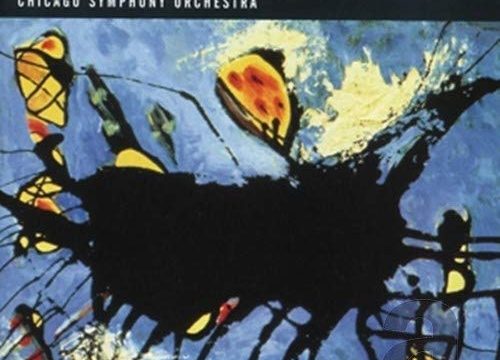
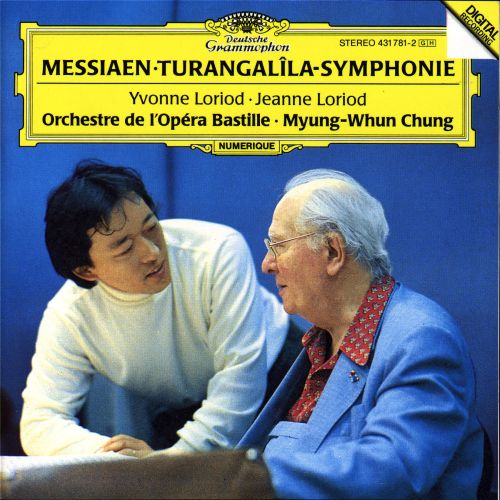
Myung-Whun Chung’s 1990 recording with the Orchestre de l’Opéra Bastille (Deutsche Grammophon) is particularly important as the version of the revised score supervised by Messiaen himself. With Yvonne Loriod (piano, the composer’s wife) and Jeanne Loriod (ondes Martenot) as soloists, it is regarded as an interpretation extremely close to the composer’s ideal.
Biography of the Composer
Olivier Messiaen (1908–1992) was a leading French composer and organist of the twentieth century. Trained at the Paris Conservatoire, he served for many years as a church organist. He established a highly personal musical language that fused birdsong, synaesthesia (the correspondence between sound and color), Indian rhythms, and Catholic mysticism. His major works include the “Quatuor pour la fin du Temps,” “Oiseaux exotiques,” and the opera “Saint François d’Assise.” As a master of postwar French music, he exerted a profound influence on younger composers such as Pierre Boulez.
Background of the Composition
Commissioned in 1945 by Serge Koussevitzky for the Boston Symphony Orchestra, the work was composed between July 1946 and November 1948. The premiere took place on 2 December 1949 in Boston, conducted by Leonard Bernstein, with Yvonne Loriod as pianist and Ginette Martenot on ondes Martenot.
Although initially conceived in a traditional four-movement form, the work evolved into a large ten-movement structure centred on the theme of love inspired by the Tristan myth, incorporating three “Turangalîla” movements and passionate love songs.
In this work Messiaen sought to express the unity of time and eternity, joy and death, body and spirit. In 1990 he made minor revisions, adjusting aspects of the orchestration.
Overall Characteristics of the Work
The scoring calls for a vast orchestra—including woodwinds, brass, strings, solo piano, ondes Martenot, celesta, glockenspiel, vibraphone, and a wide array of percussion. The percussion and keyboard sections produce shimmering, gamelan-like colors, while the ondes Martenot adds a lyrical, almost human vocal quality. The work features complex non-retrogradable rhythms (influenced by Indian tālas), modes of limited transposition, birdsong imitation, and cyclic themes (notably the love theme). Its fragmentary, superimposed textures create surreal and visionary effects. Overall, ecstatic jubilation and serene meditations on love alternate throughout.
Movement Descriptions
I. Introduction
The opening movement presents the work’s principal cyclic themes (including the love theme). It begins with dialogue between woodwinds and strings, soon joined by the ethereal sounds of the ondes Martenot and brilliant piano decorations.
II. Chant d’amour I
The first of the love songs. Heavy and sensual in character, it features strong rhythmic drive and dramatic dynamic contrasts. The love theme emerges clearly, culminating in powerful outbursts from the full orchestra.
III. Turangalîla I
The first of the three Turangalîla movements. Dreamy and slow in tempo, it is notable for its intricate rhythmic superimpositions and vivid percussion colors.
IV. Chant d’amour II
The second love song. More graceful and lyrical than the first, it features singing lines on the ondes Martenot beautifully intertwined with piano cadenzas.
V. Joie du sang des étoiles
The greatest climax of the work. Characterised by frenetic speed, powerful rhythms, and explosive energy from the full orchestra, this movement fuses cosmic jubilation with physical ecstasy in an overwhelming manner.
VI. Jardin du sommeil d’amour
The most serene and lyrical movement in the symphony. Rich in birdsong imitations, it creates a sweet, dreamlike soundscape with ondes Martenot and strings that evokes the blissful sleep of love.
VII. Turangalîla II
The second Turangalîla movement. Focused on refined rhythmic structures while maintaining a fantastical atmosphere.
VIII. Développement de l’amour
The movement depicting the development and deepening of love. It further develops material from the earlier love songs, achieving dramatic progression and rich emotional intensity.
IX. Turangalîla III
The final Turangalîla movement. A synthesis of rhythm and color, with prominent complex polyrhythms and percussion activity.
X. Finale
The concluding movement that unites all the principal themes in a triumphant close. The love theme returns gloriously, forming a magnificent apotheosis (deification / triumphant culmination) through the full resources of the orchestra, culminating in an affirmation filled with joy.
Chung Recording
Recorded in October 1990 at the Opéra Bastille in Paris (producer: Lennart Dehn). Messiaen himself attended the sessions and supervised the performance of his revised version, giving the recording exceptional historical value.
Myung-Whun Chung’s conducting emphasises subtle dynamics, timbral refinement, and structural clarity, adopting a polished approach that restrains raw exuberance. Some critics have described it as “restrained” or “soft-grained,” yet Messiaen himself praised it as “magnificent” and “definitive from every point of view.” The Bastille orchestra performs with outstanding technical precision and characteristically French sonority. DG’s recording is clear, with excellent balance between the solo instruments and the orchestra.
Released in 1991 (DG 431 781-2), the disc has been included in various Messiaen box sets and continues to enjoy high regard. Listeners seeking the overt brilliance of André Previn (EMI) or Riccardo Chailly (Decca) may find it somewhat restrained, but it offers a deeply considered interpretation that remains faithful to the composer’s intentions.
This recording occupies an important place in the performance history of Messiaen’s music in the late twentieth century as one of the “official” versions endorsed by the composer in his final years.
Streaming Services
Search Links
Search for “Messiaen Turangalîla Symphonie Myung-whun Chung” on Amazon.com
Search for “Messiaen Turangalîla Symphonie Myung-whun Chung” on Apple Music