

































































Introduction
Johann Sebastian Bach’s “Goldberg Variations” (Goldberg-Variationen, BWV 988, published in 1741) is a keyboard variation work consisting of a single theme (Aria), its 30 variations, and a return of the Aria. Rather than varying the melody of the theme, it uses the bass line and harmonic structure as the foundation for the variations, incorporating canons placed every three variations, dance movements, a French overture, contrapuntal writing, and virtuosic hand-crossing into a well-balanced overall structure. The performance duration ranges from approximately 45 minutes to over an hour (depending on the treatment of repeats) and is regarded as one of the pinnacles of Baroque keyboard music.
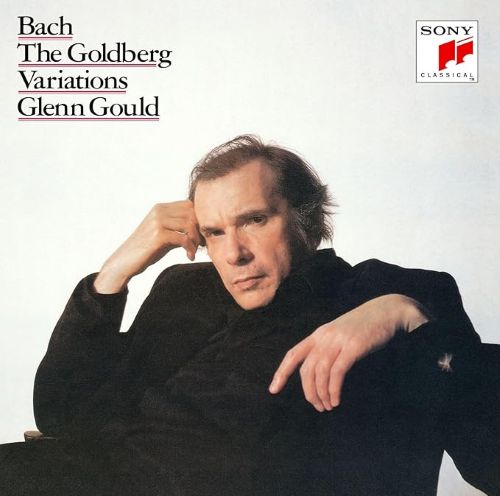
Glenn Gould recorded this work in 1955 and again in 1981. While the 1955 recording was the debut album that brought him worldwide recognition, the 1981 recording is a representative late work made about a year and a half before his death. Although both are performances of the same work by the same artist, their interpretive characters differ greatly. This article explains the work itself in the first half and Gould’s 1981 recording in the second half.
About the Work
Brief Biography of the Composer
Johann Sebastian Bach (1685–1750) was a representative composer and organist of the German Baroque period. Born in Eisenach, he held positions at various courts and churches before serving as Cantor (music director) of St. Thomas Church in Leipzig from 1723. In addition to vocal works such as cantatas, Passions, and Masses, he left decisive achievements in the systematization of counterpoint and keyboard music through works including “The Well-Tempered Clavier,” “The Art of Fugue,” and “The Musical Offering.”
Circumstances of Composition
This work was published around 1741 by Balthasar Schmid in Nuremberg as the fourth part of the “Clavier-Übung” (Keyboard Practice), which Bach continued to issue in his later years. The original title indicates an Aria with diverse variations for a two-manual harpsichord. There is no dedication.
A widely known anecdote concerning the origin of the work’s name appears in Forkel’s biography of Bach from 1802. Count Keyserlingk, the Russian ambassador in Dresden, suffered from insomnia and asked Bach to write a piece for his house harpsichordist Johann Gottlieb Goldberg to play during sleepless nights. Bach is said to have composed this work in response and received a cup filled with gold coins from the Count. However, this anecdote was recorded more than 60 years after the composition, and its historical reliability has been questioned. Goldberg’s name does not appear on the published score, and Goldberg was only in his early teens at the time. Therefore, it is appropriate to treat this anecdote as a tradition.
The Aria of the theme is also entered in the Notebook for Anna Magdalena Bach (1725). The entry is in Anna Magdalena’s hand and is estimated to have been copied onto previously blank pages around 1740; whether it is Bach’s own handwriting and the exact date of entry remain uncertain. In addition, in 1974 a personal copy containing Bach’s own editorial annotations (Handexemplar [Handexemplar]: a printed score owned by the composer himself with handwritten annotations) was discovered in Strasbourg. Besides the variations proper, it contains 14 additional canons (BWV 1087) based on the first eight notes of the Aria’s bass.
Overall Characteristics of the Work
Structure
The work as a whole consists of an Aria in G major, 30 variations, and a return of the opening Aria (da capo). The Aria is a sarabande-like dance movement in 3/4 time in binary form of 32 measures (16 + 16). Each variation shares this 32-measure bass progression and harmonic structure, giving new character based on the bass rather than tracing the theme’s melody. In this respect the work also belongs to the tradition of the passacaglia and chaconne.
Canons Every Three Variations
A canon is a compositional technique in which one voice follows another at a short time interval, imitating its melody. In this work the pitch at which the following voice enters shifts gradually with each successive canon. In Variation 3 both voices proceed at the same pitch (unison); thereafter the interval widens to a second in Variation 6, a third in Variation 9, and so on, reaching a ninth in Variation 27.
From Variation 3 to Variation 27 a canon is placed every three variations. The two intervening variations are of differing characters—dance-like, fughetta, ornate aria, virtuosic two-part writing, and so on—so that the whole forms a structure of ten repetitions of the group “character variation + virtuosic variation + canon.”
Opening of the Second Half and Conclusion
Variation 16 takes the form of a French overture (Ouverture) and divides the work into two halves. Variation 30 is not a canon but a quodlibet (Quodlibet: a form that combines several melodies simultaneously) interweaving contemporary folk songs. Afterward the quiet Aria returns to close the work.
Variations in the Minor Mode
Although the work is written throughout in G major, only three variations are in the minor mode: Variations 15, 21, and 25. Variation 25 in particular is a slow movement in G minor whose chromatic harmony and ornate melody possess profound lyricism; it is well known that the twentieth-century harpsichordist Wanda Landowska called it the “Black Pearl.”
Instrumentation
The original is written for a two-manual harpsichord. Crossings of parts and overlapping of the hands that presuppose the use of two manuals are numerous and become technical difficulties when the work is played on the modern piano. From the twentieth century onward performance on the piano became general, and Gould’s recordings are representative examples. There also exist various arrangements for organ, string trio, string orchestra, and other forces.
Commentary on the Individual Variations
- “Aria”: The sarabande-like theme. A melody richly ornamented is supported by the 32-measure bass progression. It is both the starting point and the end point of the entire work.
- “Variation 1”–“Variation 2”: Lively two-part variations that present driving energy in contrast to the calm of the theme.
- “Variation 3”: The first canon. Two voices follow the melody at the same pitch.
- “Variation 4”–“Variation 5”: A dance-like Variation 4 followed by the rapid virtuosic Variation 5 involving hand-crossing.
- “Variation 6”: Canon at the second.
- “Variation 7”–“Variation 8”: A dance-like Variation 7 and the virtuosic Variation 8 employing hand-crossing.
- “Variation 9”: Canon at the third.
- “Variation 10”–“Variation 11”: A small fughetta-like Variation 10 and the light Variation 11.
- “Variation 12”: Canon at the fourth.
- “Variation 13”–“Variation 14”: An ornate, song-like Variation 13 and the virtuosic Variation 14 involving hand-crossing.
- “Variation 15”: Canon at the fifth. Written in the minor mode, it has a deep expression that closes the first half.
- “Variation 16”: French overture (Ouverture). It announces the beginning of the second half.
- “Variation 17”–“Variation 18”: The virtuosic Variation 17 and Variation 18, a canon at the sixth.
- “Variation 19”–“Variation 20”: A light triple-meter Variation 19 and the virtuosic Variation 20.
- “Variation 21”: Canon at the seventh. In the minor mode, its chromatic descent carries a sense of pathos.
- “Variation 22”–“Variation 23”: A four-part alla breve (alla breve: a meter counted at twice the speed) Variation 22 and the brilliant Variation 23.
- “Variation 24”: Canon at the octave.
- “Variation 25”: Slow variation in G minor. The emotional core of the entire work.
- “Variation 26”: A flowing variation in compound meter.
- “Variation 27”: Canon at the ninth.
- “Variation 28”: A virtuosic and ornate variation.
- “Variation 29”: The final virtuosic variation, contrasting massive chords with rapid runs.
- “Variation 30”: Quodlibet. Two folk-song melodies are combined; it is a concluding variation placed in the position where a canon would normally appear.
- “Aria (da capo)”: The opening theme returns to close the work. The same melody heard after thirty variations takes on a different resonance from the beginning.
About Gould’s 1981 Recording
About the Performer
Glenn Gould (1932–1982) was a pianist born in Toronto, Canada. In 1964 he withdrew from public performance and thereafter concentrated on studio recording, broadcasting, and writing. He made Bach’s contrapuntal works a central part of his repertoire and was one of the most individual performers of the second half of the twentieth century, exploring the possibilities of the recording medium. He is also known for the humming (vocalizing) that accompanies his recordings. He died on October 4, 1982.
Commentary on the Recording
The recording was made digitally at CBS (Columbia) 30th Street Studio in New York from April 22 to May 1981. It is the second recording of the work and one of the late recordings completed in Gould’s lifetime. It was the final session held in that studio. The instrument used was a Yamaha concert grand piano. The producer was primarily Samuel H. Carter, with Gould himself participating as co-producer (Richard Einhorn substituted for some sessions).
The recording lasts approximately 51 minutes, considerably longer than the approximately 38 minutes of the 1955 recording. The main reasons for this length are the generally slower tempo settings and the treatment of repeats. Whereas the 1955 recording omitted all repeats, the 1981 recording observes the repeat of the A section in 13 variations (all nine canons and the strictly contrapuntal Variations 4, 10, 22, and 30). The B-section repeats are as a rule omitted. The opening and closing Arias are played far more slowly and introspectively than in the 1955 recording.
The greatest characteristic of the 1981 recording is the attention given to the tempo relationships among the variations. Rather than treating each variation as an isolated character piece, Gould seeks to present the work as a single organic temporal structure by linking units of pulse and proportional speeds. Gould himself, in Bruno Monsaingeon’s film and in an interview with Tim Page, looked back on the 1955 recording as “thirty very interesting but somewhat independent-minded pieces” and stated that in the 1981 recording he established a “constant rhythmic reference point” and sought to unify the whole through proportional tempo relationships.
Listen to All the Tracks on the Official Glenn Gould YouTube Channel
Comparison with the 1955 Recording
The differences from the 1955 recording are as follows.
| Aspect | 1955 Recording | 1981 Recording |
|---|---|---|
| Recording period | June 1955 | April–May 1981 |
| Duration | approx. 38 min. | approx. 51 min. |
| Recording method | Analog | Digital |
| Overall character | Fast and clear, brilliant virtuosity | Slower, introspective, meditative |
| Aria | Sung relatively lightly | Played leisurely with deep shading |
| Repeats | All omitted | A-section repeats in 13 variations |
| Positioning | Sensational debut recording | Comprehensive late reinterpretation |
The 1955 recording strongly impressed the individuality of the then 23-year-old Gould through its vivid non-legato touch and driving force. By contrast, the 1981 recording carefully preserves the resonance of the sound and allows each voice to sing more deeply, drawing a different world from the same score. The two are generally heard not in terms of superiority or inferiority but as a complementary pair.
Reception
The 1981 recording is widely and highly regarded as one of the representative piano recordings of the “Goldberg Variations.” In particular, the fact that Gould reinterpreted his own 1955 recording and reached a different dimension has attracted attention. On the other hand, because of the slow tempos and strong individuality, it sometimes meets with mixed reactions from the standpoint of Baroque performance norms or historically informed performance (HIP). Those who wish to hear the work in a more orthodox style and interpretation should also consult performances by harpsichordists and recordings by other pianists.
Release History
It was released in 1982 by CBS Masterworks (now Sony Classical) on LP and CD (principal catalog numbers: IM 37779, MK 37779, D 37779, etc.). Because it was a digital recording, it attracted attention from an early stage in the nascent CD market. It won a Grammy Award (Best Classical Instrumental Soloist) and a Juno Award, and achieved unusually high sales for a classical recording (said to have exceeded two million copies in later years). It has subsequently been reissued in two- and three-disc sets together with the 1955 recording.
In 2022, to mark the 90th anniversary of Gould’s birth, the 40th anniversary of his death, and the 40th anniversary of the 1981 recording, Sony Classical released “The Goldberg Variations – The Complete Unreleased 1981 Studio Sessions,” an 11-CD large-format box set. CDs 1–10 contain approximately ten hours of previously unreleased material from the April–May 1981 sessions at Columbia’s 30th Street Studio, including all takes as well as conversations and exchanges with the producers and engineers. CD 11 presents the Grammy-winning final release version of 1982. The audio was remastered at 24-bit/96 kHz from the original ¼-inch analog tapes. The set is accompanied by a 216-page hardcover art-paper book (11” × 11”) containing the complete transcripts of the studio conversations, an annotated score, archival photographs, and essays by Richard Einhorn and others.
During the 1981 recording sessions, the French filmmaker Bruno Monsaingeon produced the documentary “Glenn Gould Plays Bach: The Goldberg Variations.” Combining studio recording scenes with Gould’s commentary, it is a valuable visual document that conveys the intention behind the re-recording (the performance takes are not completely identical with those on the audio recording).
Evaluation and Influence in Music History
Gould’s two recordings constitute an extremely rare case in the reception history of the “Goldberg Variations”: the same performer recorded the same work in youth and in late life, and the change in interpretation is heard as a deepening of understanding of the work. The 1955 recording broadened the possibilities of playing Bach on the piano for the general public and made the work widely known as a masterpiece of keyboard music. The 1981 recording, made shortly before Gould’s death, is often heard as a “retrospective summation” or a “testamentary performance.”
Streaming Services
Search Links
Search for “Bach Goldberg Variations Gould 1981” on Amazon.com
Search for “Bach Goldberg Variations Gould 1981” on Apple Music