
















































- Overview
- Trailer
- Work Data
- Plot Summary
- Commentary
- Production Background and Context
- Characteristics
- Cinematography and Visual Language
- Music
- List of Songs Used
- 10cc – “I’m Not in Love” (1975)
- Redbone – “Come and Get Your Love” (1974)
- Raspberries – “Go All the Way” (1972)
- Blue Swede – “Hooked on a Feeling” (1974, original 1968)
- Rupert Holmes – “Escape (The Piña Colada Song)” (1979)
- David Bowie – “Moonage Daydream” (1971)
- Elvin Bishop – “Fooled Around and Fell in Love” (1975)
- The Runaways – “Cherry Bomb” (1976)
- Five Stairsteps – “O-o-h Child” (1970)
- Marvin Gaye & Tammi Terrell – “Ain’t No Mountain High Enough” (1967)
- The Jackson 5 – “I Want You Back” (1969)
- Theme Analysis
- Release and Reception
- Historical Positioning
- Home Media
- Search Links
- Synopsis (Contains Spoilers)
Overview
“Guardians of the Galaxy” is a 2014 American superhero film directed and co-written by James Gunn. It is the 10th film in the Marvel Cinematic Universe (MCU) produced by Marvel Studios and distributed by Walt Disney Studios Motion Pictures, and is positioned as one of the Phase Two films. The original work is the Marvel Comics featuring the superhero team “Guardians of the Galaxy” by Dan Abnett and Andy Lanning.
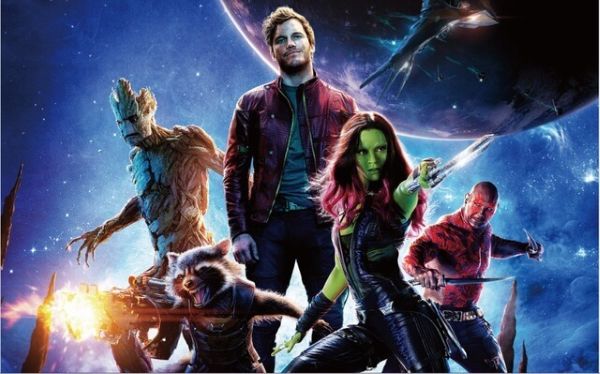
It is the story of treasure hunter Peter Quill (Star-Lord), who was abducted from Earth in his boyhood, becoming involved in a conflict over a mysterious Orb and teaming up with outlaws of unusual forms such as the assassin Gamora, Drax burning with revenge, the genetically modified raccoon Rocket, and the tree-like being Groot to stop the ambitions of the fanatical Kree warrior Ronan. A distinctive feature is that it reimagined the episodes of a relatively minor group of characters from the comics as a story of the loss and reconstruction of family, blending in a 1970s pop/rock soundtrack and black humor.
Gunn combined the poisonous humor and human observation cultivated in independent works such as “Super!” (2010) with large-scale visual effects. Against a production cost of approximately 170 million dollars, it recorded a worldwide box office of approximately 773.35 million dollars, becoming the 3rd highest worldwide box office of 2014. On the critical side as well, the wit of the screenplay, casting, use of music, and visual effects were highly evaluated, and it was nominated for the Academy Award for Best Visual Effects and Best Makeup and Hairstyling. As a work that fully opened the “cosmic side” of the MCU, it laid the foundation for the subsequent series developments.
Trailer
Work Data
- Original title: Guardians of the Galaxy
- Director: James Gunn
- Screenplay: James Gunn, Nicole Perlman
- Original work: Marvel Comics by Dan Abnett, Andy Lanning
- Producer: Kevin Feige
- Cinematography: Ben Davis
- Editing: Fred Raskin, Craig Wood, Hughes Winborne
- Music: Tyler Bates
- Cast: Chris Pratt (Peter Quill / Star-Lord), Zoe Saldana (Gamora), Dave Bautista (Drax), Vin Diesel (voice of Groot), Bradley Cooper (voice of Rocket), Lee Pace (Ronan), Michael Rooker (Yondu), Karen Gillan (Nebula), Djimon Hounsou (Korath), John C. Reilly (Rhomann Dey), Glenn Close (Nova Prime), Benicio del Toro (the Collector), and others
- Release dates: July 21, 2014 (Hollywood premiere), August 1, 2014 (United States), September 13, 2014 (Japan)
- Running time: 121–122 minutes
- Country of production: United States of America
- Language: English
- Production cost: Approximately 170 million dollars (announced figure. There are also reports of approximately 232 million dollars on a gross basis)
- Box office: Approximately 773.35 million dollars (worldwide)
Plot Summary
In 1988, the boy Peter Quill, who lost his mother to cancer, is abducted by the space smuggling organization the Ravagers. 26 years later in 2014, Quill steals a mysterious Orb from the ruins of Morag, but becomes pursued by the underlings of the fanatical Kree warrior Ronan and by Yondu, the leader of the Ravagers who is also his foster parent. He happens to meet the bounty hunter Rocket and Groot, the assassin Gamora who is the adoptive daughter of the warlord Thanos from Titan, and Drax whose family was killed by Ronan, and they plan to escape together from the prison “the Kyln” where they are confined.
Having learned that the true nature of the Orb is one of the Infinity Stones, the “Power Stone,” they form a temporary alliance beyond their interests in order to stop Ronan’s destruction of the planet Xandar.
Commentary
Production Background and Context
From the early 2010s, Marvel Studios had been exploring the development of a cosmic side different from the Earth side centered on the Avengers. The choice of the relatively low-profile “Guardians of the Galaxy” was also for the purpose of constructing a fresh team image that does not depend on existing star actors. Nicole Perlman handled the initial screenplay, and later James Gunn extensively rewrote it and assumed the position of director.
Gunn placed the emotional core of the characters on “loss and music.” Quill’s Walkman and the “Awesome Mix Vol. 1” cassette function as the final bond with his late mother and the sole point of contact with Earth as his homeland.
Filming took place mainly at Shepperton Studios in London and other locations from the summer of 2013, and post-production was completed in July 2014. Visual effects were shared among multiple studios, and the character animation of Rocket and Groot in particular was highly evaluated.
In casting, the decision to cast Chris Pratt in the role of Star-Lord was a major gamble. At the time, Pratt was mainly known as a comedy actor and was distant from the action hero image, but Gunn emphasized his humor and humanity. Rocket was voiced by Bradley Cooper, and Groot by Vin Diesel. Diesel recorded the line “I am Groot” in multiple languages and supported the emotional expression of the character.
Characteristics
While following the structure of a typical superhero film, this work centers on the formation of a pseudo-family among the outlaws. Gunn’s screenplay alternates poisonous jokes with subtle emotions and inserts quiet human drama between large-scale action. The technique of depicting Ronan as a simple villain while placing the shadow of Thanos in the background and embedding foreshadowing for the entire MCU is also characteristic.
Cinematography and Visual Language
The director of photography was Ben Davis. There are many compositions that contrast the vastness of space with the intimacy of the characters, and the sets of the ruins of Morag and Knowhere (the remains of a giant skull) in particular emphasize desolate beauty. Action sequences fuse handheld camera and CGI, and the direction that synchronizes music and movement, as in Quill’s dance scene, stands out.
Music
The original score was handled by Tyler Bates. Gunn had parts of the score composed before filming and adopted the method of playing it on set while filming. Existing songs are incorporated into the story as the “Awesome Mix Vol. 1” left by Quill’s mother, and function not merely as BGM but as carrying the psychology of the characters and the theme. The soundtrack album reached number one on the Billboard 200 in the United States and became an unusual hit for film music.
List of Songs Used
10cc – “I’m Not in Love” (1975)
Opening, the scene where the boy Quill waits for his mother’s death in the hospital. He is listening through headphones.
Redbone – “Come and Get Your Love” (1974)
Opening credits. The scene where the adult Quill steals the Orb on Morag and explores the ruins while dancing.
Raspberries – “Go All the Way” (1972)
The scene where Quill returns to the spaceship the Milano with the Orb and escapes.
Blue Swede – “Hooked on a Feeling” (1974, original 1968)
The scene where the group arrives at the Kyln prison and is incarcerated. A guard plays it on Quill’s Walkman.
Rupert Holmes – “Escape (The Piña Colada Song)” (1979)
After escaping from the prison, the scene where Quill recovers his Walkman and returns to the ship.
David Bowie – “Moonage Daydream” (1971)
The scene where the group approaches Knowhere.
Elvin Bishop – “Fooled Around and Fell in Love” (1975)
The scene where Quill has Gamora listen to music and the two dance slowly.
The Runaways – “Cherry Bomb” (1976)
Before heading to the decisive battle with Ronan, the slow-motion montage where the group prepares their equipment and walks down the corridor.
Five Stairsteps – “O-o-h Child” (1970)
The final battle on the surface of Xandar. The scene where Quill begins dancing to distract Ronan and the companions create an opening for attack.
Marvin Gaye & Tammi Terrell – “Ain’t No Mountain High Enough” (1967)
Near the ending, the scene where Quill opens the gift left by his mother and plays the “Awesome Mix Vol. 2” cassette.
The Jackson 5 – “I Want You Back” (1969)
Around the end credits, the scene where the young Groot dances on the rebuilt Milano.
※Norman Greenbaum’s “Spirit in the Sky” (1969) was used in the trailer but does not appear in the main feature.
Theme Analysis
The central themes are “reconstruction of family” and “acceptance of loss.” Quill carries the death of his mother and forced severance from Earth, Rocket carries self-loathing and loneliness as an experimental subject, Gamora carries self-denial as an assassin raised by Thanos, and Drax carries the desire for revenge for his family being killed, each respectively. The process by which they begin to function as the “Guardians” is depicted as the formation of elective bonds that transcend blood relations.
Music is not mere nostalgia but a “device of memory” for Quill and also a medium of communication with others. The scene of offering headphones to Gamora and the dance in the final battle indicate the possibility of empathy beyond words. At the same time, Ronan’s pure fanaticism and Thanos’s cold desire for power are set in opposition as cosmic-scale violence that transcends individual wounds.
In the context of the MCU, it clarified the existence of the Infinity Stones and Thanos and became a stepping stone to the later “Avengers: Infinity War” (2018). On the other hand, by introducing the perspective of “outlaws of the frontier” different from the Earth-centered hero epics, it expanded the diversity of the series.
Release and Reception
In the nationwide release in the United States on August 1, 2014, it recorded approximately 94.3 million dollars in box office for the opening weekend and became the highest record at the time for an August release. The worldwide box office reached approximately 773.35 million dollars (3rd place in 2014).
On Rotten Tomatoes the critics’ approval rating exceeded 90%, and it also maintained high evaluations on Metacritic; the wit of the screenplay, the acting of the actors including Pratt, the effective use of music, and the visual effects were particularly praised. At the 87th Academy Awards it was nominated for Best Visual Effects and Best Makeup and Hairstyling, and it won multiple categories at the Saturn Awards.
Historical Positioning
It is a work that established full-fledged space adventure departing from Earth in MCU Phase Two. As an example of leading a minor original work to commercial and critical success, it also influenced subsequent Marvel works. Gunn’s style as a director (the coexistence of humor and emotion, the narrative function of music) is carried through in the sequels “Vol. 2” (2017) and “Vol. 3” (2023), forming consistent themes across the trilogy.
Home Media
In the United States, digital distribution and Blu-ray/DVD were released on December 9, 2014. Home video was similarly rolled out in Japan as well, and in later years a 4K Ultra HD version has also been released. Special features include deleted scenes, making-of, audio commentary, and others.
Search Links
Cross-Search for “Guardians of the Galaxy” on JustWatch
Search for “Guardians of the Galaxy” on Amazon.com
Synopsis (Contains Spoilers)
1988 Prologue
Missouri. The boy Peter Quill is outside the hospital room of his mother dying of cancer while listening to his Walkman in the hospital corridor. Mother Meredith finally calls her son and tries to hand him a gift, but Quill refuses it out of fear. Immediately after the mother draws her last breath, Quill runs outside, and there he is abducted by the Ravagers’ spaceship.
2014: Theft on Morag
26 years later. Quill calls himself “Star-Lord” and is active as a treasure hunter. He steals an ancient Orb from the ruined planet Morag, but is attacked by Korath, a subordinate of Ronan. Quill flees with the Orb and tries to sell it to a broker on Xandar, the capital planet of the Nova Empire, but the deal does not go through.
Encounter with the Bounty Target
Yondu is angry at Quill’s betrayal and places a bounty. Meanwhile, Gamora, the adoptive daughter of Thanos, targets the Orb under orders from Ronan. The bounty hunter Rocket and his partner the tree-like being Groot, who can only say that I am Groot, also try to capture Quill. The four collide on Xandar, and after a brawl they are arrested by the Nova Corps and incarcerated in the high-security prison “the Kyln.”
Alliance in the Kyln
Inside the Kyln, Quill, Gamora, Rocket, and Groot meet Drax, whose family was killed by Ronan. Gamora reveals her plan to sell the Orb not to Thanos but to the Collector (Taneleer Tivan) based in Knowhere (the remains of a giant skull) and to escape from Thanos. Through Rocket’s escape plan, the group starts a riot and breaks out of prison. Quill recovers his Walkman from a guard. The group that escaped from the Kyln prison heads to Knowhere on Quill’s spaceship “the Milano.”
Knowhere and the Power Stone
The group arrives at Knowhere and shows the Orb to the Collector. The Collector explains that it is one of the Infinity Stones, the “Power Stone,” and that anyone who touches it with their bare body will be annihilated (die). Meanwhile, Drax, who tried to achieve revenge, had secretly summoned Ronan to Knowhere. Confusion arises with the arrival of Ronan’s forces, and Nebula, the adoptive daughter of Thanos, destroys Gamora’s pod and seizes the Orb (Power Stone), and the Stone passes into Ronan’s hands. Ronan embeds the Stone into his own hammer.
Sacrifice and Resolve
Gamora is thrown into outer space. Quill chases after Gamora and leaps into outer space without a spacesuit, and seeks help from Yondu. Meanwhile, Rocket engages in combat with Ronan’s forces, and Groot is injured. The surviving group learns that Ronan is trying to destroy Xandar. Quill pretends to hand the Orb over to Yondu, but actually collaborates with the Nova Corps to draw up a plan to stop Ronan. The five who are prepared for death name themselves the “Guardians of the Galaxy.”
Battle of Xandar
Ronan’s warship, the Dark Aster, approaches Xandar. The Guardians board the vessel after it breaches the Nova Corps defense network. In the ensuing battle the ship plummets toward the planet’s surface. Groot rapidly expands his branches to encase his companions and declares, “We are Groot.” His body absorbs the impact of the crash, allowing Quill and the others to survive unharmed, while Groot himself is reduced to splinters.
Dance and Victory
Ronan descends to the surface and prepares to destroy Xandar with the Power Stone. To distract him, Quill begins an impromptu dance set to “O-o-h Child.” Seizing the moment, Rocket and Drax attack and shatter Ronan’s hammer. The Power Stone is released; Quill seizes it. By joining hands with his companions he succeeds in controlling its energy. Together they direct the Stone’s power at Ronan, annihilating him.
Aftermath
Nova Prime, supreme commander of the Nova Corps, expunges the group’s criminal records. Quill hands Yondu a counterfeit container while entrusting the real Stone to the Nova Corps. He finally opens his mother’s gift and finds a letter together with a cassette labeled “Awesome Mix Vol. 2.” With “Baby Groot,” revived from a cutting, aboard the rebuilt Milano, the Guardians set off on a new journey.
After the end credits, Cosmo (a Marvel Comics character; a dog wearing a spacesuit) and Howard the Duck (a Marvel Comics character; an intelligent life form resembling a duck) remain in the destroyed Collector’s collection.