
































































Overview
“Brilliant Corners” is a 1957 studio album by the American pianist and composer Thelonious Monk. It was his third release for Riverside Records and the first on the label to center on his original compositions. Recorded over three sessions on October 9, October 15, and December 7, 1956, the album runs approximately 42 minutes and 47 seconds. It marks a decisive turning point in Monk’s career and has received exceptionally high critical acclaim.
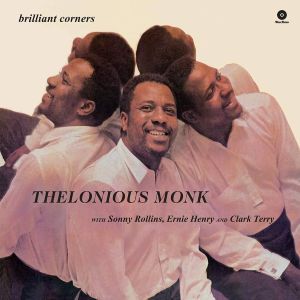
Background of Production
Born in 1917 in Rocky Mount, North Carolina, Thelonious Monk had already developed his distinctive musical language during the formative years of bebop in the 1940s. However, the revocation of his cabaret card in 1951 severely limited his opportunities to perform in New York clubs. After signing with Riverside in 1955 and releasing two albums focused mainly on standards, he fully turned to his original compositions with this record.
Producer Orrin Keepnews adopted a policy of bringing Monk’s side as a composer to the forefront. Centering on complex originals including the title track, he assembled a strong group of sidemen, featuring Sonny Rollins—who was beginning to emerge as a major force—on tenor saxophone and Max Roach on drums. The sessions took place at Reeves Sound Studios in New York, with Jack Higgins serving as engineer.
The sessions proved extremely difficult. In particular, the title track “Brilliant Corners,” with its irregular phrase structure and tempo changes, was so demanding that it required approximately twenty-five takes; the final version was completed by editing together multiple takes. For the final session, alto saxophonist Ernie Henry and bassist Oscar Pettiford were unavailable, and the lineup was reinforced by the addition of trumpeter Clark Terry and bassist Paul Chambers.
Commentary
This album meticulously develops the core elements of Monk’s music—“angular melodies,” “rhythms that defy expectation,” and “harmonies that incorporate dissonance”—within collective performance. As exemplified by the title track, the thematic statements themselves already possess a highly sophisticated structure, while the improvisations remain faithful to them yet introduce free variations. Throughout the album, Monk’s piano is characterized by percussive attacks and a distinctive use of space; Rollins’s tenor responds with a full tone and logical construction; and Roach’s drums answer with polyrhythmic interjections.
Monk’s compositions are not merely extensions of bebop but reexamine form itself. Uneven numbers of bars, sudden shifts to double time, and displaced accents continually unsettle the listener’s expectations. At the same time, introspective ballads such as “Pannonica” and the solo performance of “I Surrender, Dear” bring emotional depth to the fore. The juxtaposition of these elements creates a dynamic of tension and release across the album as a whole.
Track-by-Track Commentary
1. “Brilliant Corners”: Recorded on October 15, 1956. Quintet with Ernie Henry (alto saxophone), Sonny Rollins (tenor saxophone), Oscar Pettiford (bass), and Max Roach (drums). Regarded as one of Monk’s most difficult compositions. It features an asymmetrical structure of an 8-bar A section followed by a 7-bar B section, with a double-time theme inserted after the initial statement, demonstrating an extreme manipulation of rhythm and form. Monk’s staccato chords at the opening produce a hard-edged sound as if chiseling stone, answered by the saxophone section. Rollins’s solo maintains a massive tone within a leisurely unfolding, while Roach’s drums respond with complex accents. Although the take was completed through editing, the sense of tension continues without interruption.
2. “Ba-Lue Bolivar Ba-Lues-Are”: Recorded on October 9. Same quintet as the previous track. The title is a phonetic rendering of “Blue Bolivar Blues” in Monk’s manner of pronunciation and derives from the Bolivar Hotel, where his patron Pannonica de Koenigswarter resided. Based on the blues yet distinguished by Monk’s characteristic angular phrases and unique rhythmic treatment in the accompaniment. Extended improvisation is developed at length, with dialogue between the two saxophones and Monk’s interludes creating an urban, grainy texture. Overall, Monk’s distinctive displacements are embedded within a relaxed groove.
3. “Pannonica”: Recorded the same day. Monk plays celesta in addition to piano. A dedication to Pannonica de Koenigswarter. While possessing a character close to a ballad, it retains Monk’s characteristic inner strength. The clear tone of the celesta contrasts with the hard-edged piano sound, producing a unique poetic quality. Henry participates only in the ensemble passages, with Rollins’s tenor taking the lead. A particularly beautiful track on the album in which emotional depth and structural clarity coexist.
4. “I Surrender, Dear”: Recorded on December 7. A standard composed by Harry Barris and Gordon Clifford, performed as a piano solo by Monk. The only solo track on the album. The distinctive features of Monk’s solo playing—concision combined with unexpected harmonic displacements, the use of silence, and emotional density—stand out. While improvisatory, it maintains a strong sense of structure and an introspective, solemn bearing.
5. “Bemsha Swing”: Recorded the same day. A collaboration between Monk and Denzil Best. Clark Terry (trumpet), Paul Chambers (bass), and Max Roach (drums and timpani) join. Although the piece had been recorded previously, on this album Roach’s timpani adds depth to the low register and Terry’s trumpet brings a bright sound. While grounded in a swinging feel, Monk’s characteristic rhythmic displacements appear throughout, resulting in a performance that is both festive and angular.
Reception
From its release the album received extremely high critical praise. In 1957 Nat Hentoff awarded it five stars in “Down Beat,” describing it as “Riverside’s most important modern jazz LP to date.” The magazine ranked it as the most critically acclaimed jazz album of 1957. Later critics, including Scott Yanow and Lindsay Planer (AllMusic), have also highly praised it as “the alpha and omega of post–World War II American jazz” and “an essential album that no serious collection should be without.” It was inducted into the Grammy Hall of Fame in 1999 and selected for the National Recording Registry of the Library of Congress in 2003. It served as a catalyst for the reappraisal of Monk as a composer among critics and musicians, and is positioned as a turning point in his career that led to his activities at the Five Spot after the restoration of his cabaret card.
Track Listing
Total duration: approximately 42 minutes 47 seconds.
Side One
- “Brilliant Corners” – 7:42–7:45
- “Ba-Lue Bolivar Ba-Lues-Are” – 13:07–13:24
Side Two
- “Pannonica” – 8:50
- “I Surrender, Dear” (Harry Barris, Gordon Clifford) – 5:25–5:27
- “Bemsha Swing” (Monk, Denzil Best) – 7:40–7:42
(Durations may vary slightly between the original LP and reissues.)
Recording: October 9, 1956 (tracks 2, 3), October 15, 1956 (track 1), December 7, 1956 (tracks 4, 5), Reeves Sound Studios, New York.
Personnel
Musicians
- Thelonious Monk – piano (all tracks), celesta (3)
- Sonny Rollins – tenor saxophone (1, 2, 3, 5)
- Ernie Henry – alto saxophone (1, 2, 3)
- Clark Terry – trumpet (5)
- Oscar Pettiford – bass (1, 2, 3)
- Paul Chambers – bass (5)
- Max Roach – drums (1, 2, 3, 5), timpani (5)
Technical
- Orrin Keepnews – producer, liner notes
- Jack Higgins – engineer
- Paul Bacon – cover design
Streaming Services
Search Links
Search for “Thelonious Monk Brilliant Corners” on Amazon.com
Search for “Thelonious Monk Brilliant Corners” on Apple Music