




































































Overview
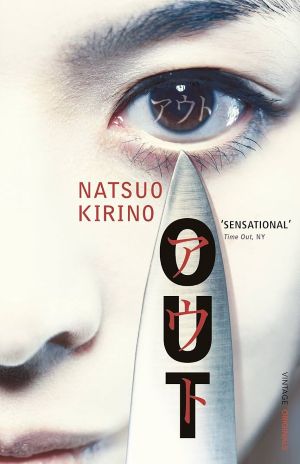
“Out” is a full-length crime novel by Natsuo Kirino published by Kodansha in 1997. It depicts the process by which four housewives working the midnight shift as part-timers at a boxed-lunch factory in the Tokyo suburbs become involved in the dismemberment and disposal of a corpse after one of them kills her colleague’s husband, and gradually deviate from social norms. The work is known for portraying women’s labor, family, poverty, and violence in post-bubble-economy Japan through cold realism and suspense techniques. It received the 51st Mystery Writers of Japan Award in 1998, ranked first in the domestic category of “This Mystery Is Amazing!”, and became a bestseller exceeding 800,000 copies. The English translation was a finalist for the Edgar Award for Best Novel in 2004, marking the first nomination for a Japanese author.
The work is positioned as a socially conscious novel that goes beyond the framework of ordinary mysteries or crime fiction, sharply probing the psychology of women who step outside of everyday oppression and the social structures surrounding them. The technique of overlapping the mechanical labor descriptions of the boxed-lunch factory with the scenes of corpse dismemberment, thereby suggesting the continuity between labor and violence, is particularly noteworthy.
Plot Summary
The four women—Masako Katori, Yoshie Azuma, Kuniko Jonouchi, and Yayoi Yamamoto—who work the night shift as part-timers at a boxed-lunch factory in the Tokyo suburbs each faced problems with family or finances. After Yayoi kills her abusive husband, Masako takes the lead in covering up the corpse, and the women are gradually pushed to the margins of society. The police investigation, the revenge of underground casino owner Mitsuyoshi Satake, and the intervention of loan shark Akira Jumonji cause the relationship among the four to collapse and lead to a chain of further crimes.
Author Biography
Natsuo Kirino (born October 7, 1951) is a novelist from Kanazawa City, Ishikawa Prefecture. Her real name is Mariko Hashioka. After graduating from the Faculty of Law at Seikei University, she worked as a company employee and freelance writer, and under pen names such as Noemi Nobara she wrote romance novels and original stories for ladies’ comics. In 1993 she won the Edogawa Rampo Prize for “Rain Falling on the Face” and made her full-fledged debut as a hard-boiled mystery writer. She carved out a unique territory with the series featuring female detective Miro Murano set in Shinjuku’s Kabukicho, and achieved a breakthrough with “Out” in 1997.
Thereafter she received numerous major literary awards, including “Soft Cheeks” (1999, Naoki Prize), “Grotesque” (2003, Izumi Kyoka Literary Prize), “Brutal Record” (2004, Shiba Ryotaro Prize), “Tokyo Island” (2008, Tanizaki Junichiro Prize), and “Something” (2010, Yomiuri Prize for Literature). She was awarded the Medal with Purple Ribbon in 2015 and became president of the Japan PEN Club (the first woman) in 2021. She is known for her cold depiction of the oppression of women and the dark side of society, and is highly regarded internationally.
Publication History and Background
“Out” was published as a hardcover by Kodansha on July 15, 1997. It is said to have been written using as material the reality of middle-aged women struggling with part-time labor and domestic oppression amid the recession after the bubble collapse, and with reference to real incidents such as the Inokashira Park dismembered-body murder case (1994). Kirino herself has stated in essays that she conducted interviews with reporters and nonfiction writers who covered the case.
At the time of publication it faced some criticism for the extremeness of its crime descriptions, yet became a bestseller and received the Mystery Writers of Japan Award in 1998. It was also nominated for the Naoki Prize and the Yoshikawa Eiji Prize for New Writers, but comments from selection committee members such as “anti-social” and “catering to readers” prevented it from winning. The work later came to be reevaluated as one that visualized issues of gender, labor, and violence in late-1990s Japanese society through the framework of mystery.
Bibliographic Information
- Original title: OUT
- First publication: July 15, 1997, Kodansha (hardcover, 448 pages)
- Paperback edition: June 2002, Kodansha Bunko (upper and lower volumes)
- Genre: crime novel, socially conscious mystery
Translation Status
The English translation by Stephen Snyder was published by Kodansha International in 2003 and by Vintage Books in 2004. This English version became a finalist for the Edgar Award for Best Novel in 2004 and attracted international attention. It has been translated into more than a dozen languages, including French, German, Italian, Spanish, Korean, and Chinese (simplified and traditional characters).
Reception
Domestically it was highly evaluated in the mystery field, receiving the Mystery Writers of Japan Award in 1998 and ranking first in “This Mystery Is Amazing!”. On the other hand, the detailed descriptions of corpse dismemberment and the “immoral” actions of the women caused controversy, and in the Naoki Prize selection there was criticism that it was “anti-social.” Literarily, the descriptions that blur the boundary between everyday labor and violence, the multi-perspective portrayal of the inner lives of the four women, and the dynamics of solidarity and betrayal among those living on the margins of society have been praised.
Outside Japan, the English translation was reviewed by The Washington Post as “depicting the dark side of Japanese society while shattering stereotypes of Japanese women,” and the Edgar Award nomination established its international reputation. American writer Mary Gaitskill has pointed out the coexistence of a cold depiction that rejects easy sympathy for the weak and the lingering pathos that remains.
Overall, it is regarded as an important achievement in contemporary Japanese literature for illuminating the oppression of gender and class through a chain of crimes.
Media Adaptations
In 1999 it was broadcast as a television drama on Fuji Television titled “Out—Wives’ Crimes” (11 episodes, starring Misako Tanaka).
In 2000 it was adapted for the stage at Shinjuku Space Zero (directed by Hiromi Suzuki, starring Seika Kuze) and restaged at PARCO Theater in 2002.
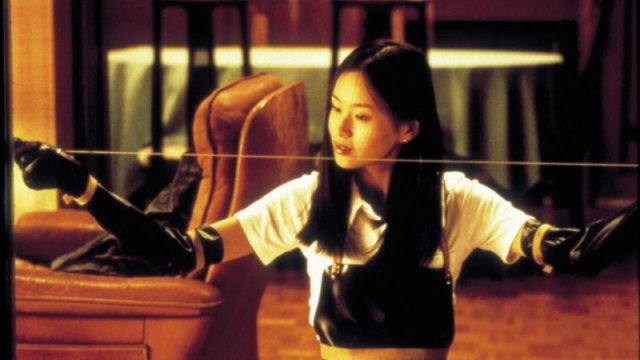
In October 2002 it was made into a film (directed by Hideyuki Hirayama, starring Mieko Harada) and selected as Japan’s entry for the Academy Award for Best Foreign Language Film. Plans for a Hollywood version were also reported but never realized.
Characters
- Masako Katori (around 43 years old): A capable former employee of a credit union who retired because of isolation at work and now works as a part-timer at the midnight boxed-lunch factory. She is in a state of domestic separation from her husband Yoshiki and barely speaks with her high-school-dropout son Nobuki. Her calm and practical personality makes her the central figure among the four and the leader of the corpse dismemberment. She harbors a latent desire to escape everyday oppression.
- Yoshie Azuma (mid-50s): Called “the Skipper” at the boxed-lunch factory for her skillful work. She lost her husband early and single-handedly cares for her bedridden mother-in-law as well as a financially dependent daughter and grandchildren. Tormented by poverty and caregiving fatigue, she becomes involved in the incident for monetary motives. She has a pragmatic personality and acts coldly according to the situation.
- Kuniko Jonouchi (around 30): Vain and addicted to shopping, she suffers from multiple debts from credit cards and loan sharks. Abandoned by her common-law husband, she continues factory work yet cannot abandon her attachment to brand-name goods. Her careless and self-centered behavior becomes the cause of the crime’s exposure and further troubles.
- Yayoi Yamamoto (around 30): A beautiful mother of two children who seems out of place at the factory. She endured her husband Kenji’s gambling addiction and domestic violence while supporting the household, but kills him after he exhausts their savings. After the incident she continues to be placed in a vulnerable position out of a sense of responsibility toward her children.
- Mitsuyoshi Satake (40s): A former yakuza who runs an underground casino and club in Kabukicho. He has a prior conviction for murder and is arrested as a suspect in Kenji’s disappearance. After release he pursues the women in order to recover his lost status and credibility. While suffering from sexual impotence, he has a strong desire for violence and domination.
- Akira Jumonji (30s): A thug who collects debts for a loan shark. His real name is Akira Yamada. He once worked under Masako and becomes involved in the incident through Kuniko’s debts. He proposes a corpse-dismemberment business and expands the chain of crimes.
Others, including Kenji (Yayoi’s husband), Yoshiki Katori (Masako’s husband), Kazuo Miyamori (a Japanese-Brazilian worker), and detectives Kinugasa and Imai, appear and form the periphery of the incident.
Search Link
Search for “Natsuo Kirino Out” on Amazon.com
Synopsis (Contains Spoilers)
The four housewives working the midnight shift as part-timers at a boxed-lunch factory in the Tokyo suburbs—Masako Katori, Yoshie Azuma, Kuniko Jonouchi, and Yayoi Yamamoto—each faced problems with family or finances. Masako’s relationship with her husband had grown cold and she was estranged from her son; Yoshie was exhausted by caring for her bedridden mother-in-law and by poverty; Kuniko suffered from multiple debts; and Yayoi had been enduring life with her gambling-addicted, domestically violent husband Kenji.
One night, after learning that Kenji had exhausted the household savings on baccarat gambling, Yayoi becomes furious, strangles Kenji to death, and seeks help from Masako. Masako decides to cover it up and involves Yoshie. During the work Kuniko happens to join, and the four dismember Kenji’s corpse at Masako’s house, divide it into garbage bags, and dispose of the parts in various places. The mechanical dismemberment work, which recalls the factory labor, is depicted as an extension of their everyday life. However, Kuniko’s careless disposal leads to the discovery of body parts in a park, and the incident comes to light.
The police investigate, but suspicion is directed at Kabukicho casino owner Mitsuyoshi Satake. Satake is arrested on another charge because of his prior murder conviction and loses his establishment. After release he uses a detective agency to investigate Yayoi’s surroundings and begins his revenge. Meanwhile, Kuniko’s debt collector Akira Jumonji learns the truth of the incident and proposes a corpse-dismemberment business to Masako and the others. Masako accepts it for the reward, and the chain of crimes deepens.
Satake kills Kuniko and forces Masako to dismember the corpse, among other acts that corner the women. Satake defrauds Yayoi of her husband’s insurance money and interferes in Masako’s household as well. The solidarity among the four gradually collapses; Yoshie is driven to mental extremes, and Kuniko has already been killed. Ultimately Masako confronts Satake, and after a situation resembling a mutual killing in a hotel she brings about his death. Facing Satake’s corpse, Masako feels a temporary sense of freedom yet attempts to flee overseas, and there the story ends.